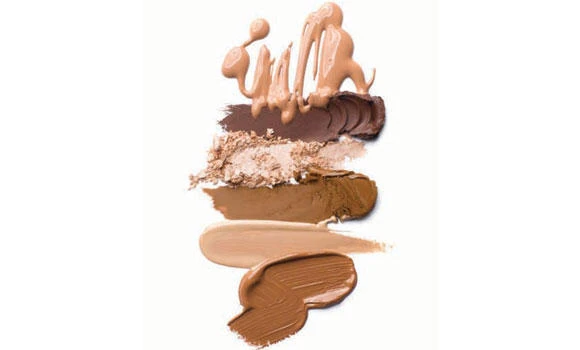
Choosing the wrong shade of foundation is the biggest beauty mistake any woman can make! Wearing a color too light will make your skin look grey and washed out, while wearing a color too dark will make you look un-natural and maybe a shade close to orange. After all this, when you find the right shade you still need to decide between liquid, cream, mousse, mineralized or powder foundation and how to apply it correctly.
We spoke to Jeddah’s leading makeup artist Nilo Haq to provide us with professional tips for choosing the right foundation. Here is some valuable advice from the beautician.
Step 1: Know Your Skin Type
Before deciding on a formula, you need to know your skin type so you can narrow down to which type of Foundation you need.
• Dry skin: Look for formulas that are not matte. Key words on the bottle like “hydrating, glow or sculpting” will help achieve a dewy/creamy finish suitable for dry skin. Mineralized Foundations are a good choice for dry skin.
• Combination skin – you need to decide if you are more oily or dry and choose the formula that represents the appropriate skin type.
If you have an oily t-zone you can always control the oil with a bit of powder on those areas.
• Oily skin – look for formulas that will help to control shine. Look for words like “oil-free” or “mattifying” on the bottle. Two-in-one Powder Foundations are a good choice for oily skin.
• Normal skin – You’re lucky if you have normal skin because then you can choose any formula you like depending on your personal preference.
Step 2: Decide on the Level of Coverage
You need to know what level of coverage you want. Decide between a light, medium or full coverage Foundation depending on your natural skin.
If you have good skin and would like to even out your complexion go for a light to medium buildable coverage. If you need more coverage because of marks, scars or pigmentation then go for a full coverage foundation, which will be heavier but will cover all your imperfections.
Step 3: Narrow Down the Formula
Now that you know your skin type and level of coverage you need to have a look at the different formulas.
Tinted Moisturizers are the most natural formula of foundations; they are like a day cream with a little bit of color. These types of foundations won’t give you too much coverage but just even out the complexion. I love these for daytime, work and school for that no makeup –makeup kind of look.
BB Creams: BB Creams tend to be a bit heavier than tinted moisturizers but less than foundations. They are popular because they are a combination of primer, sun protection and a light foundation all in one product. Different BB Creams have different finishes so look for one that is suited to your specific skin type.
Liquid Foundations: Liquid Foundations come in a huge variety of finishes. It’s important to read the label and ask your beauty adviser in stores what the finish is and the level of coverage of the foundation. You can find natural light coverage all the way to full coverage liquid foundations. Also, foundations are made specifically for different skin types so narrow down your choices to the ones suited to your skin type and the level of coverage you need.
Mineralized Foundations: Mineralized Foundations come in either powder form or liquid. Mineralized products sit close to the skin giving it a “glow”. Generally, most mineralized foundations are good for normal to dry skin.
Mousse Foundations: Mousse foundations come in both glossy and matte finishes. They tend to be pretty natural on the skin and are popular because of the texture of the foundation.
Cream Foundations: Cream foundations are the heaviest and give the skin a medium to full coverage depending on which brand you choose. For oily skin it’s important to set cream foundation with a powder to control the oil and matte the foundation.
Step 4: Know Your Undertone
Generally there are two undertones when choosing a foundation, a yellow or pink undertone. Yellow undertone foundations are brighter while pink undertone foundations are more beige. You can determine your undertone by looking at your veins. If your veins are green that means your undertone is most likely pink, if your veins are blue most likely your undertone is yellow. Another way to tell is pull your hair back and look at yourself in a mirror under daylight. Pink undertones have a lot of pinkness in the cheeks while yellow undertones are yellow. If you are dark skin or African, very dark skin pink is more suitable while medium dark African skin tends to have a lot of yellow in the center.
Step 5: Test the Foundation
It’s important to test the foundation before you purchase it. You don’t’ want to be stuck with a foundation that is the wrong color once you get home! So, head to your favorite makeup counter with just some moisturizer on your face and no foundation. Then choose a few colors that are similar to your natural skin tone (you can ask the beauty adviser for suggestions).
Apply a bit of the foundation on your jaw line or cheeks and blend upwards and downwards (NEVER test on your arm or hands as your face is not the same color!). If the color is correct it will easily blend into the skin without much effort. Look at yourself in different lighting and see how it feels after 20 minutes. Once you are sure: make the purchase!
Step 6: Apply it Right!
• Brushes: The benefit of using a brush is that a professional foundation brush is made of synthetic hair so it won’t absorb any product. The brush just picks the foundation up and distributes it evenly on the face. Brushes are good when you want to achieve a more full coverage effect.
• Sponge: The best thing about it is that it is quick and easy. You will also get a more natural finish since the sponge will also absorb the product as it is being applied. Try to use a slightly damp sponge for the more natural finish.
• Fingers: Using your fingers is also quick, easy and free! Your fingers actually warm the product up so it sort of melts into the skin. I love using my hands but remember using fingers is not recommended for those of you who have acne prone skin.
“Everyone is different and no two faces are the same. The most important advice I can give is when choosing the right foundation don’t rush; be an informed consumer and know what you are purchasing. Do some research and ask your friends – once you find a type of foundation you love, I’m sure you’ll be a loyal customer for years,” said Haq.
—
Email: [email protected]
Choosing the right foundation