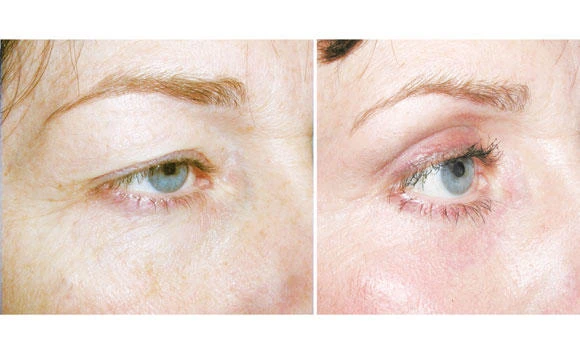
Upper eyelid surgery or blepharoplasty is a surgical procedure to remove skin and to add or remove fat from the eyelids. It is frequently in demand.
The surgery requires at least two counseling sessions before the procedure, preferably separated by a period of 15 days, for both the patient and the surgeon to give it a thought.
In these counseling sessions, the surgeon should explain all medical and surgical contexts to the patient, and in turn completely understand his or her mental condition and desire for the surgery.
Why the surgery?
Is it to bring sparkle to the eyes, or to change the look of the eye? The doctor should listen to the patient very well. Most patients want to get a ‘bright’ look, but there are others who are motivated to change the look or shape of the eye. There are, in fact, some shapes of the eye that look tired or exhausted, even among young people, as is the case with the ‘sad’ eye or ‘round’ eye.
Preparations
Prior to the eyelid surgery the patient should have a detailed discussion about blepharoplasty and potential risks associated with the procedure. It may be required to have your medical doctor “clear” you for surgery if intravenous sedation or general anesthesia is used.
The aim of a complete examination is to exclude anything that might pose a danger to the eye, such as dry, sensitive or inflamed eyes, as well as visual instability, weak eyes or eye paralysis/ophthalmoplegia.
An examination of the entire face and eyelids, in the smallest detail, allows to identify possibilities to improve the shape of the eyes.
It is a must to look for any complications, anomalies or inconsistencies before the surgery, often through a mirror.
The patient is given a booklet containing all the information and instructions he or she need to read before the second counseling session.
Swellings and infections are rare, but sometimes a new surgery may be required. Fortunately, the probability of vision loss in the eye due to vasospasm is very rare.
Preoperative procedures
The surgeon must pay attention to any previous cases of sensitivity or fainting.
Medical treatments must be described, which include preventing the patient from taking medicines that cause bleeding for a few days.
To reduce bleeding, the patient should also avoid eating garlic, ginseng and ginkgo before the operation. Of course, smoking is not recommended.
Blood tests are necessary to rule out any bleeding tendency. Analyzing old and new images is useful when discussing the surgery and developing a treatment plan.
—
Email: [email protected]
Eyelid surgery: What you should know