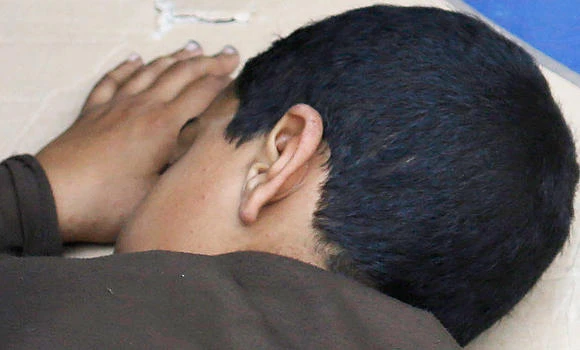
I ended Part 3 by exploring some of the symptoms of sleep deprivation, which occur at the expense of body responses and cognitive performances. In studies, it was seen that sleep loss takes a toll on physical and mental abilities and productivity as well as affecting reflexes that can cost vehicle drivers’ and pilots’ their lives along with other’s lives and causing ecological disasters like in the case of the Exxon Valdez.
Research has shown that less than seven hours of sleep for several nights in a row can become cumulative sleep debt and weigh on the person’s mental and physical performances, especially if cognitive skills and responses are required such as with driving. What is quite strange is the results of studies of those who slept six hours or less a night for two weeks did not realize that their mental performances and physical responses were affected by their sleep debt.
Modern day competitiveness, joblessness, high-paying jobs, deadlines, and other work demands push employees to sleep deprivation and late working hours. These drastic working conditions have resulted in significant drop in performances. Studies have estimated that sleep deprivation costs businesses losses of over $100 billion yearly caused by decline in efficiency and productivity.
According to sleep expert Gregory Belenky, director of the Sleep and Performance Research Center at Washington State University, “Unless you’re doing work that doesn’t require much thought, you are trading time awake at the expense of performance.” Sleep is an important factor in performing efficiently and productively. Studies have now shown that performance drops with sleep loss. Some studies speculate that decline starts at less than seven hours of sleep. To be more exact according to studies on adults, 95 percent of those who slept below seven hours all the time develop mental and physical inefficiency. According to Harvard Medical School, the average American’s night sleep hours have declined from nine to seven hours since 1910.
Now, I shall continue demonstrating how short-term sleep loss impacts body, brain, and mental and physical reflexes. As for long term sleep debt, it can be quite detrimental to health. The immune system begins to suffer by failing to produce enough killer cells, which fight cancer. Killer cells can suffer a decrease of 30 percent with insufficient sleep. It is not yet known if they can be fully recovered.
According to research, stress, exhaustion, late-night drinking, and fewer hours of sleeps can alter the way you think and act. It makes you feel groggy, exhausted, irritable, moody, and inattentive the following day.
Daniel Sternberg, PhD, senior data scientist at Luminosity, an online brain-training program, analyzed the performance of 60,000 people in various tests. It was found that sleep loss impacts the speed of processing information, short-term and working memory, task switching, visual attention, verbal fluency, and mathematical responses. On the other hand, those who enjoyed seven to eight hours of sleep at night gave good results in their cognitive tests and games and enjoyed more stable moods than those who had insufficient night sleep.
After a good night sleep, most people perform better in mental tasks in the morning between 9:00 and 10:00 a.m., as I mentioned in Part 2, even if they were night owls, those who prefer working or feel more alert at night. Sleep researchers also found that the best time of the day for creativity happens between 2 and 4 p.m. Apparently, creativity does not require too much discipline from the brain and at those p.m. hours, the peak of mental sharpness wanes to allow for creativity to take over.
On another front of sleep deprivation, researchers found that sleep loss could make the emotional centers in the brain become overly responsive to negative experiences. Researcher Matthew Walker, the director of the Sleep and Neuroimaging Lab at the University of California, Berkeley, believes that with lack of sleep, the human brain “revert[s] to more primitive behavior,” losing control over emotions, becoming overly reactive emotionally, and easily losing rationality. The effects of “Negative emotional stimuli” were seen clearly by functional magnetic resonance imaging (FMRI).
Walker also said that previously psychiatrists believed that mental disorders caused sleep disturbances, but recent research reveals the opposite: “Particularly ones involving emotions, seem to be linked with abnormal sleep.” He continued by saying that “Human beings are one of the few species that really deprive themselves of sleep.”
A large British study in 2007 revealed that individuals who are short on sleep increase their risk of dying of heart disease by 50 percent. It is not clear why, but sleep debt (five hours) is also associated with hypertension, which leads to higher risk of heart attacks and strokes, according to Francesco Cappuccio, professor of cardiovascular medicine at the University of Warwick’s medical school. His study followed the sleep patterns of subjects who were between the ages of 35 and 55 years. Their ages, sexes, smoking and alcohol habits, weights, blood pressure, and cholesterol levels were taken into consideration. It is one of the first studies to relate hours of sleep to fatality. On the other hand and strangely enough, those who slept more than nine hours also increased their mortality risk.
While the body and the brain require sleep to rest and regenerate, they also need certain hours of physical activity to keep the heart pumping and the blood circulation moving to reduce the risk of blood clotting.
In a CBS interview with Lesley Stahl, Matthew Walker, who led a series of studies in 1980, explained when rats were prevented from sleeping, they began to die after only five days. He also found that they would die just as fast as going without food. He continued saying that all animals succumb to death within days of sleep deprivation; this includes big and small animals.
Another experiment on five college students, who were kept awake more than 24 hours, showed that their abilities to memorize lists of words dropped by 40 percent after just one sleepless night. On the other hand, subjects, who did their learning and memorizing during the day and then had a good night sleep, improved their results by 20 to 30 percent. According to Walker, “It’s practice with a night sleep that makes perfect.” In other words, sleeping well at night after learning and studying reinforces learning, whereas “staying awake” all night studying does not give the desired results. That is why sufficient sleep hours are needed to increase productivity and efficiency.
I shall continue on the same subject when I resume writing in October, Insha'Allah. The subject has more parts to it and more interesting information will come. Meanwhile, I wish you a rewarding Ramadan and the best of health for Eid and all the time. Eid Mubarak to all.
References:
• “Body clock alters immune system” by James Gallagher
• “How Exhaustion Might Change the Way You Think,” by
Amanda Woerner
• “Emotions Run Amok in Sleep-deprived brains, ” by
Charles Q. Choi
• Ben Hirschler on sleep on Reuters
• CBS Lesley Stahl interview with Matthew Walker, director
of Sleep and Neuroimaging at the University of California, Berkeley
• “Good Sleep, Sociability may keep Grandma Healthy,”by
Megan Rauscher for Reuters.
• The Science of Good Sleep: There is a Reason You’re Always So Tired by James Clear in Wellness
N.B.:
Individuals with medical conditions or on medication should consult their physicians when they decide to introduce anything new in their diet even if it is natural.
The previous Health Solutions articles are located at www. arabnews.com
—
Email: [email protected]
Don’t underestimate the importance of sleep (Part 4)