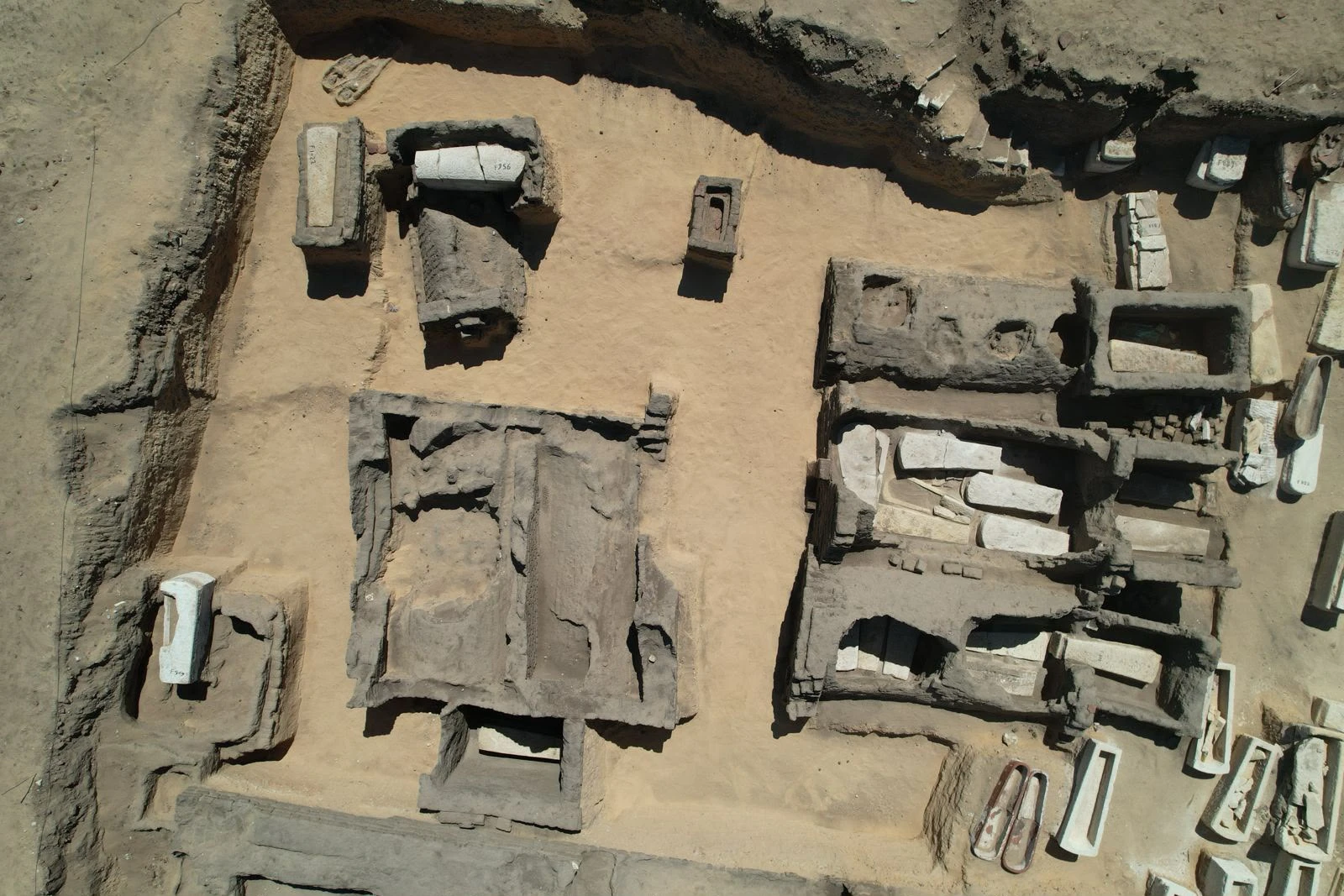
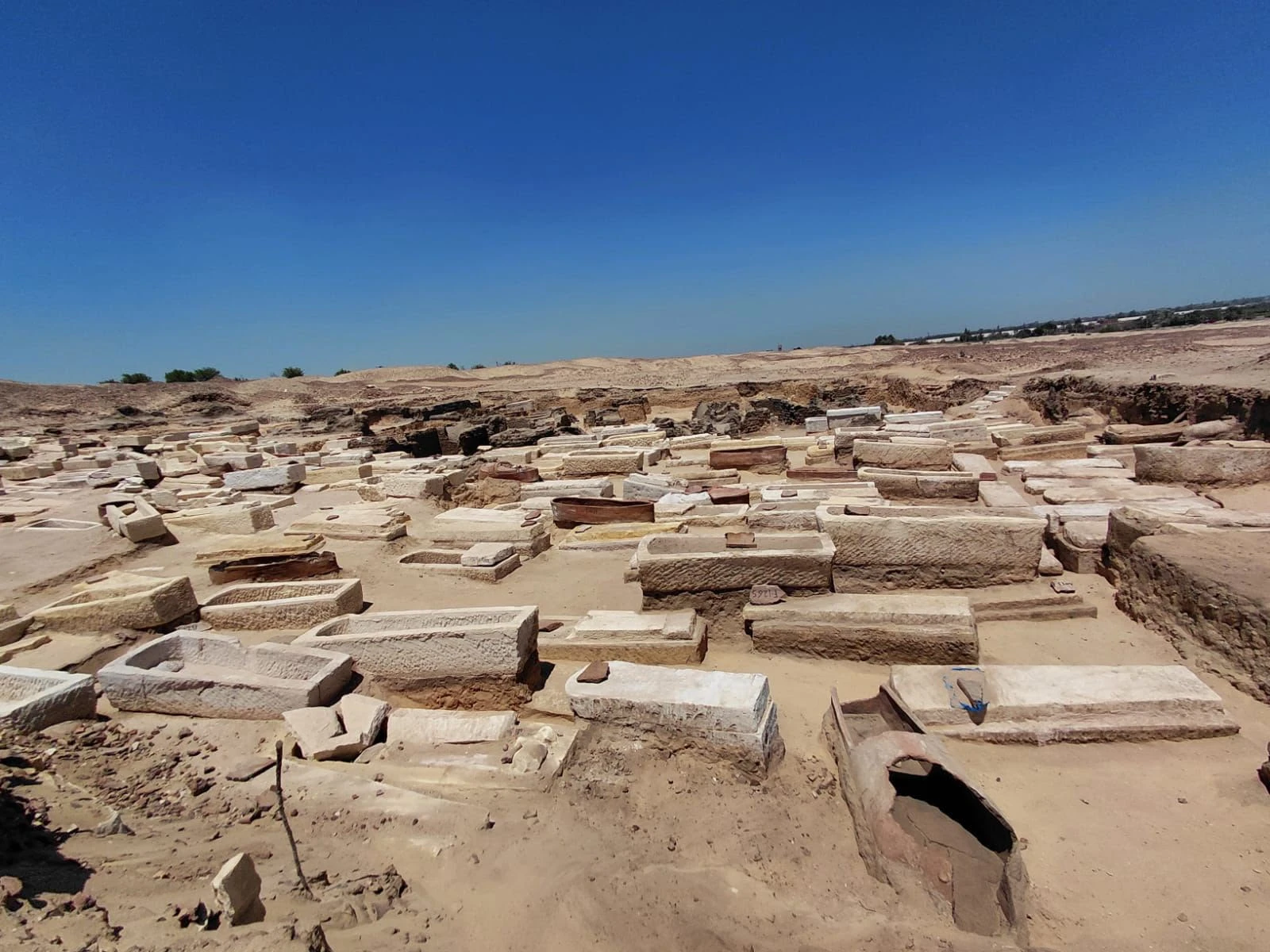
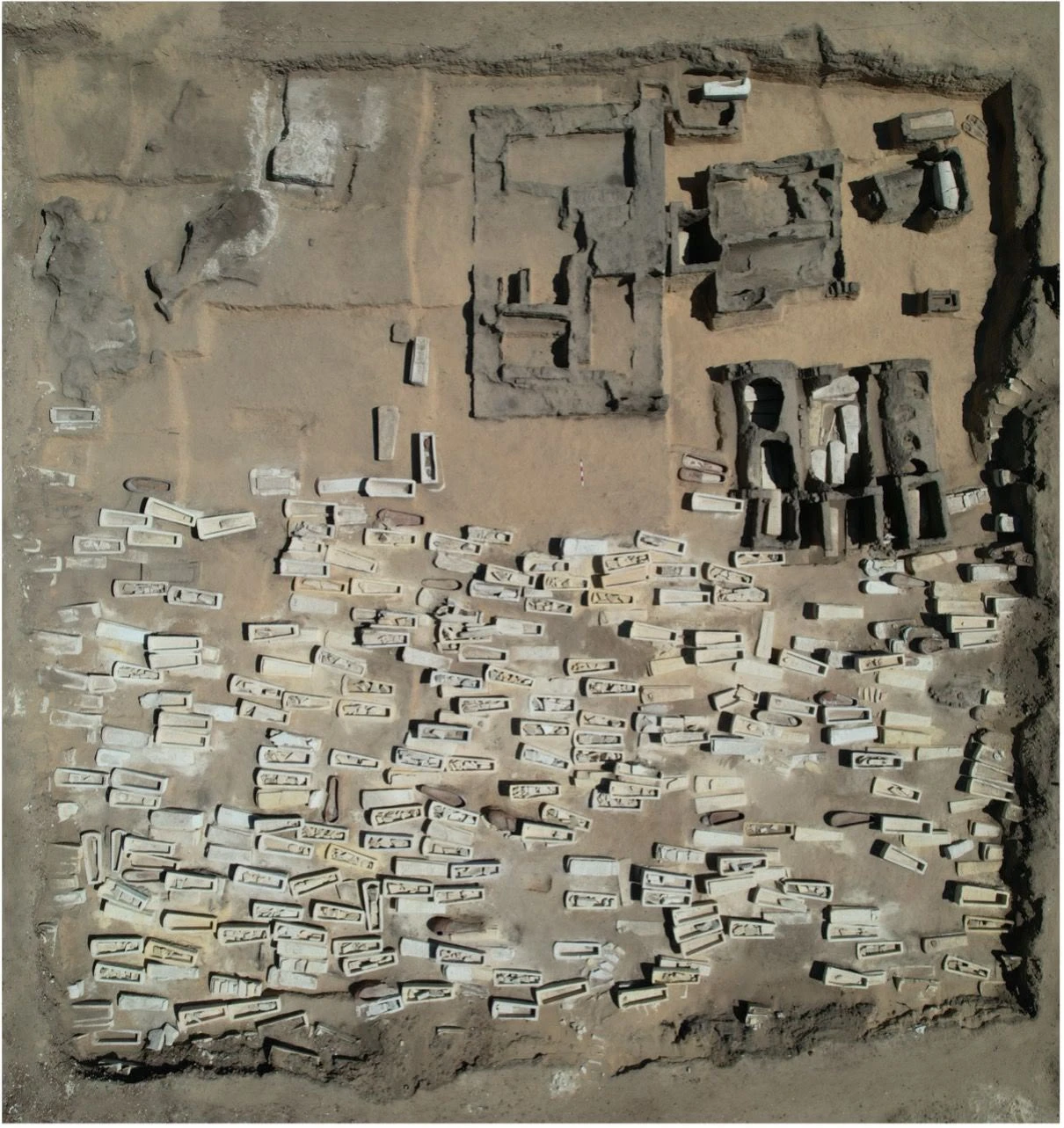
CAIRO: An Egyptian archaeological mission has uncovered an extensive necropolis containing hundreds of coffins and rare gold artifacts at Tell Kom Abu Billo in the northern governorate of Menoufia, the Ministry of Tourism and Antiquities said on Wednesday.
The tombs and burials date from the end of Egypt’s Late Period through the Ptolemaic era and into the early Roman period.
Among the finds were tongue-shaped gold pieces, jewelry, gold foil, scarabs and large numbers of faience ushabti figurines in various shapes and sizes.
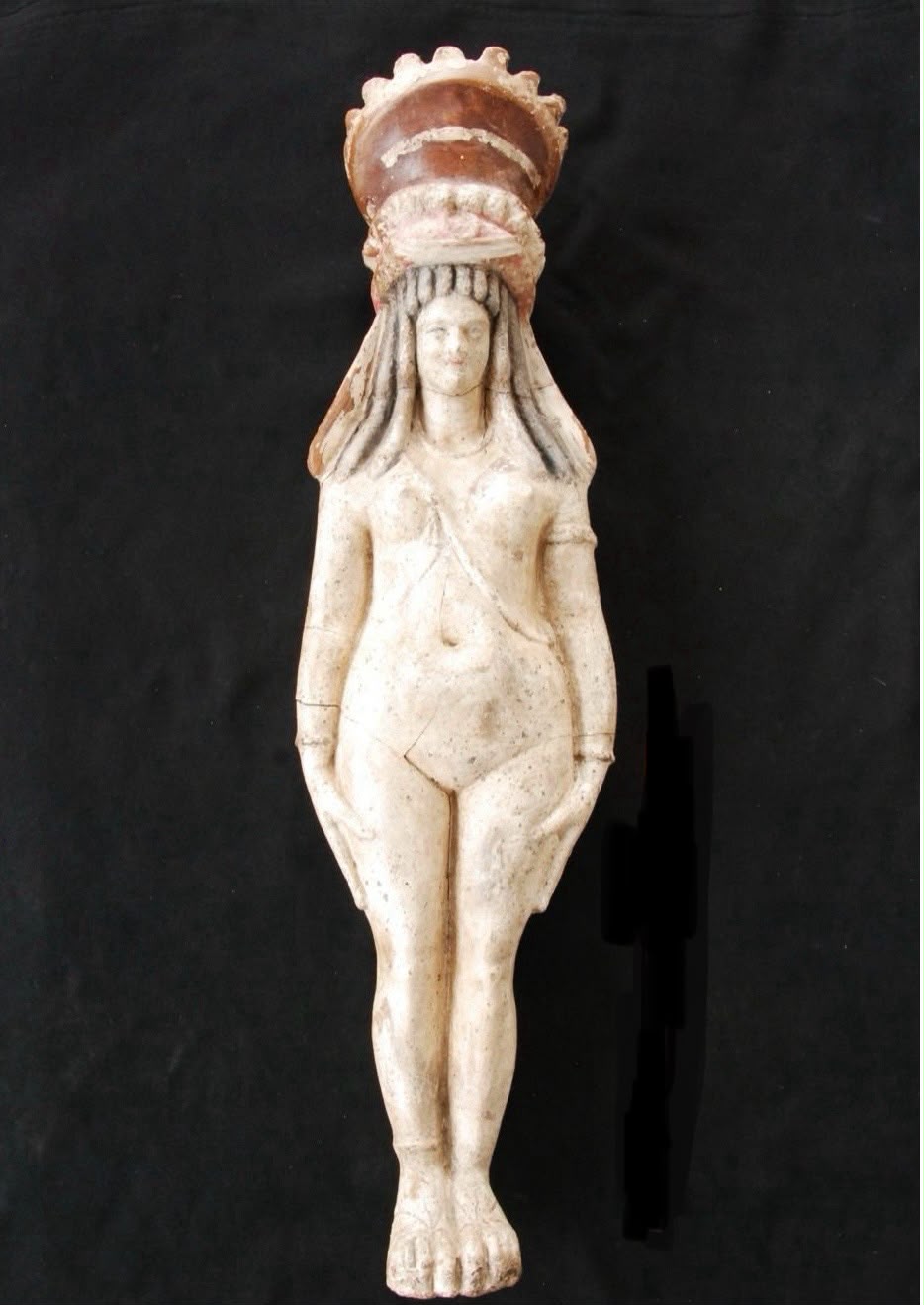
The mission also discovered terracotta figurines depicting Isis-Aphrodite seated on a lotus flower, as well as small sphinx and Horus figures, amulets, offering tables and two falcon burials.
Mostafa Rizk, director-general of antiquities in Menoufia, said excavations had uncovered a surface layer containing hundreds of stone coffins. Some were missing their lids, while others had been badly damaged by previous looting and quarrying at the site.
Human remains found inside the coffins were in a poor state of preservation, he said. However, analysis revealed traces of mummification materials and resins, as well as fragments of painted cartonnage and plaster.
Rizk said the findings indicated that the burials had been prepared in accordance with ancient Egyptian religious beliefs and funerary practices.
The necropolis also contained pottery coffins, remnants of wooden coffins, vaulted mud-brick tombs and a tomb lined with limestone.
Dr. Hisham El-Leithy, secretary-general of the Supreme Council of Antiquities, said the discovery was the first of its kind at the site because of the large number of burials and coffins found within an open courtyard.
He added that the site also contained distinctive architectural elements extending beneath surrounding sand and debris mounds, suggesting that further structures and archaeological evidence remained to be discovered.
Initial studies of the coffins, burials and funerary objects indicated that the necropolis was used mainly during the early Ptolemaic period, particularly the third and second centuries B.C., although some burials dated to the end of the Late Period.
The evidence also suggested that the burial ground was intended primarily for members of the middle class.
Further excavation and research could reveal more about the community that used the necropolis and its funerary practices, El-Leithy said.
Egyptologist Dr. Hussein Bassir told Arab News that the discovery represented a significant contribution to understanding ancient Egyptian history during the transitional period between the end of the Late Period, the Ptolemaic era and the beginning of Roman rule.
He said the coffins and funerary artifacts offered insight into ancient Egyptian beliefs surrounding life, death, rebirth and immortality, as well as the relationship between the deceased, the gods and the afterlife.
Bassir added that the connection between the necropolis and the ancient city of Terenuthis — modern-day Tarrana — together with its proximity to Wadi El-Natrun, offered an opportunity to deepen understanding of the region’s history.
Wadi El-Natrun was historically an important source of natron salt, which ancient Egyptians used during the mummification process.
The Ministry of Tourism and Antiquities said excavation, analysis and scientific documentation of the artifacts and architectural remains would continue.
The work is expected to shed further light on the necropolis and the archaeological landscape associated with ancient Terenuthis.