- Restrictions on humanitarian access have left hundreds of thousands of children without protection against measles and rubella
- Rising malnutrition, attacks on medical facilities and dwindling supplies are pushing Yemen’s overstretched health system toward collapse
TAIZ/LONDON: World Children’s Day, which fell on Nov. 20, passed unmarked in the Yemeni city of Taiz, where an ongoing Houthi siege is depriving children of lifesaving medical care.
Ten days earlier, a distraught mother from a mountain village south of the city had appeared in a harrowing video on social media, cradling the lifeless body of her baby girl, Gaza.
According to the Yemeni Human Rights Network, the child had fallen ill and was being driven to a hospital in Taiz when the vehicle came under fire from Houthi gunmen and was forced to turn back.
Unable to reach medical care because of the siege, Gaza died.
She was not the first child to die as a consequence of the civil war triggered by the Houthi revolt 12 years ago, and she is unlikely to be the last.
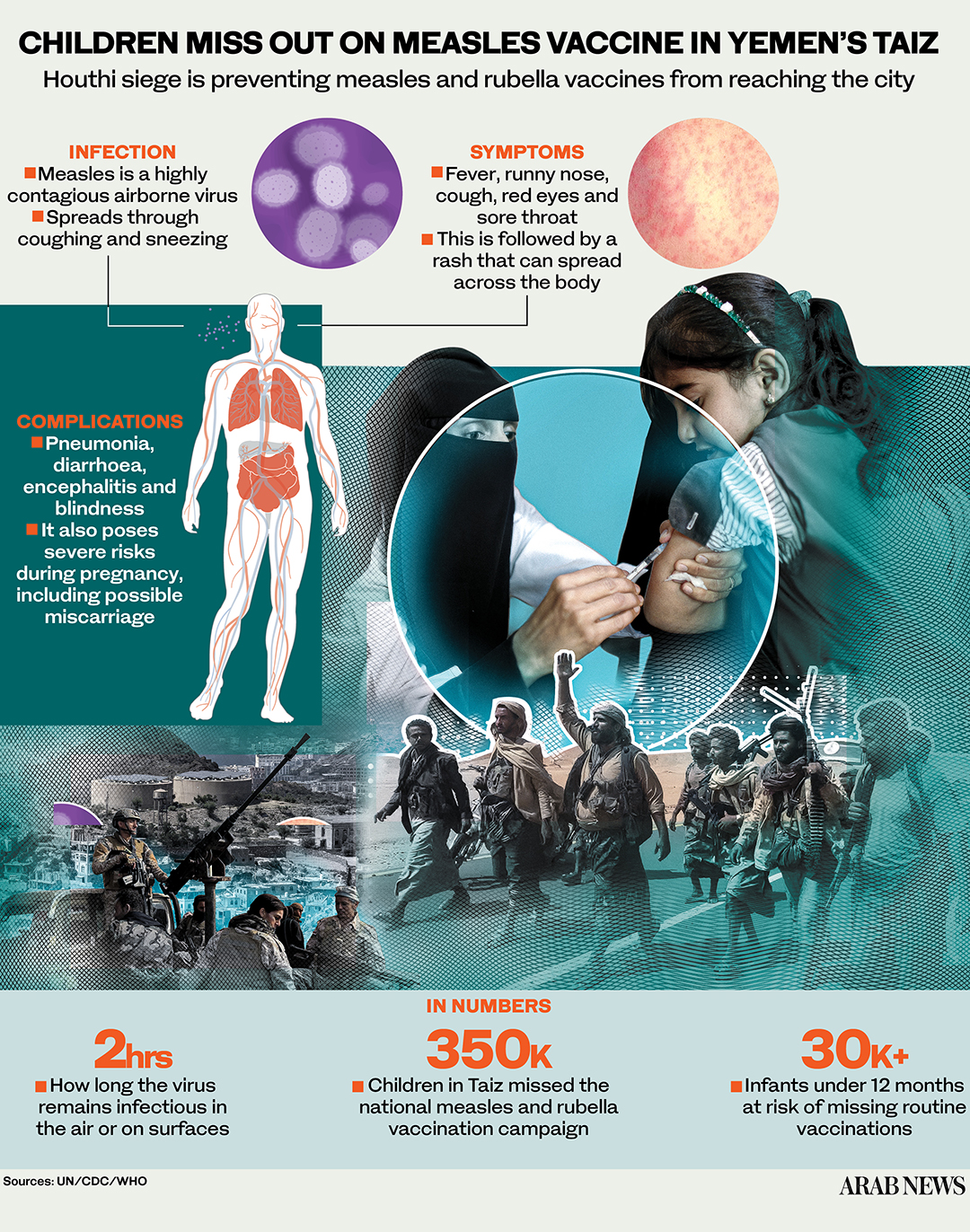
This week, the UN revealed that about 350,000 children in Taiz governorate had missed scheduled measles and rubella vaccinations because of insecurity and restrictions on humanitarian access.
For some, the consequences could be fatal.
On Wednesday, the Disease Surveillance Department at the Ministry of Health’s office in Taiz told Arab News that 2,804 suspected cases of measles, including 280 laboratory-confirmed infections, and 26 deaths had been recorded across the governorate so far in 2026.
Health authorities have also recorded 1,605 cases of cholera, 71,303 cases of acute diarrhea, 1,646 cases of febrile illness and 50,040 suspected cases of malaria, of which 4,354 have been confirmed.
According to figures released in July by the Taiz Office of Public Health and Population, more than 14,400 cases of measles had been recorded across governorates under the authority of Yemen’s internationally recognized government in the first six months of the year, resulting in the deaths of 87 children.
Taiz recorded the highest death toll (18), followed by Aden (14), Hadramaut (12), and Abyan and Lahj (11 each).
These figures cover only government-controlled or contested areas of Yemen, where health services, although severely compromised by the war, are in better shape than in territory held by the Houthis.
Comparable statistics for areas entirely under Houthi control are unavailable, but the World Health Organization estimates that these account for 70 percent of Yemen’s measles cases.
Dr. Fahed Al-Namer, manager of the immunization program in Taiz governorate, told Arab News that the blockade and security concerns had severely hampered the delivery of vaccines and other medical supplies to areas recently seized by the Houthis.
Delays during vehicle inspections risked compromising temperature-sensitive vaccines, medical supplies could be confiscated, and the safety of vaccination teams could not be guaranteed.
The Houthis, he added, had been obstructing vaccination campaigns in areas under their control for more than a year.
“We have 70 health facilities in the areas recently seized by the Houthis that are now completely devoid of vaccines,” he said.
Mohammed Al-Masani, director of the Taiz provincial office of Yemen’s Ministry of Information, told Arab News: “The supply of medicines and medical equipment between Aden and Taiz has completely ceased, and the city is now suffering from a complete lack of access to medicines through official channels due to the blockade and tightened sanctions.
“Medicines that enter through smuggling are at risk of spoilage and loss of efficacy due to improper transport and storage, thus exacerbating the risks.”
The disruption of vaccination programs poses a serious threat not only to individual children but also to entire communities.
Measles is a highly contagious viral disease that spreads through the air when an infected person coughs or sneezes. The virus can also be transmitted through contact with contaminated surfaces.
Although symptoms typically begin with a fever and runny nose, followed by a distinctive rash, the disease can cause life-threatening complications, particularly among young children and those with weakened immune systems.
Even in countries with advanced health systems, measles can result in hospitalization among unvaccinated patients.
Where hospital care is inaccessible, complications such as pneumonia and encephalitis — inflammation of the brain — can prove fatal.
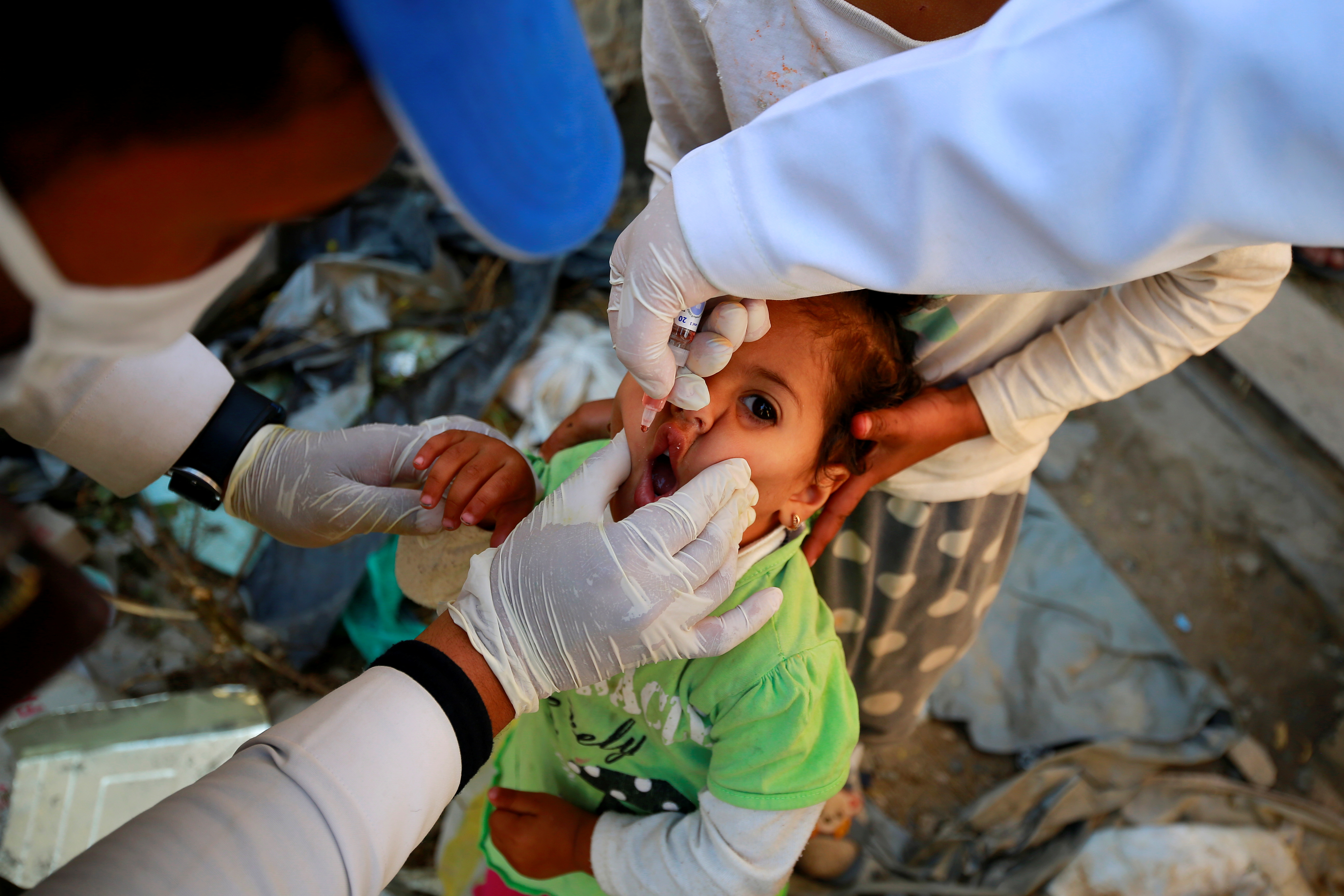
Two doses of the measles vaccine provide highly effective protection against the disease. However, preventing transmission across entire communities requires vaccination coverage of about 95 percent to achieve what is known as herd immunity.
In Taiz, Al-Namer fears this threshold is increasingly beyond reach.
“In those Houthi-controlled areas of Taiz province, a total of 347,000 children, aged between six months and five years, have been denied the measles booster dose, which is essential for strengthening both individual and herd immunity,” he said.
Even in Taiz city, existing vaccine stocks could run out within weeks.
“For the city of Taiz, we have a stock of vaccines that will last until the end of December or mid-January — supplies we obtained before the siege. Beyond that point, however, there will be a shortage.”
On Nov. 4, the WHO released an emergency response plan for Yemen, “as escalating conflict drives mass displacement, overwhelms health facilities and threatens access to lifesaving care.”
Three days later, Yemen’s Ministry of Health launched an emergency national measles and rubella vaccination campaign.
Supported by the WHO, UNICEF and Gavi, the Vaccine Alliance, the six-day campaign aimed to immunize more than 950,000 children ages 6 months to 5 years across 100 districts in 11 governorates.
However, Yemen’s territorial fragmentation has left hundreds of thousands of children beyond the reach of vaccination teams.
According to a Nov. 15 assessment by the Anaween Center, only six of Yemen’s governorates are entirely under the control of the internationally recognized government. Five, including Taiz, remain contested, while 11 are controlled by the Houthis.
The resurgence of measles is symptomatic of a much broader public health emergency, the scale of which is laid bare in the WHO’s response plan.
As of Oct. 25, 1,677 deaths and 7,395 injuries had been reported since the escalation in violence by the Houthis in early August.
However, the WHO warned that the toll was “likely to be higher given figures from the Ministry of Public Health and Population exclude casualties in areas inaccessible to WHO and its partners.”
More than 270,000 people have been internally displaced, placing additional pressure on already overstretched health services.
The WHO reported that “hospitals face critical shortages of medicines, fuel, oxygen and other medical supplies,” and that “health facilities and ambulances have also come under fire.”
Compounding the crisis is a deterioration in child nutrition.
Data published in September showed that more than a quarter of the nearly 2,900 children screened by mobile nutrition teams working with WHO partners in accessible areas were suffering from acute malnutrition, including more than 200 with severe acute malnutrition.
The findings offer a troubling indication of how rapidly conditions could deteriorate if the fighting continues.
Even before the latest escalation in violence, the WHO said, “projections published in Feb. 2026 estimated that more than 2.2 million children under five would experience acute malnutrition, including over half a million with severe acute malnutrition.”
With their immune systems already weakened by hunger, malnourished children are particularly vulnerable to infectious diseases such as measles.
Although the lack of reliable data from Houthi-controlled territory makes it difficult to establish the full extent of Yemen’s health crisis, available figures point to a substantial burden of measles infections.
In its Nov. 7 assessment, the WHO reported that a total of “22,800 measles cases, including 128 measles-related deaths, had been reported in Yemen as of Oct. 4, 2026.”
And vaccines are far from the only essential supplies failing to reach Taiz.
According to the UN Office for the Coordination of Humanitarian Affairs, or OCHA, the city has been effectively cut off since the beginning of October.
“We are seeing increasingly that the fighting makes it impossible for us to get in and impossible for people to get out,” Jens Laerke, an OCHA spokesperson, said on Oct. 23, warning of a rapidly deteriorating humanitarian situation.
“Access roads have been cut off and that means that very little fuel, food or other supplies have reached the city since.”
Human Rights Watch has called on the Houthis to “immediately open vital roads for essential goods and aid to civilians” in Taiz.
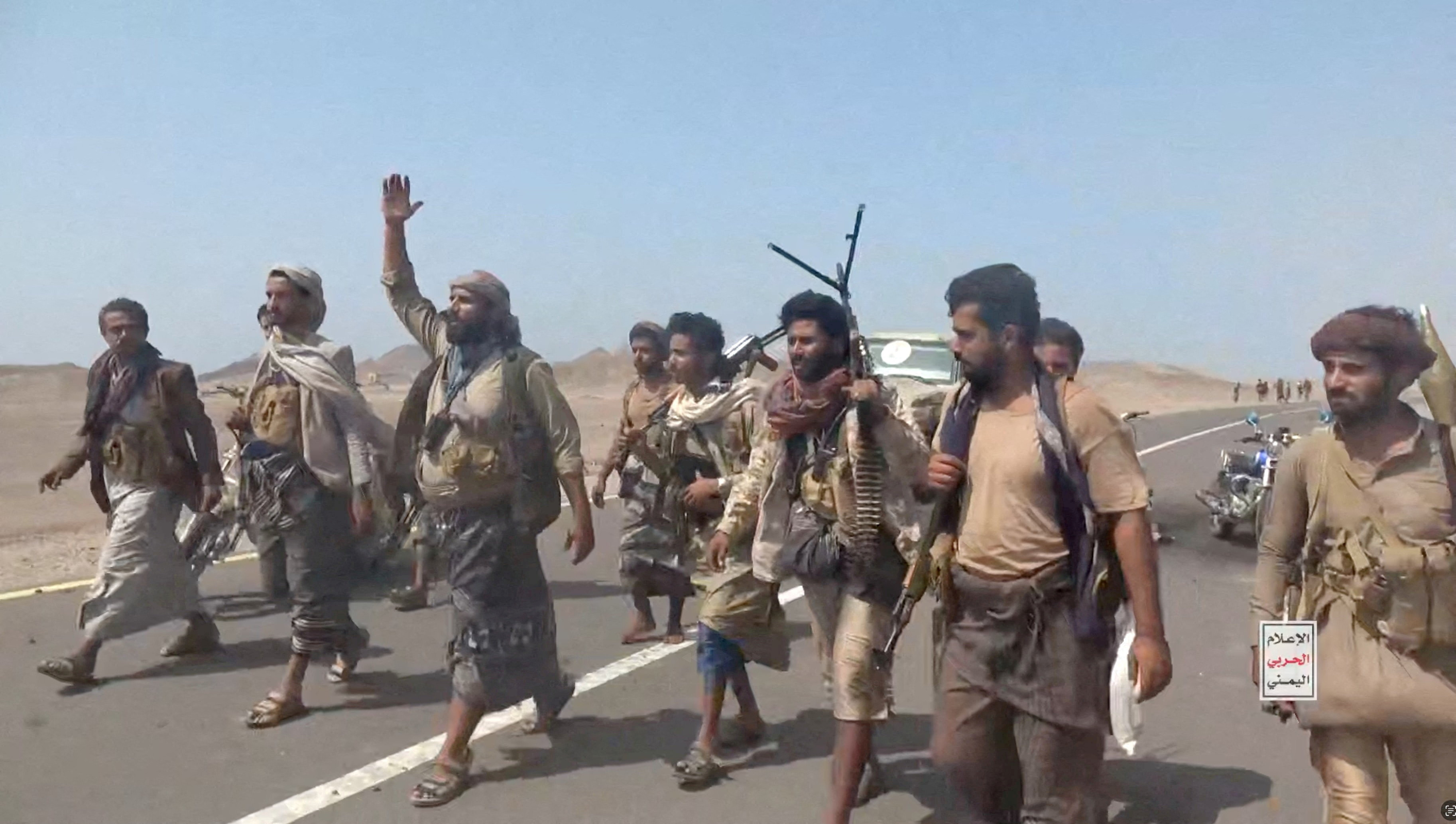
“Throughout the 11-year-long siege of Taiz, the Houthis have bombed, starved, and denied humanitarian aid to a million residents of the city with scant adherence to international law,” Niku Jafarnia, Yemen researcher at Human Rights Watch, said in a statement.
“Efforts by the Houthis to cut off food, water, and medicine to Taiz show their utter disregard for civilian lives.”
The Taiz-based Human Rights Information and Training Center documented a series of incidents between Sept. 3 and Nov. 9 “in which the health sector in Taiz Governorate was subjected to a series of simultaneous and systematic violations and attacks by the Houthi militia.”
These included attacks on five hospitals and health centers, as well as ambulances, resulting in deaths and injuries among patients and paramedics.
Medical equipment had been looted, while restrictions on the movement of supplies had caused “a severe shortage of fuel, oxygen, medicines, and supplies, which has curtailed medical services and threatened the operation of incubators, intensive care units, and dialysis.”
For the children of Taiz, the combined effects of violence, malnutrition, preventable disease and dwindling medical supplies mean that surviving the war increasingly depends on access to even the most basic health care.
As the death of baby Gaza illustrates, that access can mean the difference between life and death.