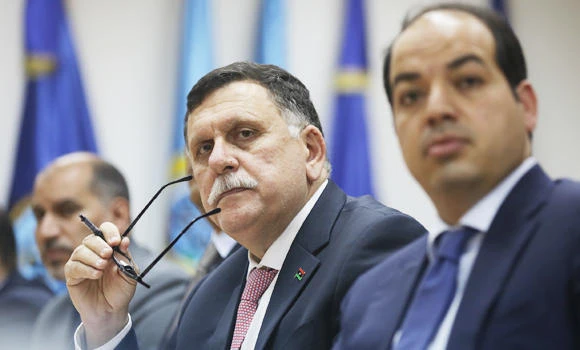
TRIPOLI: Libya’s UN-backed unity government won the support Friday of guards who secure the country’s key oil terminals, the latest pledge of loyalty for a Cabinet facing strong opposition from rival political forces.
Libya’s warring sides are under intense international pressure to cede power to prime minister-designate Fayez Al-Sarraj, whose arrival in the capital on Wednesday angered a rival Tripoli-based government.
But there are signs that allegiances are starting to shift in favor of Sarraj, a businessman from Tripoli who was a member of a committee that paved the way to national dialogue.
On Friday, an official from a unit of guards in charge of securing installations in Libya’s so-called “oil crescent” in the east of the country said it had pledged loyalty to Sarraj’s government.
“All the oil terminals under our jurisdiction have been placed under the authority of the unity government,” the official who declined to be named told AFP.
He said that revenues from oil exported from those terminals, including the main one at Ras Lanuf, would be allowed only if they are “for the benefit” of the Government of National Accord.
Libya has been awash with weapons since the 2011 uprising that ousted and killed longtime dictator Muammar Qaddafi, with a slew of militias battling for control of its cities and oil wealth.
It has had two rival governments since mid-2014, when the Libya Dawn militia alliance overran Tripoli, forcing the internationally recognized government to flee to the east.
Oil is Libya’s main natural resource, with reserves estimated at 48 billion barrels, the largest in Africa. It had a pre-revolt output capacity of about 1.6 million barrels per day, but unrest has forced a major slump in production.
Control of the oil industry is essential for the new government, which not only needs to unite the divided country but also shore up its economy.
On Thursday, 10 western cities also rallied around Sarraj’s government and urged Libyans to back it, in a major blow to the unrecognized Tripoli authorities who are refusing to cede power.
The announcement came in a statement on the official Facebook page of the Sabratha municipality near the border with Tunisia.
“The situation of the country is sad. Life is very expensive, there is no cash, and so we saw that it’s time to support this government in order to start solving all of these issues,” said Sabratha mayor Hussein Al-Dawadi.
Libya unity govt wins support