Regional security and stability will top the agenda of a two-day conference on regional challenges, which begins here Tuesday.
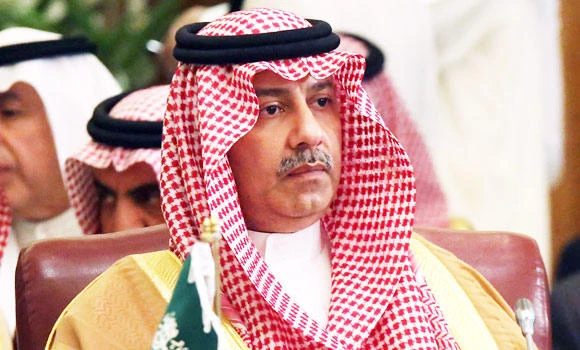
The conference, which is being held under the auspices of Foreign Minister Prince Saud Al-Faisal, is organized by the Riyadh-based Institute of Diplomatic Studies (IDS), a premier institution under the Ministry of Foreign Affairs, in cooperation with the Gulf Research Center in Dubai.
Deputy Foreign Minister Prince Abdulaziz bin Abdullah will inaugurate the conference.
Speaking to Arab News on Monday, Turki Al-Awwad, IDS media director, said that the conference will be attended by strategic affairs experts from various countries.
Abdulkarim Al-Dekhayel, IDS director-general, said that the first session will focus on the Gulf Cooperation Council (GCC) and regional variants while the second session will address challenges facing the Arabian Gulf.
The third session will address Gulf security and the impact of political changes in the region and the fourth, fifth, sixth and seventh sessions will address conflicts in the Arabian Gulf and visions for the Gulf region at large.
Speakers in the first session, entitled “the GCC and regional variables,” include Prince Abdulaziz, Sheikh Abdullah bin Zayed, foreign minister of the United Arab Emirates, and GCC Secretary-General Abdullatif Al-Zayani.
The second session, under the slogan “regional challenges in the Arabian Gulf: Iraq, Iran & Syria,” will assess threats to regional security from conflict-ridden countries, such as Syria and Iraq.
It will also address the role of Iran in the regional system and the nature of Iranian-Arab relations, as well as the role played by Iraq.
The third session, entitled “Gulf security and the impact of political changes in the region,” will assess the potential impact of regional developments on GCC states, in addition to the effects of terrorism and the stalled Middle East peace process on regional stability.
The fourth session, entitled “non-traditional and asymmetrical challenges,” will analyze the dangers of nuclear proliferation in the Arabian Gulf.
The fifth session, dubbed “external forces and the security of the Arabian Gulf: the US, Russia, Britain and France,” will analyze the dynamics between these countries and regional powers and their effect on security and stability.
The sixth session, entitled “the security of the Gulf and the role of emerging powers: China, the European Union, Japan and India,” will assess the international and regional roles these powers of the new international order can play in bringing about stability.
The seventh and final session, entitled “future vision,” focuses on the importance of the regional role in preventing a domino effect of ramifications arising from political chaos, sectarian strife and foreign intervention.
Regional security tops agenda of Riyadh conference