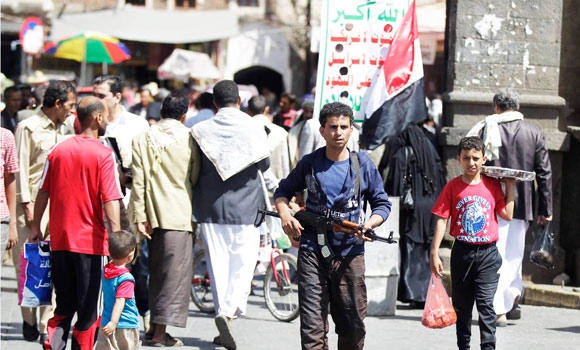
DUBAI: The lightning takeover by Shiite rebels of Yemen’s capital this week is a potential boost for Iran, while the US is preoccupied with fighting radicals, analysts said.
It is still unclear what the links are between the Ansarullah, or Huthi, rebels and Shiite-ruled Iran, but Tehran will no doubt be pleased by a move that offers the prospect of expanding its influence on the Arabian Peninsula.
But while it is also unclear what the rebels plan to do now, any ambitions they may have to dominate the whole country are out of the question.
The capital Sanaa lies in the Shiite-majority northern highlands, but the rest of Yemen is overwhelmingly Sunni and virulently anti-Shiite Al-Qaeda militants have a strong presence in the south and east.
And a complicating factor could be former president Ali Abdullah Saleh, forced from power after 33 years of iron-fisted rule by a 2011 uprising but still a key powerbroker.
Saleh, who is himself Shiite, is widely believed to have played a role in the rebels’ takeover of Sanaa through his tribal and security force allies, and it is still unclear what he may expect in return.
As it stands, rebel leader Abdelmalek Al-Huthi has taken advantage of growing poverty, a rejection of the traditional tribal elites and the collapse of state institutions to impose himself as a force to be reckoned with.
Ibrahim Sharqieh, an analyst at Brookings Doha, said there is “no hard evidence to confirm official Iranian backing though the issue is very clear that the Huthis receive significant support from Iran.”
Saleh’s successor, Abed Rabbo Mansour Hadi, a Sunni originally from the south, is adamant there are “foreign plots” aimed at torpedoing progress in Yemen.
“Internal and foreign forces (have) allied to... overthrow the Yemeni model” of political transition after the uprising of 2011, the president said. His claims were backed by reports that Yemen freed this week two Iranians said to be members of Iran’s elite Revolutionary Guards who were accused of having trained the rebels.
For the analyst Sharqieh, “the Americans have chosen to accommodate Iran’s expansion of influence in Yemen for two reasons.”
Meanwhile, a drone strike on a vehicle in southern Yemen Thursday killed four suspected members of Al-Qaeda, a security official said.
The drone struck near Nissab, west of the Shabwa provincial capital of Ataq, the official said, with a tribal source adding that the charred bodies of four men were seen inside the vehicle.
Seizure of Sanaa a ‘gift’ for Tehran?