


There have been numerous accounts lately of famous artists, especially singers, turning to religious life and giving up singing, only to change their minds and return to some form of song or another. While this news appears to cause some shock both inside and outside the social circles of artists, garnering much attention in the media, moving between sacred and secular spaces is a very common phenomenon. In this and the coming two columns, I will take a look at this phenomenon and highlight a few instances — some less famous than others — to contextualize the social and political circumstances within which these shifts take place.
The first example is a male singer from Syria, Saleh Al-Muhabbek (1911-1954), who was one of the most prominent Arab musicians and religious cantors of the first half of the 20th century. The course of his artistic and outwardly religious life exemplifies not only the fine line Middle Eastern artists straddle between the sacred and the secular, but also the significance of nationalism in the larger picture.
Saleh was born to an Aleppine family that was well known for its interest in Qur’anic knowledge. At the age of five or six, he started learning to read and memorize the Qur’an with his father, Mohammed, who also taught him tajwid, the art of Qur’anic recitation. As a young man, Saleh started performing the call to prayer (adhan) from Aleppo’s Great Umayyad Mosque, which made him known in the city for having a good voice. Being in Aleppo, young Saleh gradually became acquainted with the music masters of his time, whom he sought for various kinds of music education. His list of teachers included Ali Al-Darwish, Ahmad Al-Obari, Omar Al-Batsh, and Saleh Al-Jadhbah.
Taking up the name Saleh Mohammed, he released his first song in 1928, with Columbia Records. During the same year, according to historian Samim Al-Sharif, Saleh befriended a female singer he met at one of the city’s entertainment houses. Known as Umm Sami, the female artist taught Saleh how to play ‘ud. But his ambition and thirst for music learning were greater than the performances afforded by local contacts.
Aleppo, like most Syrian cities of the era, enjoyed an active social and cultural life. To expand his contacts, young Saleh joined the city’s Society for Drama and Music, where he met prominent names on the music scene. One of the masters he met was Al-Obari, a prolific musician who took a liking to Saleh’s singing style, so he took him in and tutored him in old and contemporary song styles. During the same era, Saleh also made contact with Al-Darwish, one of the masters of the art of muwashshah.
To complete his circle of sources, Saleh sought out the Armenian Music Society and became a student of Maestro Nalbandian, the conductor of the society’s music ensemble, studying European music literacy. Within a short time, the talented musician managed to expand his musical theoretical knowledge, such that it included eastern master instruction alongside principles of western music notation.
In 1929, during the height of Saleh’s nightlife music years, the Iraqi singer Fayruz asked him to accompany her in a series of shows in Iraq, which he did for six months. Upon his return to Aleppo, as Al-Sharif recounts, Saleh was nominated by Al-Obari to represent Syria as a singer at the first International Congress for Arab Music, which took place in Cairo in 1932. Arguably the most significant Arab music event in the first half of the 20th century, the Cairo Congress officially launched Saleh’s career as a prolific master of Arabic song. As a result, he received an invitation to the 40-day commemoration of the death of King Faisal I in Iraq, in which he performed a nationalistic poem.
Nationalist sentiment was high during the 1930s, with local and nationwide revolts ebbing and flowing against the French military presence throughout the country, which included today’s Syria and Lebanon. Saleh, like many of his age and in his circles, was active in the popular movements of national liberation, which called for independence from foreign occupation. Because of his political activity, Saleh was imprisoned and, according to some sources, tortured during these turbulent times.
Of his prolific musical legacy, perhaps the most famous work is the music he set for a famous poem by Omar Abu Risha “Fi Sabil Al-Majd wa Al-Awtan” (For Glory and the Homeland), which remains one of the most widely known patriotic Arabic songs of the 20th century. It continues to return to public debates as a contender for national anthems in various places.
Between nationalistic activity, secular singing and religious vocal performance, Saleh’s educational and creative activity continued to be all-encompassing, although his recorded output focused on the latter, especially toward the final decade of his life.
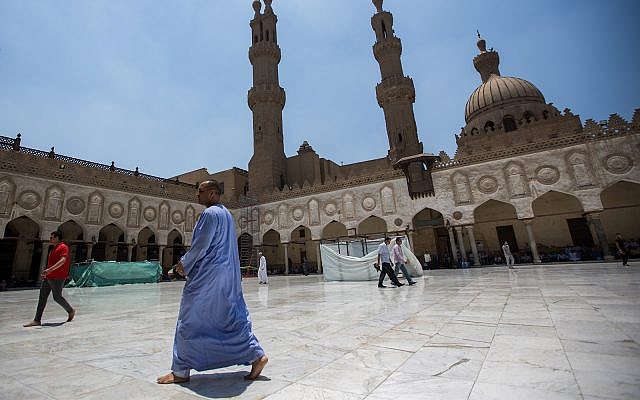
In 1943, he was dispatched by the Syrian Ministry of Education to the Al-Azhar Mosque in Egypt to complete his studies of tajwid. Upon his return, and on the eve of Syria’s independence from France in 1946, he was the first muqri’ (master reader and teacher of the Qur’an) whose voice was transmitted on the Syrian radio waves.
Saleh, like many of his age and in his circles, was active in the popular movements of national liberation.
Tala Jarjour
Saleh was a virtuoso in all senses of the word. His singing showcased highly developed technique and a masterful command of his instrument. His clarity of voice was only matched by an ability to maintain stylistic distinction. That was the case in his secular as well as in his sacred performances. His voice can be heard in a number of extant recordings, which include supplications and adhkar (plural dhikr, the religious mention of God and Prophet Muhammad), as well as Qur’anic recitations.
That he managed to move seamlessly between seemingly contrasting forms of song and diverging styles of vocal performance speaks not only of Saleh’s extraordinary talent, but also of the reception afforded to a male artist’s apparent oscillation between the sacred and the secular in the Arabic-speaking world of the 20th century.
- Tala Jarjour is author of “Sense and Sadness: Syriac Chant in Aleppo” (OUP, 2018). She is currently Visiting Research Fellow at King’s College London and Associate Fellow of Pierson College at Yale.


