- Palestinian confectioner has been serving up traditional Middle Eastern desserts to residents of Jeddah for decades
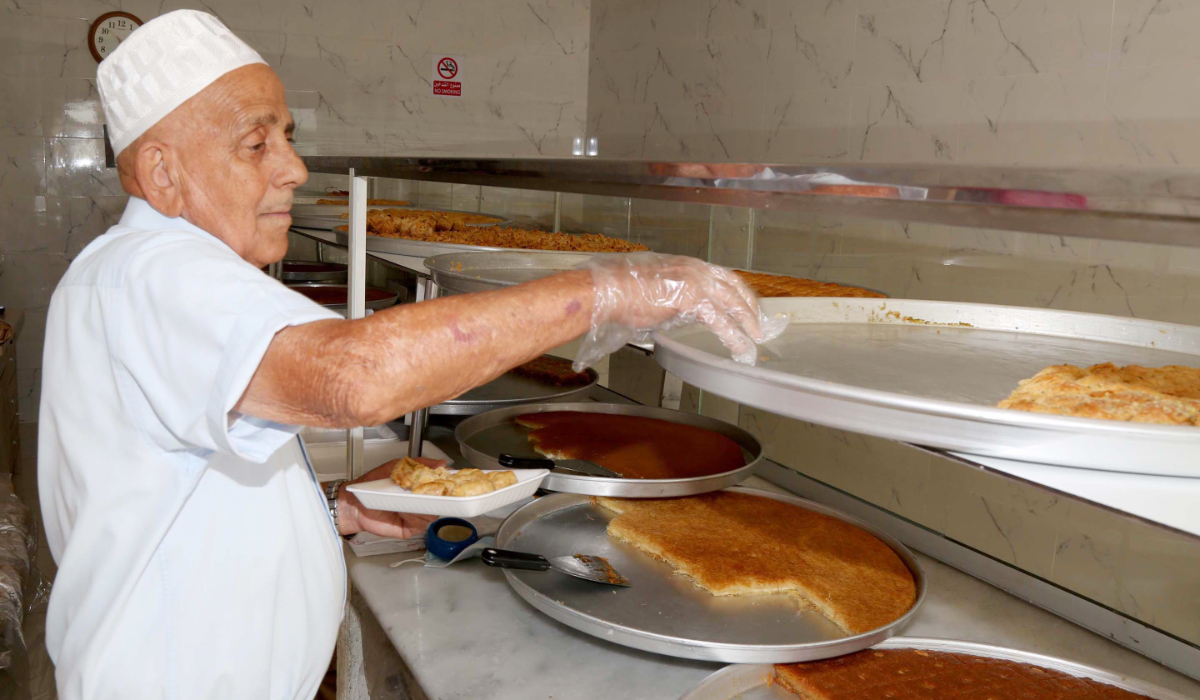
JEDDAH: Palestinian confectioner Fareed Khalid Al-Hattab has been making delicious Middle Eastern desserts, such as kunafa, basbousa and qatayef, for the people of Jeddah for more than half a century.
Such sweet treats are particularly popular during Ramadan; when families and friends get together in the evenings to break their fast at iftar, traditional desserts — which are often served with gahwa, or Arabic coffee — are a highlight for many people.
“During the holy month I make sure to offer two main options: banana-stuffed kunafa and qatayef,” said Al-Hattab.
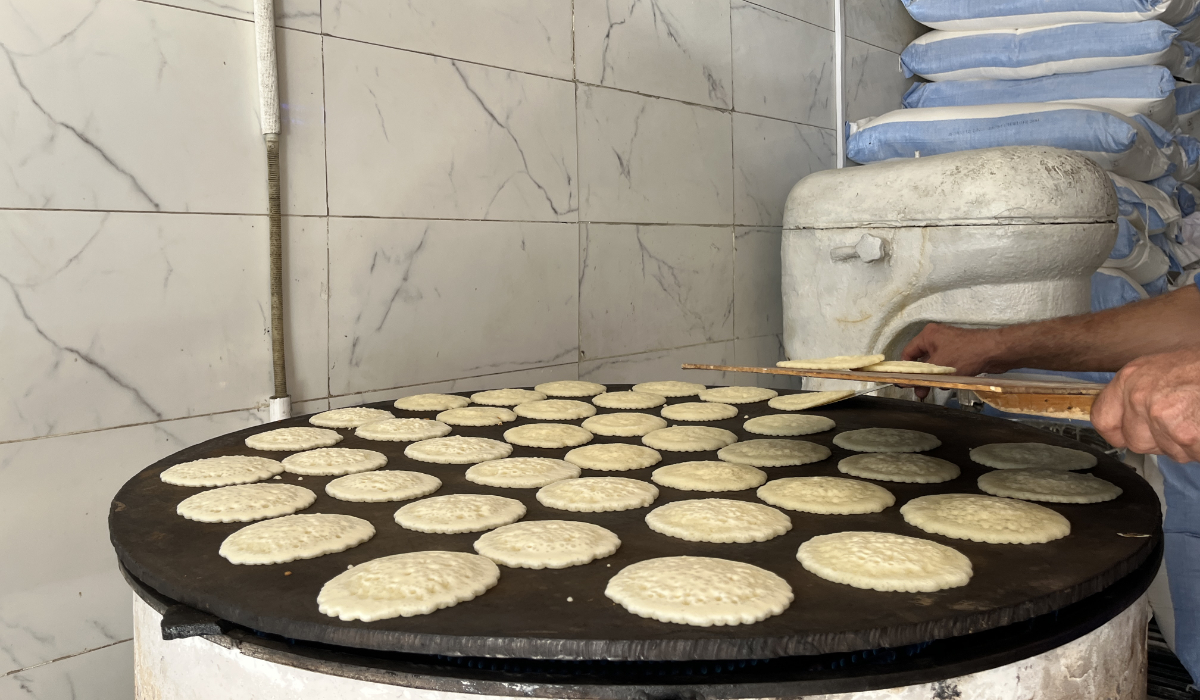
Qatayef is a dessert that comes in may forms. It is prepared on a griddle, like a pancake, from a batter that contains yeast. It is then stuffed with one of a variety of fillings before being baked or fried, after which it is dunked in a thick sugar syrup.
The end result is crunchy, creamy, sweet and tempting. Every Ramadan there are qatayef kiosks in front of Al-Hattab’s shop, Demasi Kunafa, where his employees constantly prepare fresh batches of the sweet for the long queues of customers. It us commonly served after Taraweeh prayers as a post-iftar treat.
Al-Hattab said two types of qatayef are particularly popular at his shop. For the first, the crescent moon-shaped pastry is filled with nuts, cream or cheese and dipped in syrup. The second, called “asafir qatayef,” is served only partly prepared so that customers can add the fillings of their choice.
“I make 600 kilograms of raw qatayef daily during Ramadan,” he added.
Al-Hattab moved to Jeddah from Beersheba — the largest and oldest city in Palestine, located 70 kilometers west of Jerusalem — when he was 14 years old. He inherited Demasi Kunafa from his father-in-law in 1970 and moved it to Al-Kandra, one of the city’s oldest neighborhoods.
“Demasi was among the very few confectioners in the area; there were none at that time that’s why we gained this huge popularity in Saudi Arabia,” he said. “My Saudi customers used to come all the way from Taif, Riyadh, Alkhobar and Qatar.”
The shop built a reputation for the quality of its products, in particular basbousa, and kunafa with cheese, cream and walnuts.
“People love the authentic, traditional and ancient sweets … and this is how I choose to reflect my culture, through the things we eat and admire,” said Al-Hattab.
“After spending a few years in the country, we found out about turamba and it also became another bestseller for our shop.”
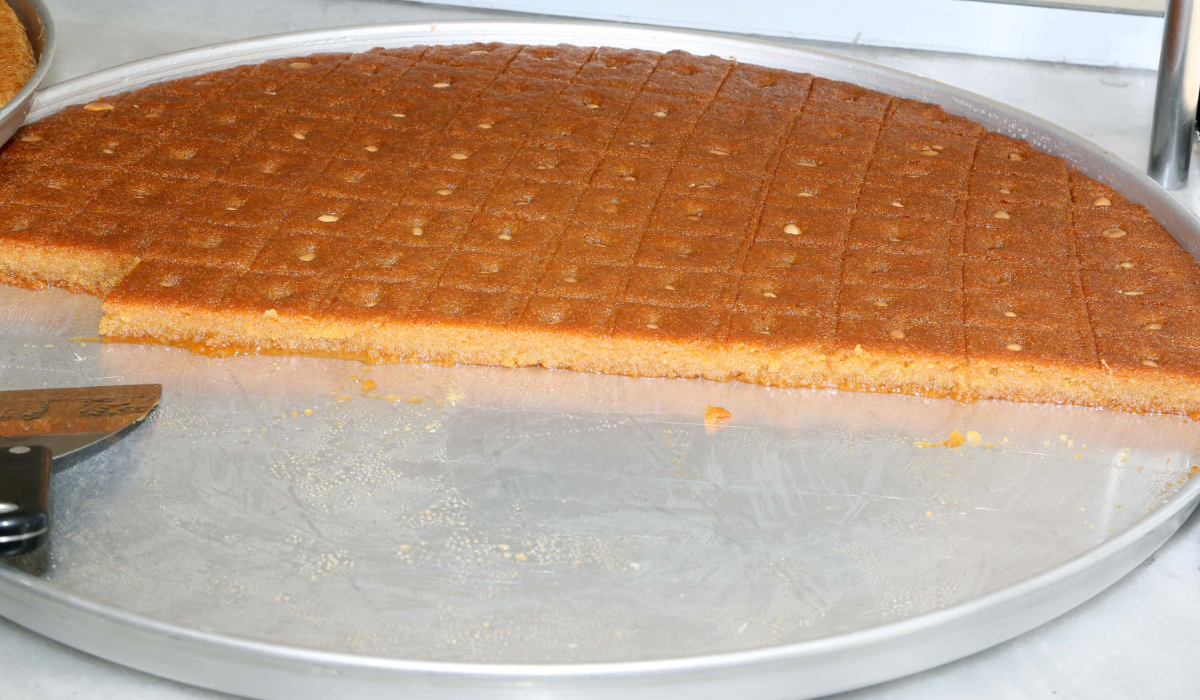
Turamba is a deep-fried dessert, similar to a churro, that comes in various sizes. It’s origins are believed to lie in Ottoman cuisine. Basbousa, which originated in Egypt, is a soft, semolina cake soaked in syrup.
Demasi now sells more than 16 types of sweets including, of course, the ever-popular kunafa from which the shop takes its name. This dessert, which is believed to have originated in Nablus, Palestine, is made from phyllo pastry, is round like a pie, and is typically layered with a filling, such as cheese or nuts. It is best served hot.
The shop offers two varieties: Kunafa khishneh, which is topped with crunchy pastry made from shredded phyllo dough, and kunafa na’ameh, which is garnished with a ground semolina dough known as farkeh. Both types are filled with fresh cream or cheese.
The exterior of a good kunafa is crunchy and the interior gooey. Achieving the perfect consistency for a cheese variety, for example, depends on using just the right amount of the right types of cheese.
Al-Hattab said that he uses “desalted akkawi and Nabulsi cheese that I make sure to bring all the way from my homeland.”
Another signature dish, which originated in the Gaza Strip, is kunafa Arabi, which is considered a healthier option than the regular kunafa because it is made from bulgur, walnut, cinnamon and pistachio.
“I am so happy to introduce these authentic types of desserts to my customers and they love them,” he said. “I love Saudi Arabia and … I will be always grateful for this country.”
After almost five decades in Al-Kandra, Demasi Kunafa moved to Umm Al-Qura street in the Rehab district, when its former home “was demolished” as part of Jeddah’s development.
“(In the old days) all my customers were Saudis,” said Al-Hattab. “They used to come from all of Jeddah’s districts to enjoy our authentic sweets. The city had a very small number of residents at the time. But today, the situation is different; I have customers of all nationalities.”
Al-Hattab uses traditional recipes passed down through the generations but the methods used to prepare them have changed a lot over the years.
“I started out making kunafa khishneh on a coal stove and a copper plate, and that is how I acquired the skill, as I started learning the hard way before all the modern technology — everything was manual,” he said.
“Back then we used to sell 1 kilogram of raw kishneh for only SR2 ($0.50) and we were just a kiosk … then we developed into a whole shop and factory, gradually.”
Nowadays, as the costs of the basic ingredients used to make kunafa, such as flour, semolina, oil, sugar, ghee and nuts, have risen, so too have the prices of the desserts, and 1 kg of raw kunafa currently costs SR60.
Demasi is now one of the main distributors and suppliers of desserts to events venues, halls, hotels, and hospitals in Jeddah and Makkah.
“We have been distributing to five-star hotels and government hospitals for so many years, including Intercontinental and Albilad hotels, as well as to King Fahad General Hospital and King Abdulaziz Medical City and more,” Al-Hattab adds with pride.