



ISLAMABAD: At least 15 people in Pakistan’s most populous Punjab province lost their lives in floods, officials confirmed late Wednesday night, after three monsoon-swollen rivers continued to surge downstream from India while the southern Sindh province braced for inundation amid forecasts of more rains.
Torrential downpours influenced by climate change have killed at least 805 people and injured 1,107 since the season began on June 26, according to the National Disaster Management Authority (NDMA). The highest death toll has been reported in the northwestern Khyber Pakhtunkhwa province, where 479 people have died and 347 have been injured.
The Pakistan army has expanded rescue and relief operations in Punjab, where heavy rains and excess river waters from India in the Sutlej, Chenab and Ravi rivers have created an alarming situation.
“According to the commissioner of Gujranwala and Gujrat division, 15 people have died in the floods, including five from one family in Sialkot’s Sambrial, four in Gujrat, three in Narowal, two in Hafizabad and one in Gujranwala,” said the provincial information department.
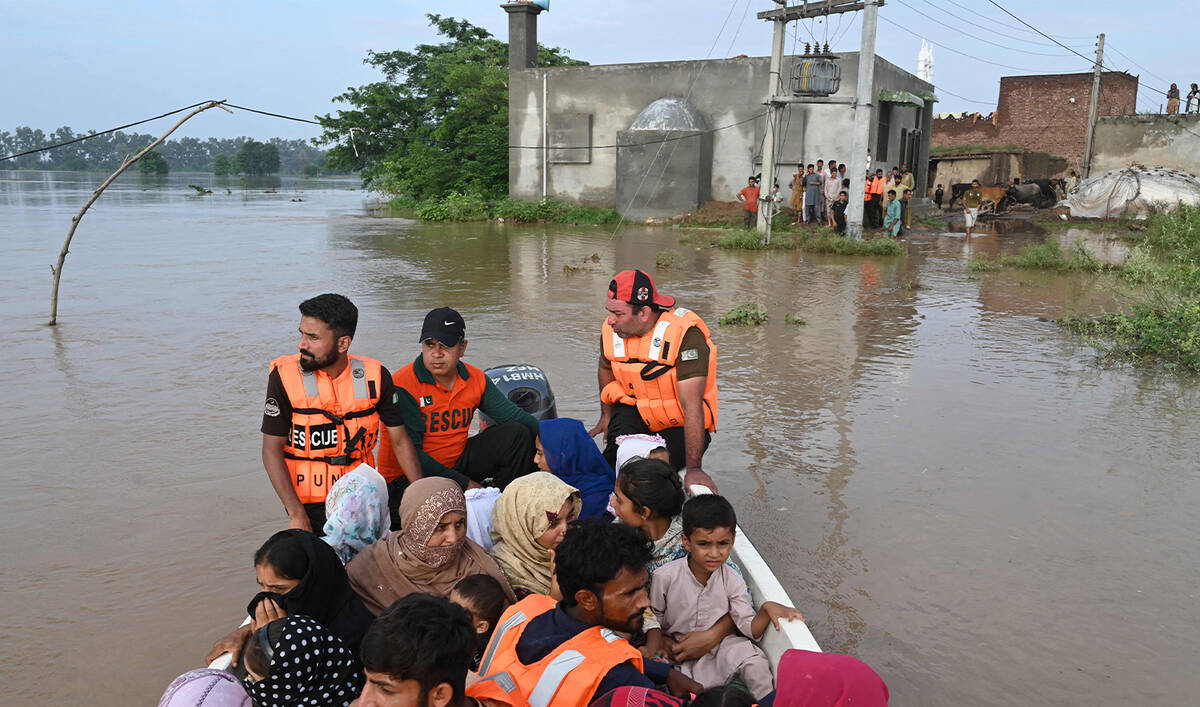
Rescuers in a small boat transport residents from the flooded area of Narowal, a town of Punjab province, on August 27, 2025. (AFP)
Reuters reported Wednesday India had opened all gates of major dams on rivers in its part of the Kashmir region following heavy rains, and warned neighboring Pakistan of the possibility of downstream flooding.
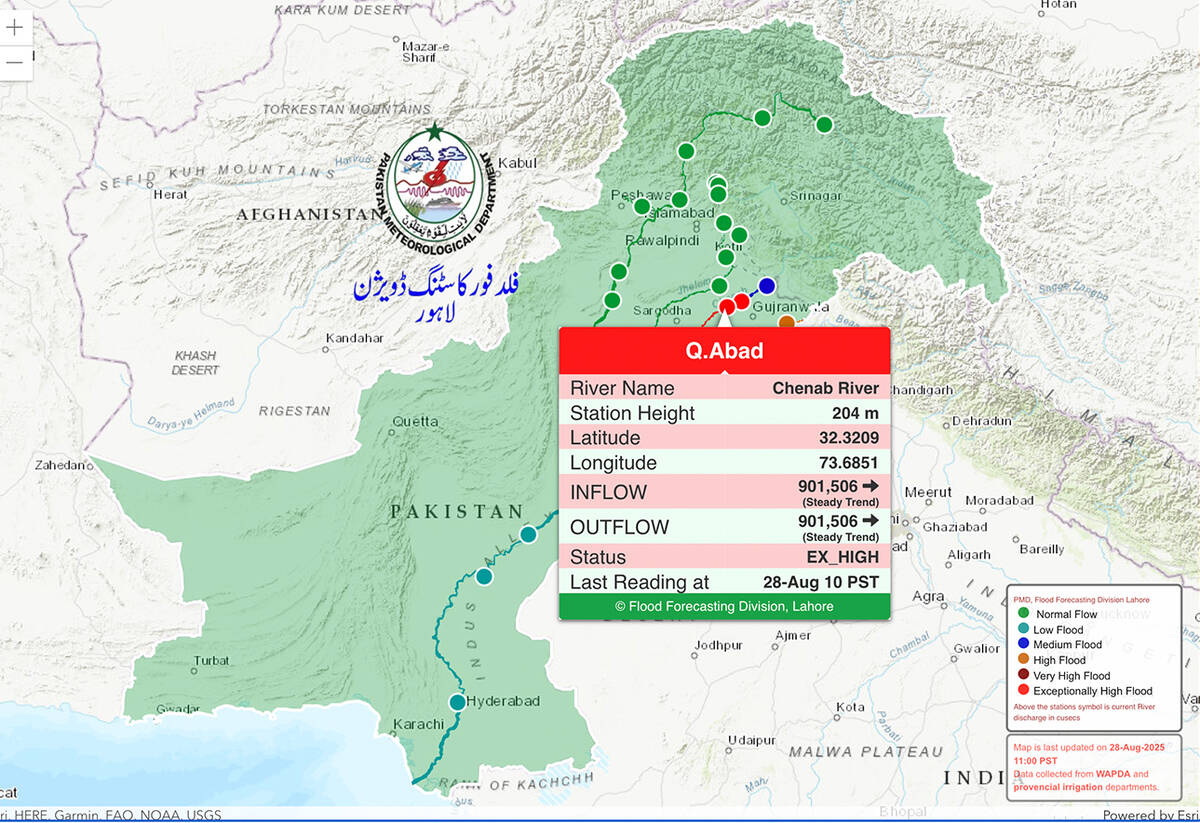
Authorities issued alerts for the Qadirabad headworks in Mandi Bahauddin last night, warning of a potential breach that could inundate Hafizabad and Chiniot.
“Deputy commissioners have been instructed to evacuate citizens from these areas,” said Punjab Provincial Disaster Management Authority (PDMA) Director General Irfan Ali Kathia.

Residents wade through a flooded street after torrential rains on the outskirts of Wazirabad, Pakistan, on Aug. 27, 2025. (AP)
By 7:30 a.m. Thursday, the provincial information department reported inflows and outflows of 996,660 cusecs at Qadirabad.
The Punjab PDMA also reported extremely high flood levels in the Ravi River at Shahdara, where water flow reached 148,000 cusecs early Thursday, with projections of further increase in the next 12 hours.
At Jassar, flows of 166,000 cusecs were recorded, while Balloki headworks faced medium-level flooding with 93,000 cusecs.
The provincial disaster agency has appealed to citizens to take precautions and cooperate with the administration.
The situation, which has so far battered central Punjab districts, is expected to spread to the province’s south and into Sindh.
The NDMA on Wednesday warned Sindh’s PDMA to evacuate residents from riverine and low-lying areas along the Indus River and its tributaries.
“The NDMA has issued this advisory in view of the exceptionally high and very high flood levels being recorded at upstream locations in Rivers Chenab, Ravi and Sutlej,” Radio Pakistan reported. “It is anticipated these floodwaters will ultimately contribute to rising flows in the River Indus.”
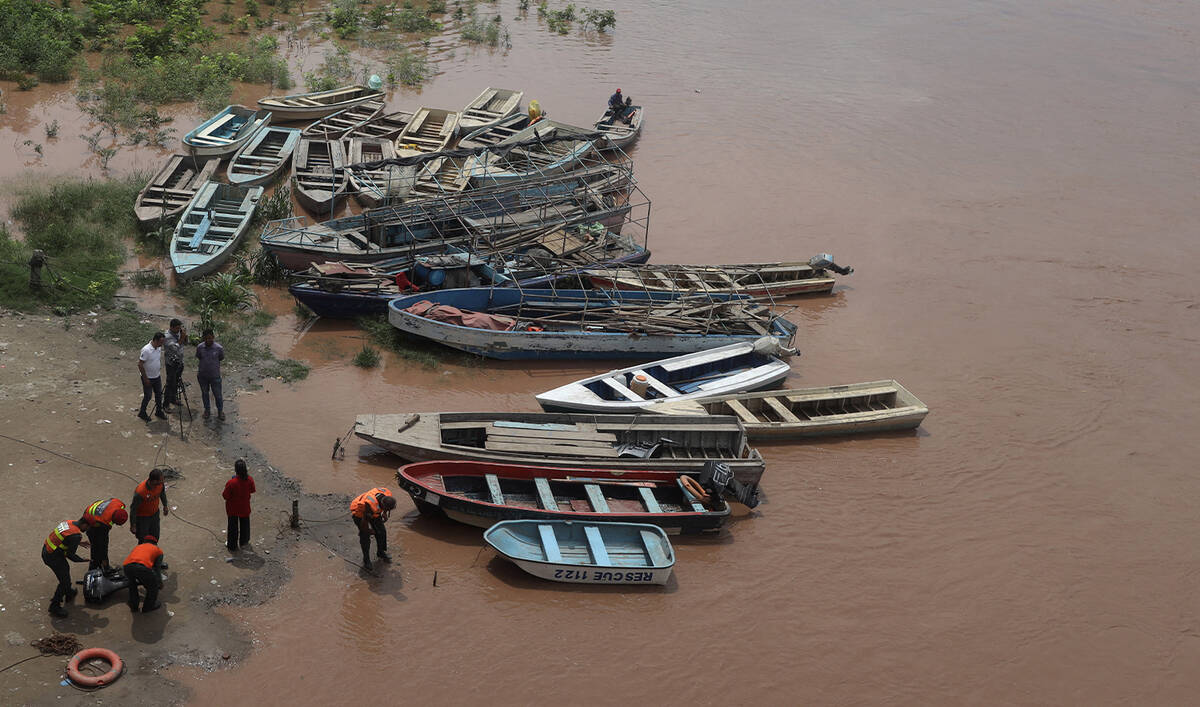
Rescuers ready boats on the banks of the Ravi river, following flood alerts after India opened the gates of major dams on rivers in its part of Kashmir after heavy rain, in Lahore, Pakistan, on August 27, 2025. (REUTERS)
Following the warning, Sindh’s chief minister’s secretariat appointed several ministers as focal persons to monitor threats in Guddu, Sukkur and Kotri.
Provincial legislators along the Indus have been directed to remain in their constituencies for at least a week.
Meanwhile, the Pakistan Meteorological Department (PMD) has forecast fresh monsoon rains from Aug. 29 to Sept. 2 across the country’s upper and central parts, warning of flash floods in Azad Kashmir, Murree, Galliyat, Rawalpindi, Islamabad, upper Khyber Pakhtunkhwa and northeastern Punjab.
Flight operations at Sialkot International Airport were suspended until 10 p.m. Thursday due to flooding, after the city recorded 405 millimeters of rain this week that paralyzed urban life.
Prime Minister Shehbaz Sharif also took an aerial view of flood-affected areas of Punjab on Thursday, with the top NDMA official, Lt. Gen. Inam Haider, giving him a detailed briefing on the overall flood situation in the country.
The prime minister issued instructions to take all necessary measures for protection against floods and for relief operations, according to a statement released by his office.





