- Syria and Israel have technically been at war since 1948, but the state of play between the two countries has shifted dramatically since Islamist-led forces toppled longtime ruler Bashar Assad in December.
- Israel has deployed troops in a UN patrolled buffer zone on the Golan Heights, launched hundreds of air strikes on targets in Syria and carried out incursions deeper into the south
KHAN ARNABAH: Rubble and Hebrew graffiti mark Israel’s presence in Syria’s Quneitra province, where people accuse the southern neighbor’s troops of demolitions, detentions and forced displacement — defying ongoing security talks between the two sides.
“Israeli forces entered under cover of darkness and demolished my house, along with 15 others, with a bulldozer,” said Mohammed Al-Ali.
“They turned them into rubble within a few hours,” said the 50-year-old from the southern town of Hamidiya.
Syria and Israel have technically been at war since 1948, but the state of play between the two countries has shifted dramatically since Islamist-led forces toppled longtime ruler Bashar Assad in December.
Israel has deployed troops in a UN-patrolled buffer zone on the Golan Heights, launched hundreds of air strikes on targets in Syria and carried out incursions deeper into the south.
These operations — denounced as illegal by Syria’s government and human rights groups — have continued even as both sides claim progress in direct talks toward a security agreement.
Ali, who works in Quneitra’s agriculture directorate, can no longer access his destroyed home, located next to a new Israeli military outpost.
“This land belongs to Syrians; there can be no peace until it is returned to us,” he said.
- Hebrew graffiti -
Hebrew graffiti can be seen on the walls inside Quneitra’s provincial courthouse, which Israeli forces occupied for weeks.
Some listed the soldiers’ schedules, while one inscription read: “My dear, I miss you.”
Destroyed homes — including Ali’s — are visible from the windows of the building.
Last week, Human Rights Watch accused Israeli forces of forcibly displacing residents of southern Syria in their operation, calling it a “war crime.”
The New York-based watchdog also said Israeli troops had “arbitrarily detained residents and transferred them to Israel.”
The Israeli military operates in a region patrolled by peacekeepers from the United Nations Disengagement Observer Force, which is tasked with monitoring the armistice.
Israel says it carries out strikes in Syria to prevent weapons from falling into the hands of the new authorities it considers jihadists or arch-foe Iran and its proxies.
Last month, Prime Minister Benjamin Netanyahu said Israel was engaged in talks to establish a demilitarised zone in Syria’s south.
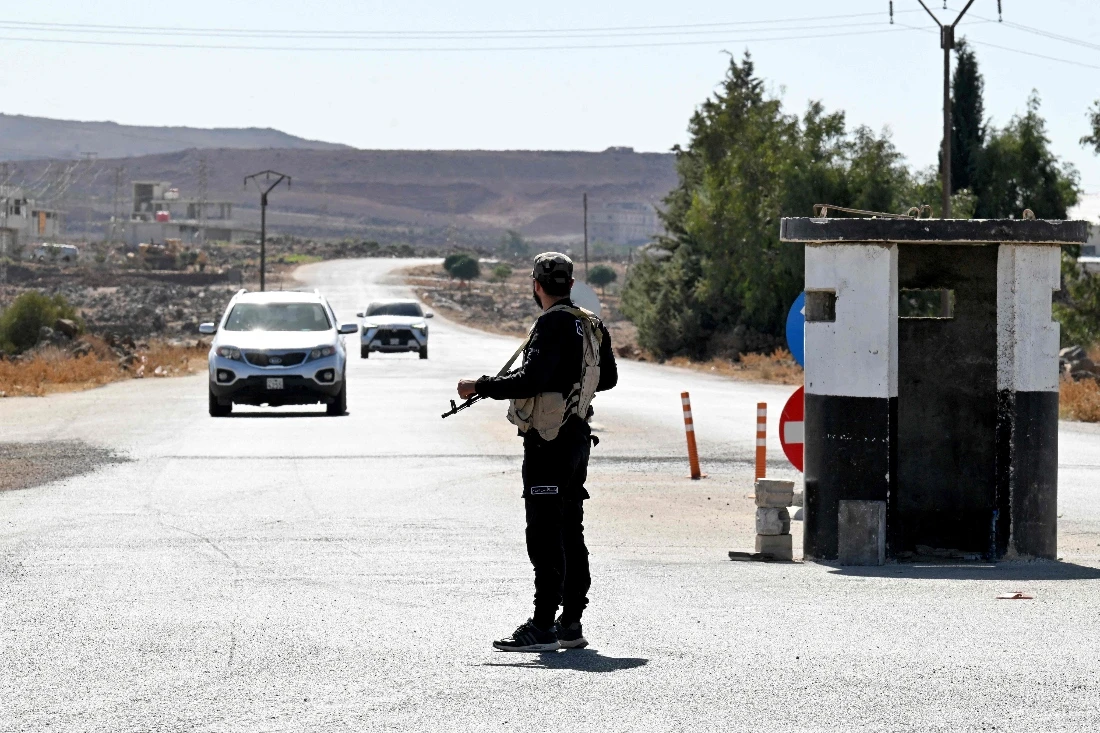
In the town of Khan Arnabah, 38-year-old Raafat Al-Khatib is on his motorcycle with his wife and son.
“We were terrified when we first saw Israeli soldiers... as they were stopping young men and checking their identification documents,” he said.
- ‘An enemy’ -
Ayman Zaytun, who runs a confectionery shop in the town, said sales have dropped significantly.
“The daily Israeli incursions are making people nervous... we just want to live in peace and safety,” he said.
“We demand that the government, which went to the United States to negotiate a security agreement, ensure the safety of the people,” he added, emphasising however that Israel “will remain an enemy until they leave our land.”
Syrian President Ahmed Al-Sharaa is in New York to speak at the United Nations General Assembly this week.
Syria and Israel are expected to finalize security and military agreements by the end of the year.
A Syrian military official said last week that government forces had pulled heavy weapons out of the area.
On the road linking Damascus to Quneitra, AFP journalists saw dozens of military positions abandoned or reduced to rubble by air strikes.
They also saw destroyed tanks, damaged military vehicles and burned-out trucks.
“Only the internal security forces are present in Quneitra,” said a Syrian security source who spoke on condition of anonymity.
“The army has withdrawn all its heavy weapons, and there is no representative of the defense ministry here.”
Syrian forces have refrained from retaliating against Israeli attacks since December.
“After 14 years of war and destruction, people are prioritising security and stability above all else,” said Mohammad Al-Said, an official in Quneitra’s provincial government.
Israel has occupied Syria’s Golan Heights, part of Quneitra governorate, since 1967, annexing it in 1981 in a move not recognized by the international community.
Quneitra city, occupied by Israel from 1967 to 1974, has been in ruins since then.
“Peace means ending the state of war, not normalization,” added Said.