- Joint action ‘essential,’ says KSrelief’s Dr. Abdullah Al-Rabeeah
- EU’s Hadja Lahbib emphasizes 305m people need urgent help
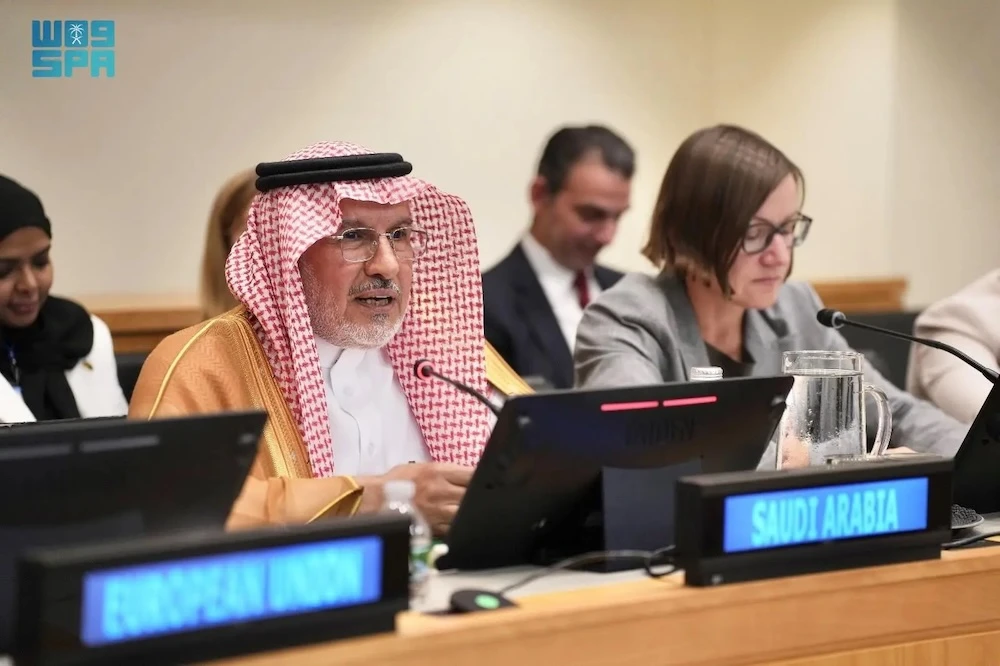
NEW YORK: Saudi Arabia’s aid agency KSrelief co-hosted a high-level ministerial panel at the UN headquarters this week on the worsening humanitarian crises in the Middle East and Sudan.
KSrelief hosted the event, titled “Humanitarian Diplomacy in Action: Collective Response to the Crises in the Middle East,” with the EU and the UN Office for the Coordination of Humanitarian Affairs.
International leaders, experts, and officials from humanitarian organizations discussed ways to deliver lifesaving assistance to millions facing violence, hunger, and limited access to basic services in Gaza, the West Bank, Syria, Yemen, and Sudan.
Participants included the UN World Food Programme, the Norwegian Refugee Council, and the International Committee of the Red Crescent.
Discussions highlighted the urgent need to overcome political and administrative barriers, support frontline aid workers, and secure flexible funding for relief.
The panel focused on how diplomatic efforts could open access, protect civilians, and ensure aid reaches those most in need.
Dr. Abdullah Al-Rabeeah, adviser at the royal court and general supervisor of KSrelief, said: “In times of crisis, humanitarian diplomacy is essential to breaking down barriers and saving lives.
“We must work together, using every tool at our disposal, to reach those who rely on our help. Through partnership and determination, we can bring hope and dignity back to people across the region.”
European Commissioner for Equality, Preparedness and Crisis Management Hadja Lahbib emphasized the scale of the challenge.
“We remain steadfast in our efforts to alleviate the suffering of the most vulnerable around the world. Over 305 million people need humanitarian assistance.
“The humanitarian disasters in Gaza, Syria, Yemen, and Sudan are a stark reminder that much more needs to be done, by all of us, to help civilians suffering the effects of brutal conflicts,” she said.
“Funding itself is not the solution: adequate funding is necessary but so is ensuring effective delivery to the vulnerable. Humanitarians must be allowed to do their work everywhere — this is an imperative of international humanitarian law, and an imperative of our shared humanity.”
Cindy McCain, executive director of the WFP, warned of escalating risks. “With famine gripping Gaza and Sudan, and UN teams arbitrarily detained in Yemen, humanitarians are facing unprecedented risks and challenges as they carry out their lifesaving work.
“We urgently need global leaders to uphold the right to safety and protection for all aid workers, and the obligation on all parties to provide unimpeded humanitarian access.”
Joyce Msuya, assistant secretary-general for humanitarian affairs and deputy emergency relief coordinator at OCHA, said: “Humanitarian diplomacy can secure humanitarian space and yield real, lifesaving outcomes for the people we serve.
“In the Middle East and in Sudan it is not just important — it is indispensable.”
The event closed with the participants resolving to push for practical solutions and more coordinated action to meet the urgent needs of millions across the region.