Jordanian and Palestinian officials affirm need to empower women and children
Jordanian and Palestinian officials affirm need to empower women and children/node/2617982/middle-east
Jordanian and Palestinian officials affirm need to empower women and children
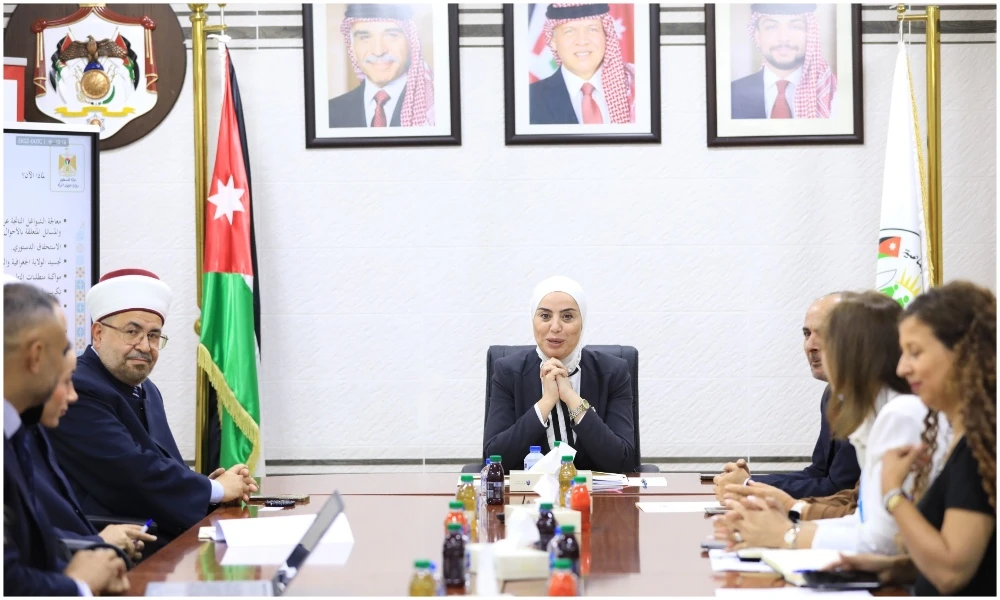
Jordan’s minister of social development, Wafa Bani Mustafa, chaired the meeting with Maher Khudair, the chief justice of the Palestinian Supreme Shariah Court. (Petra)
Jordanian and Palestinian officials affirm need to empower women and children
They also call for sharing of expertise related to social development, specifically on issues such as family welfare, child protection and care of the elderly
Jordanian minister stresses King Abdullah’s steadfast efforts to end the aggression on Gaza
Updated 06 October 2025
Arab News
LONDON: Jordan’s minister of social development, Wafa Bani Mustafa, emphasized the importance of empowering women and children, during talks in Amman on Monday with Maher Khudair, the chief justice of the Palestinian Supreme Shariah Court.
The minister also called for the sharing of expertise between the authorities relating to social development, specifically on topics such as family welfare, child protection, care of the elderly, and the empowerment of women. She noted the similarities between the Jordanian and Palestinian legal frameworks relating to such issues, in particular those covering marriage, divorce, custody, inheritance and family relationships.
Khudair said it was also important to share knowledge about personal status legislation and judicial procedures, and affirmed Palestine’s commitment to the enhancement of cooperation with Jordan.
Bani Mustafa highlighted King Abdullah’s efforts to help end the Israeli aggression against Gaza, and his steadfast support for the Palestinian people in their quest for justice and independence, the Jordan News Agency reported.
New satellite images suggest ‘mass graves’ in Sudan’s El-Fasher
Yale researchers said in a report released Thursday, more than a week after mass killings were reported in the area
Updated 9 sec ago
AFP
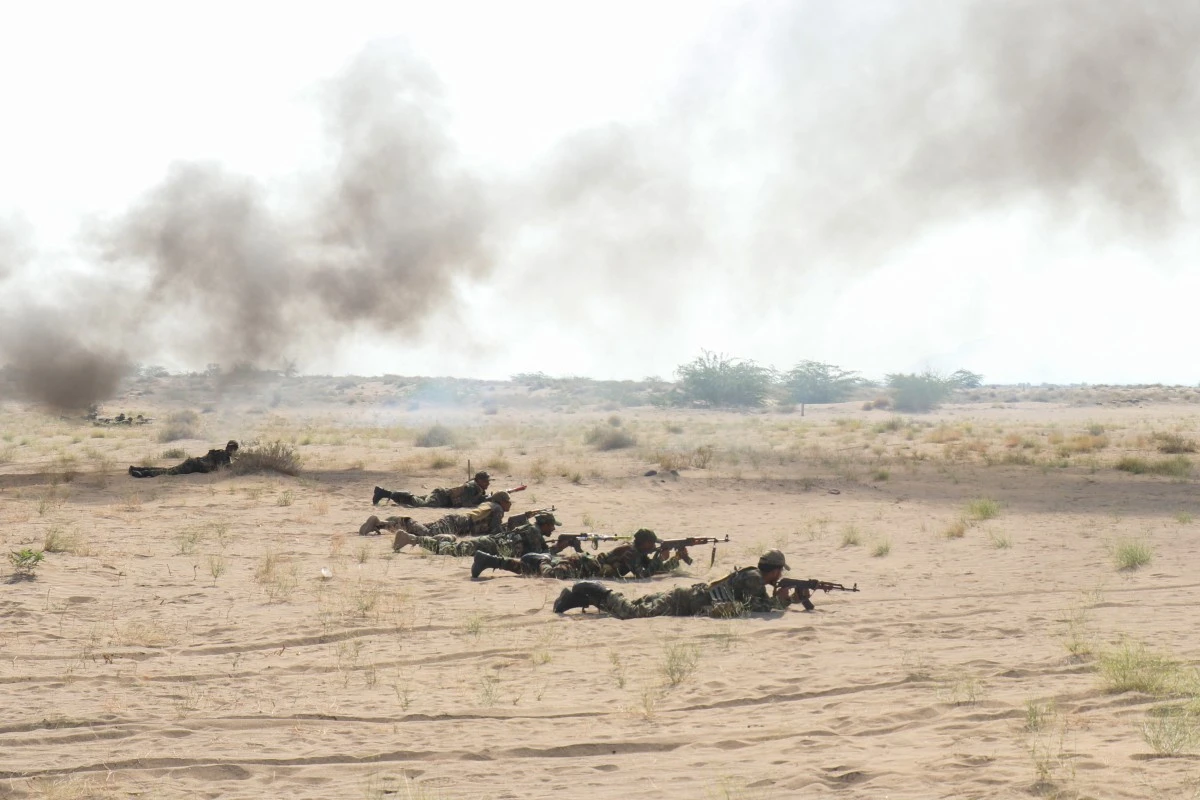
PORT SUDAN: New satellite imagery has detected activity “consistent with mass graves” in the Sudanese city of El-Fasher, Yale researchers said in a report released Thursday, more than a week after mass killings were reported in the area. On October 26, the paramilitary Rapid Support Forces (RSF), at war with Sudan’s army for more than two years, seized control of the key Darfur city they had besieged for nearly 18 months. Satellite imagery has since revealed evidence of door-to-door killings, mass graves, blood-stained areas, and bodies visible along an earthen berm — findings that match eyewitness accounts and videos posted online by the paramilitaries. In its Thursday report, Yale University’s Humanitarian Research Lab (HRL) said it found evidence consistent with “body disposal activities.” The report identified “at least two earth disturbances consistent with mass graves at a mosque and the former Children’s Hospital.” It also noted the appearance of meters-long trenches, as well as the disappearance of clusters of objects consistent with bodies near the hospital, the mosque and other parts of the city — indicating that bodies deposited around those areas were later moved. “Body disposal or removal was also observed at Al-Saudi Hospital in satellite imagery,” the report said. The World Health Organization had reported the “tragic killing of more than 460 patients and medical staff” at that hospital during the city’s takeover. “It is not possible based on the dimensions of a potential mass grave to indicate the number of bodies that may be interred; this is because those conducting body disposal often layer bodies on top of each other,” the report added. Fresh imagery from around the former children’s hospital — which the RSF has since turned into a detention site — indicates the likelihood of “ongoing mass killing” in the area, the report said. Before El-Fasher’s fall, the HRL had observed only individual burials, consistent with traditional practices, in zones controlled by either the RSF, the Sudanese army, or their allies. The lab says it has identified “at least 34 object groups consistent with bodies visible in satellite imagery” since the city’s capture. “This is widely believed to be an underestimate of the overall scale of killing,” the report said. The conflict in Sudan, raging since April 2023, has pitted the forces of army chief Abdel Fattah Al-Burhan against those of his former deputy, RSF commander Mohammed Hamdan Dagalo. Violence has wracked the entire Darfur region, especially since the fall of El-Fasher, the army’s last stronghold in the area. Fighting has since spread to the Kordofan region, which remains under army control. With access blocked and communications severely disrupted, satellite imagery remains one of the the only means of monitoring the crisis unfolding across Sudan’s isolated regions.