Egypt, Italy sign cooperation agreement to advance biogas production

Egypt, Italy sign cooperation agreement to advance biogas production
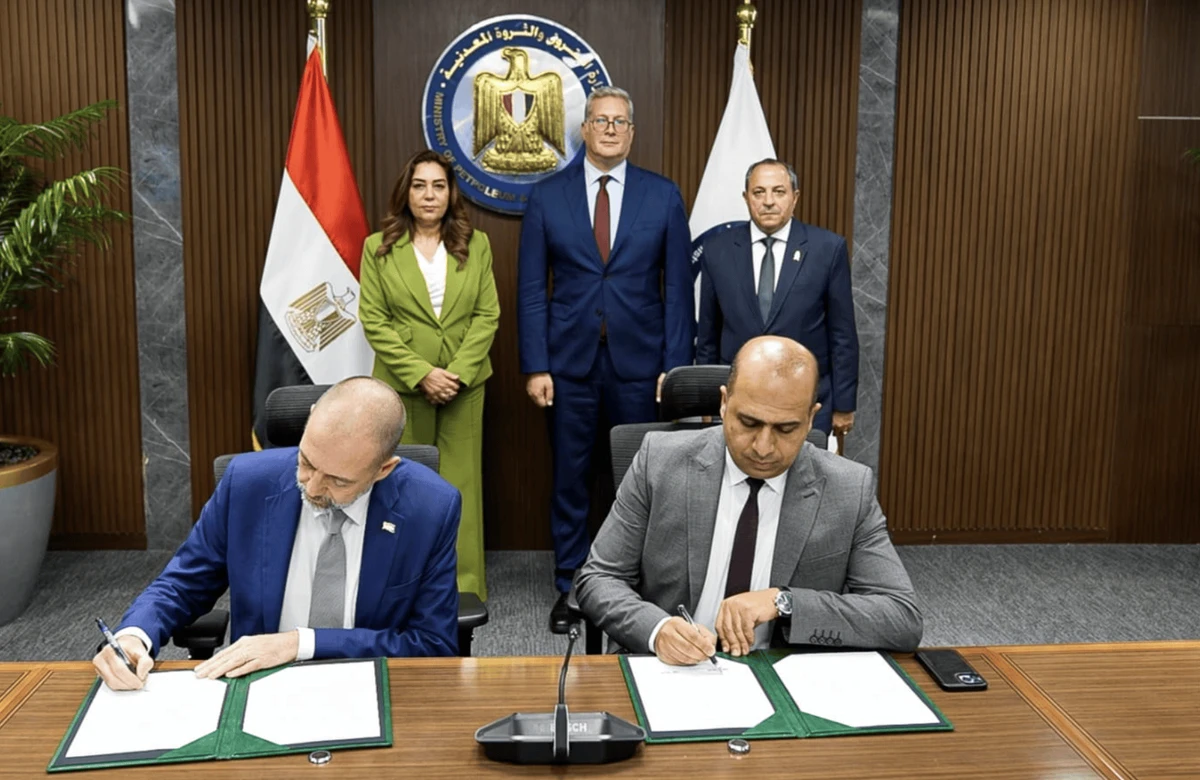
The signing ceremony was attended by Petroleum Minister Karim Badawi, Local Development Minister and Acting Environment Minister Manal Awad, and Port Said Governor Mohab Habashi Khalil. Facebook/Egyptian Cabinet
Short Url
Updated 28 October 2025
Follow

Egypt, Italy sign cooperation agreement to advance biogas production

Egypt, Italy sign cooperation agreement to advance biogas production

RIYADH: Egypt’s Ministry of Environment, through the Bioenergy Foundation for Sustainable Development, signed a cooperation agreement with Italian energy company Eni to advance biogas production and support the country’s clean energy transition.

The agreement, signed in Port Said, aims to prepare a comprehensive feasibility study for establishing biogas production units that process agricultural and animal waste, the Petroleum and Mineral Resources Ministry said in a statement. 

The signing ceremony was attended by Petroleum Minister Karim Badawi, Local Development Minister and Acting Environment Minister Manal Awad, and Port Said Governor Mohab Habashi Khalil. 

Representing the parties were Yasser Abdullah, chairman of the foundation’s board of trustees, and Andrea Marsanich, Eni’s carbon offset solutions manager. The event was also attended by Francesco Gaspari, managing director of AIOC, Eni’s Egyptian subsidiary. 

The initiative aligns with Eni’s €24 billion ($26.2 billion) regional investment plan in Algeria, Libya, and Egypt over the next four years, part of the Italian government’s Mattei Plan to strengthen economic and energy ties with Africa. 

In an official post, the Ministry of Petroleum and Mineral Resources, stated: “Karim Badawi, Minister of Petroleum and Mineral Resources, emphasized the importance of utilizing this advanced technology in all governorates of the republic.” 

It added: “He noted that the petroleum sector is ready to provide all necessary support and contribute effectively to the implementation of sustainable development projects, most notably biogas units, through sector companies spread across the country in cooperation with foreign petroleum companies operating in Egypt.” 

Badawi added that this support forms an integral part of the sector’s corporate social responsibility toward communities near petroleum operations, aiming to promote local development and improve resource efficiency. 

Awad said the agreement reflects Egypt’s push to expand public–private partnerships and international cooperation to promote biogas technology, reduce emissions, and generate sustainable energy from agricultural and animal waste. 

She also emphasized plans to replicate the model in governorates with high organic waste volumes under Egypt’s National Agricultural Waste Strategy. 

The foundation, established in 2015 in cooperation with the UN Development Programme, operates under the supervision of the Ministry of Social Solidarity. It supports biogas technologies through technical assistance and pilot projects across Egypt. 

Saudi Arabia’s non-oil sector posts strong growth as PMI hits 60.2 

Saudi Arabia’s non-oil sector posts strong growth as PMI hits 60.2 
Updated 8 sec ago
Follow

Saudi Arabia’s non-oil sector posts strong growth as PMI hits 60.2 

Saudi Arabia’s non-oil sector posts strong growth as PMI hits 60.2 

RIYADH: Saudi Arabia’s non-oil economy accelerated in October, with the Purchasing Managers’ Index climbing to 60.2, its second-highest level in more than a decade, signaling strong business growth momentum. 

The latest survey by Riyad Bank and S&P Global showed a sharp improvement in operating conditions across the Kingdom’s private sector, underpinned by solid demand, rising employment, and robust output growth.  

The October reading, up from 57.8 in September, highlights the sustained momentum of the non-oil economy as Vision 2030 reforms continue to drive diversification away from crude revenues. 

Speaking at the Future Investment Initiative in October, Saudi Arabia’s Minister of Economy and Planning Faisal Alibrahim said the Kingdom’s gross domestic product is expected to expand by 5.1 percent in 2025, supported by continued growth in non-oil activities. 

Commenting on the latest report, Naif Al-Ghaith, chief economist at Riyad Bank, said: “Saudi Arabia’s non-oil private sector recorded a solid improvement in business conditions in October, with the PMI rising to 60.2, marking one of the strongest readings in over a decade.”  

He added: “The acceleration was driven by broad-based gains in output, new orders, and employment, reflecting sustained demand momentum and continued strength in the non-oil economy.”  

Al-Ghaith noted that the latest survey results also indicate a strong start to the final quarter of the year, supported by both domestic and external demand. 

According to the report, the pace of growth in new orders received by non-oil companies accelerated for the third consecutive month in October, with 48 percent of surveyed firms reporting higher sales. 

Participating companies attributed the sales growth to improving economic conditions, a growing client base, and increased foreign investment. 

Output and employment also expanded sharply during the month, with job creation rising at the fastest pace in nearly 16 years.

Al-Ghaith said the persistent rise in new export orders highlights the growing competitiveness of Saudi firms and the progress achieved under ongoing diversification initiatives. 

“The rise in demand encouraged firms to expand production and workforce capacity at the fastest rate since 2009, as businesses expanded capacity to meet new workloads. Purchasing activity and inventories also increased, while suppliers’ delivery times continued to improve, reflecting efficient coordination and resilient supply chains,” he added.  

October data indicated a sharp rise in input costs for non-oil firms, driven mainly by wage increases from salary revisions and bonuses. 

On the outlook, companies remained optimistic, citing strong market demand, ongoing project work, and government investment initiatives. 

“Optimism is underpinned by solid domestic demand and the momentum of ongoing projects. Although some concerns persist around costs and competition, sentiment overall remains strongly positive, reflecting confidence in the economy’s continued expansion and the strength of the non-oil private sector,” concluded Al-Ghaith.