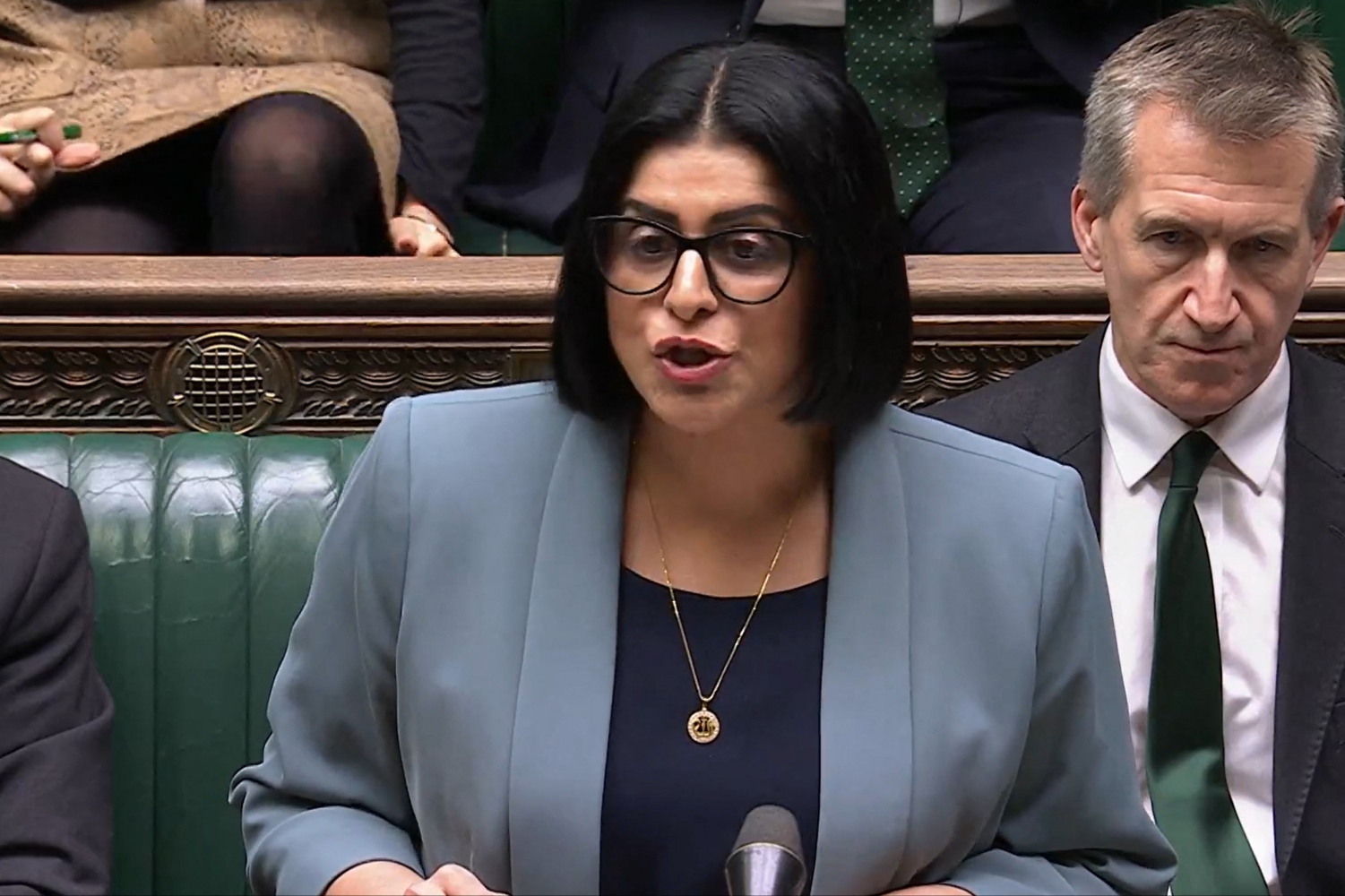

Maybe it will take the daughter of immigrants to save the government of Prime Minister Keir Starmer, as dark forces are stirring up anger in the UK and dividing communities amid a buckling and very expensive asylum system.
Ask many people in Britain — including those hailing from a migrant or refugee background, which are a large proportion of the UK population — and they tend to tell you that immigration has been out of control for a long time, with Brexit only exacerbating the problem.
So, Home Secretary Shabana Mahmood’s new proposals, unveiled this week, to solve the crisis and draw a line under the rise of the toxic anti-immigrant rhetoric used by the ultra-right as a vehicle to power, was inspired by Denmark’s controversial “zero-refugee” system. But the UK is not Denmark — it is highly multicultural and its population is more than 10 times the size.
To succeed, maybe Mahmood, whose parents hail from Kashmiri Pakistan, instead needs to overhaul a system that is both very generous and open to fraud, manipulation and exploitation. Without a long national conversation, including all parties and communities, and a painful and costly reform project, it is unlikely that any harsh new measures alone can stem the flow of illegal migration, while still serving a jobs market that has for years binged on cheap labor.
The far right is threatening to inflict a major defeat on the mainstream parties at next spring’s local elections
Mohamed Chebaro
When she unveiled her proposals, the home secretary seemed genuine in describing the problem and her willingness to go further to try to stem the waves of irregular migration that have fueled rising anger on the far right. The populist-right Reform UK party has, through its social media campaigns, infiltrated the heartlands of both Conservative and Labour, winning voters over on the basis of its anti-migration cause. It is threatening to inflict a major defeat on the mainstream parties at next spring’s local elections.
The new proposals go as far as threatening visa bans for anyone from countries that refuse to take back their citizens who have been refused permission to stay in the UK. The most sweeping reforms seen in modern times will also include giving refugees only temporary status, reviewed every 30 months. They could then be returned to their home country if it is deemed to be safe. Those staying the course and remaining in Britain will have to wait 20 years, instead of the current five, before they can apply for permanent residency.
On face value, it is fine to look at Mahmood’s plans and try to believe that the country has the means to deliver a leaner, simpler processing system that is free of legal and administrative stopgaps and holes.
Figures from the Home Office show that a record of more than 110,000 asylum applications were made in the 12 months to June. Small boat arrivals accounted for 88 percent of irregular arrivals over the same period, at 43,000. These 12 months also saw the UK grant more than 850,000 visas for “non-visit” reasons, such as to study or work, as well as family reunions and other special cases.
But a more thorough look could reveal the size of the task as Mahmood seeks to limit arrivals and speed up processing, while still providing safe routes for those in need and avenues to feed the labor market with the required skilled and unskilled workers. Those granted visas to work in the UK in good faith can also end up asking for help from the social security system, either due to changes in circumstances or to freeload on a system that has long been open to abuse.
It is all well and good to claim to want to tear up asylum seekers’ ‘golden ticket,’ but in practice the matter is more complex
Mohamed Chebaro
Those arriving on small boats, who have caused the political backlash, require millions of pounds annually to be housed in hotels or barracks while their applications to stay are processed. They seem to be the tranche of refugees most likely to “game the system.”
It is all well and good to claim to want to tear up asylum seekers’ “golden ticket” to the UK, but in practice the matter is more complex.
Since our world has opened up for trade and travel since the 1990s, many governments, especially in Europe, have found themselves on the receiving end of a growing crisis. They have to balance their country’s ever larger labor needs as the population ages, while at the same time ensuring that newcomers integrate and understand that they need to work and contribute in order to deserve social benefits, healthcare and a pension. In addition, of course, they seek to ward off new waves of weaponized migration, which target European countries as part of political and geostrategic conflicts.
For all the good intentions of Starmer’s desire to draw a line under a problem that has been bleeding his popularity and that of his government dry, Mahmood’s plan will put him at odds with his own Labour Party’s left-of-center MPs. They believe the proposals are radical, unfair and unjustified, as well as a desperate effort to beat the populists by being even more hard-line. At the same time, they fail to remedy the causes of their unpopularity.
Though some are likely to give Mahmood’s proposals the benefit of the doubt, hoping that someone whose parents were once migrants will know how to bring an end to a crisis that is dividing the country and distracting the government from dealing with more pressing adversities and challenges. But these proposals are also being seen as harsh and, if adopted, could take Labour away from its left-of-center political positioning and its politics of compassion — the reason many vote for it in the first place.
If this plan backfires, the government and the Labour Party could pay dearly for promoting a strange and dangerous platform, trying to outdo the populists, who themselves rely on slogans rather than the policies needed to reform the system and fix age-old problems.
- Mohamed Chebaro is a British-Lebanese journalist with more than 25 years’ experience covering war, terrorism, defense, current affairs and diplomacy.