
Almost in the blink of an eye, 2025 has gone and a new year is upon us. In an age when the next gadget arrives before we have even finished reading the manual of the last, it is easy to become enamored with tomorrow’s technologies and ideas. But progress without memory is like a ship without a compass, steaming ahead without any idea where it is heading. The building blocks of our individual and collective identities are recollections and relics that tell us who we are — and explain how we became that person or that community. Without such a foundation, young people can become unmoored from their roots in an age of relentless change and mobility.
Take, for instance, an old family photograph, possibly dog-eared at the corners. To a young viewer, it might seem like a simple image of a moment captured in the blink of an eye. But to those who know the background, the photo is much more than that. It could very well be a parent’s youth in black and white, a grandmother’s smile before age silenced it, a living room where generations gathered for meals and celebrations, or a reunion of relatives or friends who have long passed on. The photo is evidence that the individuals who posed for it not only existed but also loved, laughed and enjoyed life.
The Arab Image Foundation in Beirut has recognized the unique importance of such visual archives, collecting and preserving hundreds of thousands of photographs from across the Middle East and the Arab diaspora precisely because they document how people lived before such memories vanish forever. “The photographs, to which we are custodians, capture moments in time throughout Southwest Asia and North Africa, and its diasporas, that have been, and continue to be, threatened by erasure,” the foundation says on its website. “In this way, the ultimate importance of digitizing the physical archive is to safeguard, and inspire engagement with, the histories, narratives and lives these images hold.”
Heritage is not just some archaeological curiosity but a continuous chain of human experience passed from one generation to the next
Arnab Neil Sengupta
In Arabic culture, oral memory has always held a special place alongside the written word. Traditional storytellers have transported history across generations in cities like AlUla, recounting tales of old towns, poetic traditions and family rituals that otherwise might have disappeared into obscurity. Their voices show us that heritage is not just some archaeological curiosity but a continuous chain of human experience passed from one generation to the next down the centuries.
Our memories matter in a forgetful age. But preserving the past is much more than dusting old photo albums and occasionally checking the contents of the storage room. The right way to go about it is by revisiting letters written by a grandparent, the first school reports, a pair of sandals for a newborn tucked away in a closet, or emails that tell of incidents and accidents that have long since faded from memory. These items are important markers of family history, bearing information that may not be worth turning into a book or a movie but are meaningful and priceless all the same.
In the rush of progress, there is a risk of losing tangible objects to digital obscurity. Present and future generations might be tempted to believe that memories stored in a cloud are secure forever. But as most of us know firsthand, digital storage is not insulated from deterioration, obsolescence and even erasure. Better, then, to make the most of technological innovation by putting equal trust in physical history. This may require scanning old photographs and preserving fragile letters digitally, while also conserving the original objects in archival conditions or in a safe.
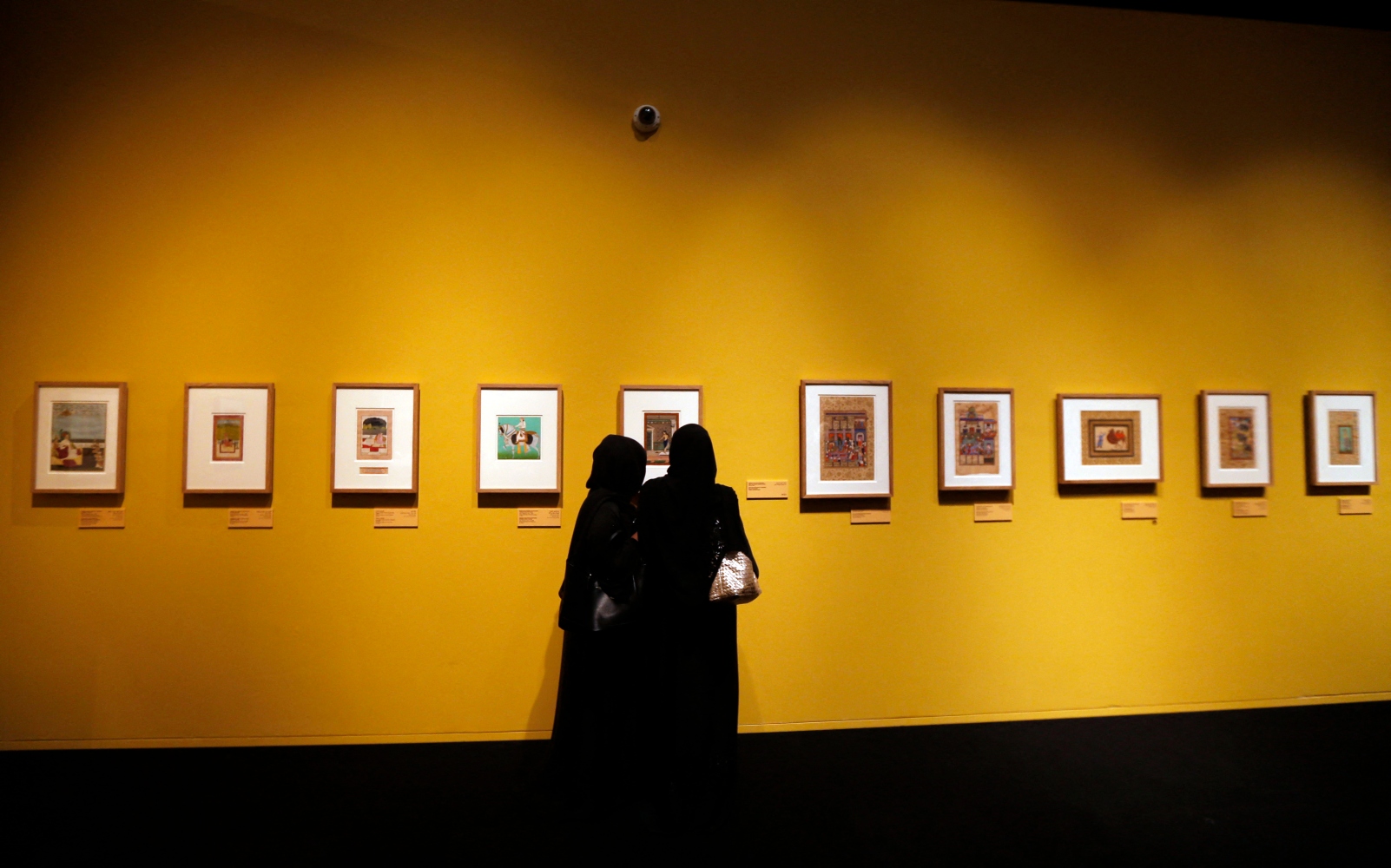
Government-led and private efforts in Gulf countries are proof of the ways forward-looking Arab societies cherish their heritage. Be they digital museums that make collective memories accessible or virtual heritage programs that enrich visitor experiences, there is a growing recognition that the past and the future can complement and enhance one another. Such initiatives are also a reminder that cultural continuity is not at odds with material progress and innovation. We need to hold on to who we essentially are in a digital world that moves too fast.
Societies must embrace new ways of viewing and interacting with the world without severing the ties that bind them to the past. The Middle East, with its ancient cities, rich traditions and layers of civilization, offers some of the most interesting examples of this vital balance. Rock engravings in AlUla, etched centuries ago into sandstone, still captivate visitors today, connecting ancient traders and pilgrims with contemporary observers in search of knowledge. To view these inscriptions as mere relics would be incorrect, for they are living links that continue to be discovered and appreciated by digital camera-toting Saudis.
Government-led and private efforts in Gulf countries are proof of the ways forward-looking Arab societies cherish their heritage
Arnab Neil Sengupta
Similarly, rescuing cultural artefacts from war-torn regions — as teams in Iraq, Syria and Palestine have done under immense pressure — is not just about saving objects of stone and clay. Those works pay homage to people who lived, learned skills, built, created and contributed to the world’s shared cultural heritage. Without that effort, the stories of a glorious past in each of these places would be at risk of being forgotten in the rubble of modern-day conflicts.
Finally, we must remember that, like charity, preservation begins at home. The Grundig tape recorder purchased in the 1950s, the Smith Corona typewriter received as a gift in the 1960s and the folders of emails preserved from the late 1990s are respective testaments to music once played, books once written and friendships once kept. History is not something that exists only beneath the ground in archaeological sites and on the walls and shelves of museums — it can also be found inside our own homes.
For our part, we can encourage elderly relatives to tell their stories, over the phone or face to face, and record them for posterity. We can preserve family photographs so that younger generations can appreciate their lineage and understand where they come from. Such habits will not just preserve memory but also teach them to honor the people they have lost, or will lose, with the passage of time.
To be sure, as individuals and as societies, we must constantly look ahead by innovating and embracing the future. But we have a duty to do so without losing the past, because what we will lose cannot be retrieved once it is gone. Through simple acts like preserving old photographs, the recollections of elders and the letters and memoirs of our lives, we can find personal anchors that reflect well on our upbringing, strengthen our convictions and shield our children and grandchildren from passing fads and ideologies. In this way, the past can become a source of identity, pride and wisdom.
- Arnab Neil Sengupta is a senior editor at Arab News. X: @arnabnsg