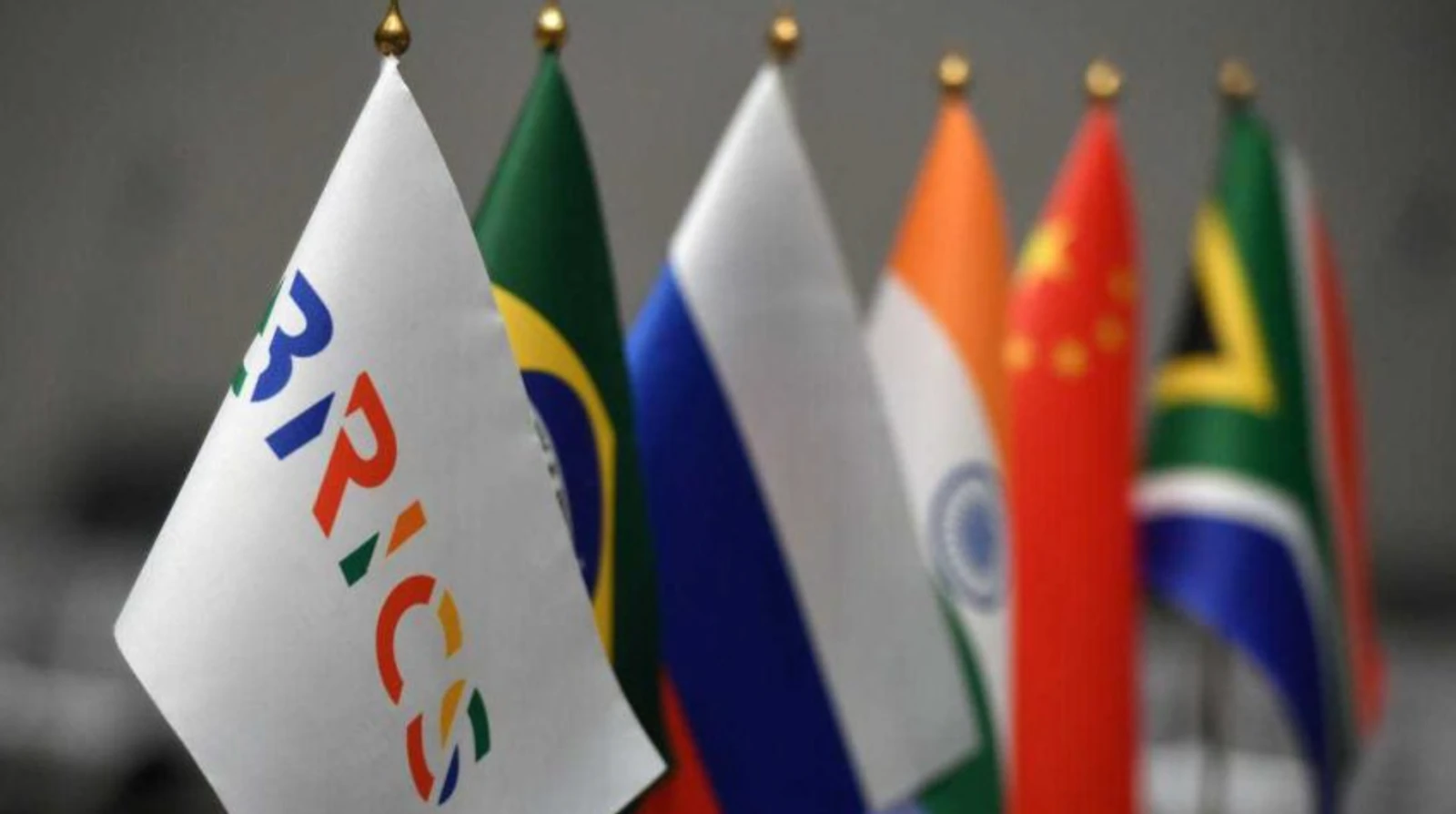
In recent years, the BRICS+ club of emerging economies has been seen to have some wind in its sails, with the expansion of its membership from five to 10 countries. However, its upcoming leadership summit on Sept. 12 and 13 might be one of the group’s toughest diplomatic challenges yet.
This is because the BRICS+ group is in a moment of major flux. While it is growing in geopolitical weight, with member states that now encompass over 20 percent of global land territory and more than a third of the world’s population, it also faces internal divisions. These divisions are driven not only by the expansion of the core membership but also by granting partnership status to 10 additional nations. Moreover, a greater number of countries have expressed interest in collaborating with the group.
Intrabloc tensions have been on display this year, especially differences over the conflict in the Middle East. This stems in part from the fact that one BRICS+ member, Iran, has used military force against another, the UAE, for the first time since the bloc was founded by Brazil, Russia, India, and China in 2009. In April, a BRICS+ meeting of deputy foreign ministers and special envoys ended without a joint statement, despite intensive diplomacy. This forced the chair of the meeting to issue a face-saving statement instead.
The BRICS+ club will hope to avoid such wrangles at the leadership summit, and issue a powerful declaration under the theme of “Building for Resilience, Innovation, Cooperation and Sustainability.” This is planned to focus on issues such as the effects of the Iran war, including disruptions to energy supply chains; sanctions and tariffs; and trade in national currencies among BRICS+ members. To this end, key leaders have already embarked on a round of shuttle diplomacy encompassing not only the BRICS+ event itself, but also the Shanghai Cooperation Organisation summit in Bishkek, Kyrgyzstan, on Aug. 31 and Sept. 1.
The pressure to deliver a successful leadership summit, despite all the challenges, is especially high after the high-profile diplomacy carried out in recent months by Pakistan (which is not involved in BRICS+) in hosting talks between the US and Iran. There are reasons for members to be hopeful that tensions related to the Iran war can be ameliorated in the coming days. Firstly, forums such as BRICS+ can sometimes offer a pathway for de-escalation. This was shown, for example, during the Shanghai Cooperation Organisation summit in 2020, which helped calm relations between India and China during their standoff at the time.
Intrabloc tensions have been on display this year, especially differences over the conflict in the Middle East.
Andrew Hammond
Secondly, a breakthrough might be enabled by the roll call of world leaders expected to attend the event. This includes Chinese and Russian Presidents Xi Jinping and Vladimir Putin as well as Indian Prime Minister Narendra Modi. Yet, even if a path to compromise on the Iran war can be found, the splinters within the BRICS+ club go far beyond that one burning issue. A deeper, more fundamental difference is over the future strategic posture of the bloc.
Some members, including China, Russia, and Iran, see BRICS+ as a strategic counterweight to Western influence. However, others, including India, view the group largely in economic terms, as a tool for the promotion of issue-based cooperation. A good example of the differences within this intrabloc schism is this issue of payment systems and efforts to build alternatives to the dollar in the global monetary system. As was recently argued by British peer Lord Jim O’Neill, the person who in 2001 originally coined the acronym BRIC, advances in payment technologies now mean the emerging market bloc could create an alternative financial system after decades of dollar dominance following the collapse in the 1970s of the 1944 Bretton Woods Agreement.
Certainly, some states, such as India, support the settlement of bilateral trade activity by members within BRICS+ in their own national currencies. However, they are not such strong advocates of the emerging “dedollarization” narrative or discussions about replacing the dollar-denominated international financial system, possibly with one based on the Chinese renminbi.
Last year, India’s Commerce Minister Piyush Goyal went so far as to say that “we have no plans. It is impossible to think of a BRICS+ currency.” New Delhi has been consistent in its messaging that the bloc should be complementary to existing structures, not an outright replacement.
In the early years after the formation of the original BRICS bloc, the tensions between these two positions were easier to reconcile. Now, there is less room for this amid a growing polarization in world politics, including the second-term US presidential agenda of Donald Trump and a growing push among some BRICS+ countries for greater distancing from the West.
So as the bloc’s leaders seek this month to paper over the cracks in their group caused by the Iran war, a fragile summit consensus might yet be brokered. However, there is a growing push to configure the bloc as a counter-hegemonic force at a time when international polarization continues to grow between some key parts of the Global South and North.
Andrew Hammond is an associate at LSE IDEAS at the London School of Economics.