
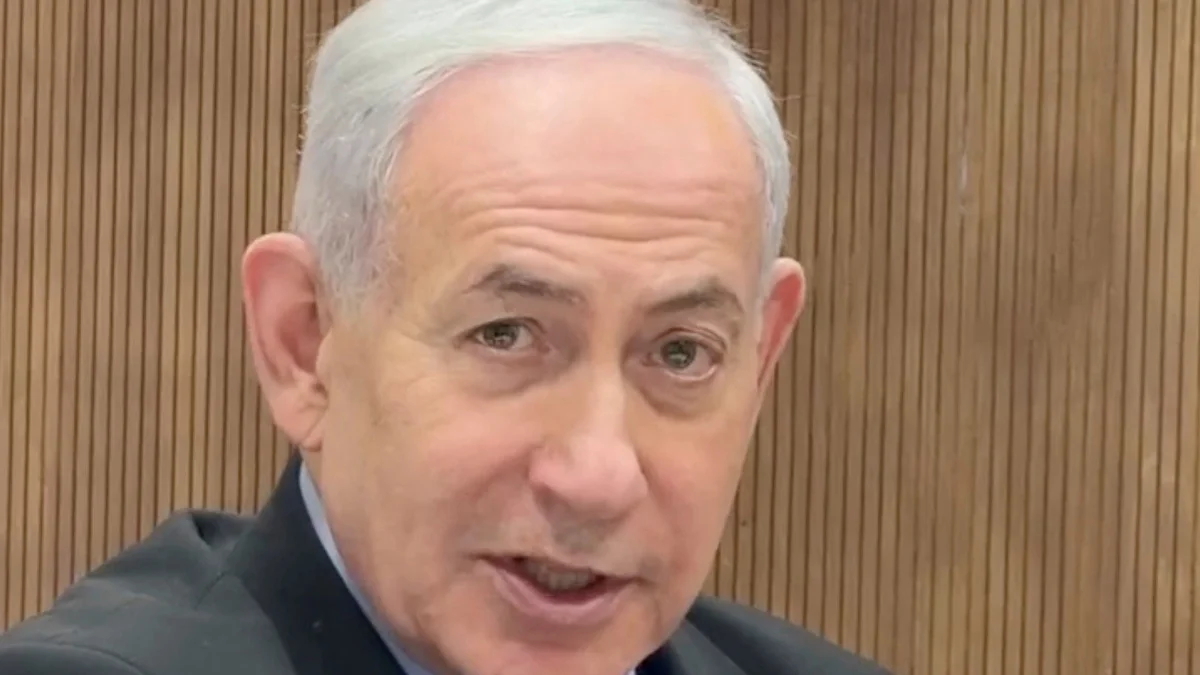

There may come a time of reckoning, perhaps after the October general election and, eventually, in the judgment of history, over the harm that Israeli Prime Minister Benjamin Netanyahu and his government have inflicted on their own people as much as on some of their neighbors. Realistically, it will take more than tweaking or fine-tuning to get the country out of the political, military, and social hole in which it finds itself. It will require a new and very different coalition, with a completely different composition and, more importantly, a different political-ideological DNA.
One area that has been badly damaged is Israel’s relationship with the international community, including close friends and allies. The strained situation with Europe, and to a certain extent with the US, which is increasingly frustrated with Israel’s policies in Gaza, the West Bank, Lebanon, and Syria, is hardly surprising. If anything, these countries have until quite recently been inexplicably tolerant of these same policies.
Most recently, the situation in the occupied West Bank has led certain countries to impose or seriously consider imposing sanctions. Much of this is a consequence of the defiant attitude of Netanyahu and his government in refusing to curtail the despicable violence meted out by settlers on Palestinians, and in continuing to expand the settlement project. This has provoked the international community, and much of the tension is deliberately stoked by the Israeli government, with additional zeal during election time, to demonstrate to supporters that it is not afraid to stand up to both friends and foes.
Netanyahu’s recklessness alienating friends and allies.
Yossi Mekelberg
When it comes to settlement building and the brutality of the occupation and of settlers, it could be argued that Europe has come late to the game. It should have been much more vociferous and determined long before more than 700,000 settlers were living in hundreds of settlements, with Palestinians at the mercy of the Israeli authorities and increasingly violent intruders. At the same time as the international community calls for a halt to settlement expansion, the government is sanctioning further expansions.
What feels like the last straw is the approval of construction in an area known as E1. This is a small, but strategically significant, stretch of land within Area C — the part of the West Bank under full Israeli civil and security control — lying between Jerusalem and the settlement of Ma’aleh Adumim. Populating E1 with Israeli settlers would mean cutting off the northern and southern parts of the West Bank, which are designated to form part of a future Palestinian state. Moreover, the territory lies between Jerusalem and two major Palestinian cities, Ramallah and Bethlehem. Israeli control of the area would also cut off East Jerusalem, which is expected to be the future Palestinian capital, from the rest of the West Bank.
The ploy is clear, and hence countries and their leaders who still believe that a two-state solution is the way forward to ending the conflict are expressing their exasperation, and threatening sanctions against the settlements and those facilitating their construction and expansion. The international fury is fully merited, as the West Bank and East Jerusalem are considered under international law to be illegally occupied, and hence all settlements are illegal. Politically, the viability of a two-state solution has long been questioned, and the establishment of additional settlements, particularly in strategic areas such as E1, is a clear effort to kill off what remains of it.
If the original sin of building these settlements was not bad enough, the reaction of the Israeli government to criticism, and even to sanctions, is making the situation worse. For instance, late last month, Israeli Foreign Minister Gideon Saar announced that Dutch representatives would be expelled from the US-backed international coordination center for Gaza in the southern Israeli city of Kiryat Gat, citing a series of “anti-Israel measures” by the Netherlands and referring to the Dutch government’s July decision to ban imports from Israeli settlements in the occupied West Bank.
Similar “punishment” was also considered against British officials at the coordination center for criticizing Israel’s settlement policy, and probably as a preemptive response to expected British sanctions. Ed Miliband, the UK foreign secretary and a long-standing critic of Israel’s settlement policies, warned recently that “Britain will not stand back and accept the destruction of the two-state solution.”
Israel is becoming increasingly isolated and ostracized internationally.
Yossi Mekelberg
These so-called punitive measures by Israel are galvanizing a conversation that has been gathering momentum in political and other circles in Europe: the need to move from words to action and demonstrate that there are consequences for Israel’s behavior in the West Bank as well as in Gaza.
For years, the EU and UK have criticized Israel’s behavior in the occupied Palestinian territories, but most of this criticism has been toothless and, consequently, has had no effect on Israeli decision-makers. On the contrary, under the current government, the situation has only worsened. Europe was naturally and justifiably united in its support for a grieving and traumatized Israel after Oct. 7, not realizing, perhaps, that this would embolden Israel to conduct a war with recklessness and disregard for the lives of people in Gaza, while entrenching the occupation in the West Bank and moving toward annexation.
An expression of frustration with this Israeli attitude was delivered last month in a letter signed by more than 100 former senior British and French diplomats, many of whom had served in the Middle East, including Israel. Sent to French President Emmanuel Macron and British Prime Minister Andy Burnham, the letter connected the past to the present by stating: “Our countries played a decisive role in the shaping of the Middle East. They should make common cause over the region’s fundamental fault line: equal rights for Israelis and Palestinians. Peace stems from equality.” In this even-handed letter, these highly experienced former diplomats underlined the importance of security for all, while also arguing that we should be “appalled by the suffering of the Palestinian people under occupation” and by Israel’s destructive policies in the occupied territories.
From a position in which Israel, only three years ago, enjoyed unparalleled international support, the country, due to its government’s policies, is becoming increasingly isolated and ostracized internationally. Instead of retaliating with pathetic and inconsequential punitive acts against countries that have decided to take tougher measures in an attempt to stop what is taking place in the West Bank, Netanyahu should put his own house in order and stop these self-harming policies. But, for electoral reasons, he most probably will not.
Sadly, the longer this goes on, the harder it will be for the next government to repair relations, first and foremost with the Palestinians but also with the international community.
Yossi Mekelberg is a professor of international relations and an associate fellow of the MENA Program at Chatham House. X: @YMekelberg


