

Washington’s debate on critical minerals has become fixated on one question: How can the US reduce its dependence on China without replacing one strategic vulnerability with another? An answer has recently emerged far from Beijing, Washington, or the cobalt mines of southern Congo. It is in Burundi, a country with a roughly $4 billion economy, whose geopolitical importance is now expanding far faster than its fiscal capacity.
In March, this year, Burundi signed agreements at the US State Department with Lifezone Metals and KoBold Metals, the exploration company backed by Jeff Bezos and Bill Gates. The projects center on Musongati, where more than 140 million tonnes of nickel-bearing ore are estimated to also contain copper, cobalt, gold, platinum-group metals, and scandium. A single deposit potentially equivalent to roughly 6 percent of global nickel reserves has suddenly acquired significance well beyond Burundi’s borders.
The timing matters. While Washington was courting Burundi as a potential alternative node in critical mineral supply chains, Burundian soldiers were fighting alongside Kinshasa against Alliance Fleuve Congo-March 23 Movement forces in eastern Democratic Republic of Congo. More than 29,000 Burundian troops reportedly entered eastern Congo between August 2022 and December last year, with others deployed simultaneously in South Kivu. Burundi has consequently acquired something rare for a state of its size: geopolitical bargaining power generated by the intersection of geology, geography, and military necessity.
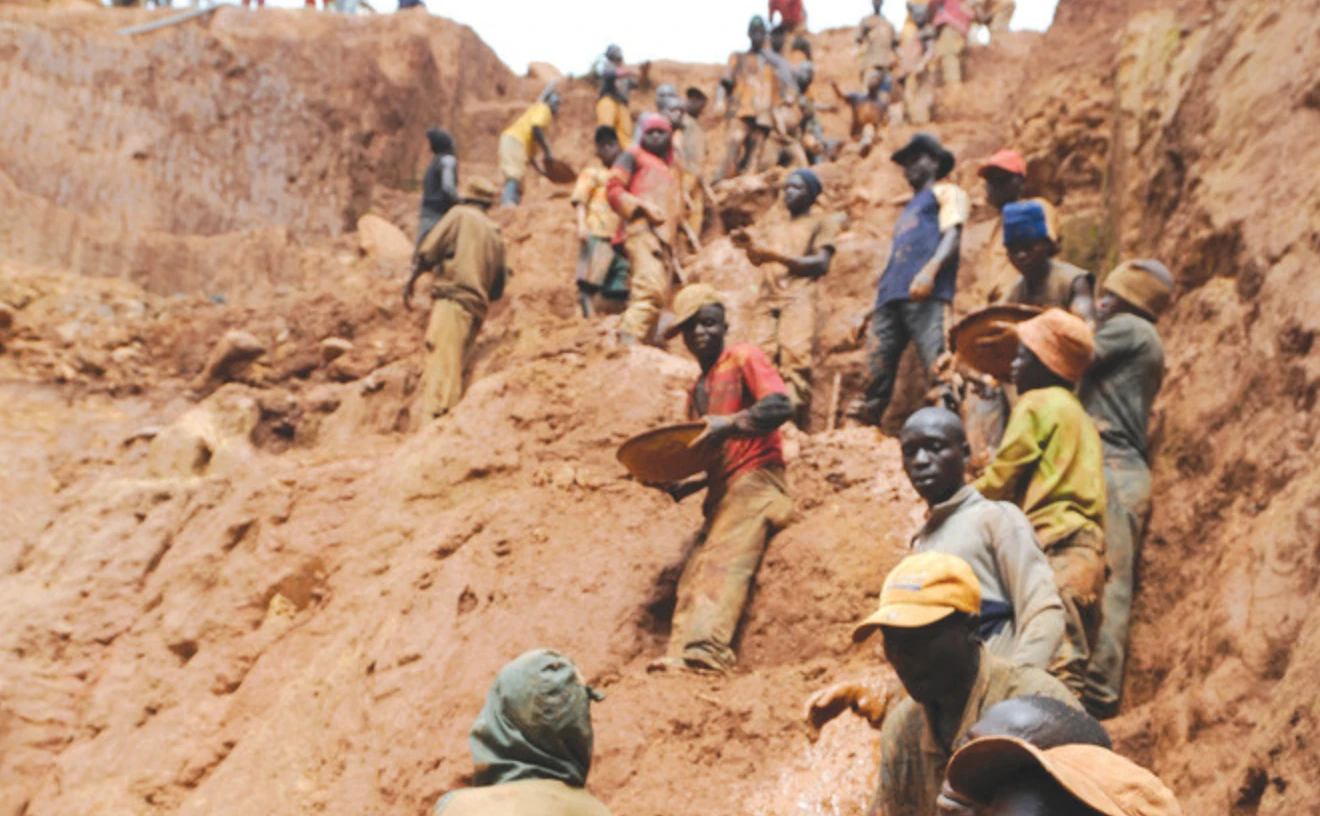
Burundi is East Africa’s second-largest holder of coltan, a mineral containing the elements tantalum and niobium indispensable to the manufacture of modern electronic devices. It also accounts for roughly 2 percent of global tantalum production, and while its formal mining output remains small, its position astride the Bujumbura-Bukavu-Uvira corridor gives it importance as a conduit for highly sought-after Congolese minerals. Traceability can document declared supply chains; it cannot, by itself, eliminate the commercial incentives surrounding informal cross-border flows.
Washington and Doha, meanwhile, have constructed peace architecture around an incomplete map of the war. The December 2025 Washington Accords address Rwanda and the DRC; the Doha process addresses Kinshasa and AFC/M23. Burundi occupies the missing space between them, despite becoming a major foreign military actor in South Kivu.
For Burundi’s President Evariste Ndayishimiye, the calculus is existential. The Ruzizi Plain and Uvira sit dangerously close to Bujumbura’s economic core. Every battlefield shift toward the Burundian frontier, therefore, shortens the distance between Congo’s war and Burundi’s domestic security. The resulting feedback loop is difficult to ignore. Insecurity justifies intervention; intervention creates military exposure; mineral diplomacy creates international protection; and international demand for alternative supply chains can make continued intervention easier to sustain.
Moreover, the most consequential implication lies in the incentives created by emerging Western supply chain policy. A government that becomes useful to Washington because its territory contains strategically valuable minerals can acquire diplomatic room that exceeds the conventional weight of its economy. For Gitega, mineral diplomacy consequently has the potential to become a form of strategic insurance: External investors need political predictability, while policymakers seeking alternatives to Chinese supply chains need new projects capable of surviving geopolitical competition.
Economic geography magnifies the effect. Musongati is not an isolated geological prospect existing outside regional conflict dynamics. Burundi’s mineral corridors connect directly to eastern Congo’s commercial networks, ports on Lake Tanganyika, and the trading centers around Bujumbura, Bukavu, and Uvira. Every improvement in roads, customs systems, geological mapping, energy supply, and export infrastructure can lower the cost of legitimate mineral production and increase the value of the territorial corridors through which armed actors, commodities, and influence move.
Mineral diplomacy creates international protection.
Hafed Al-Ghwell
Military geography follows the same logic. South Kivu is separated from Bujumbura by a body of water and a narrow frontier, yet the strategic distance can collapse almost overnight when control of Uvira or the Ruzizi corridor changes. The Burundian military presence consequently carries a defensive rationale that is easy for domestic audiences to understand. An army positioned in South Kivu can be portrayed as creating strategic depth for Burundi, even while the deployment exposes Burundian forces to retaliation from M23/AFC and potentially Rwanda.
Furthermore, the Washington-Doha framework has a major vulnerability. Peace negotiations built around two principal parties can become obsolete when battlefield power depends on a wider coalition. Democratic Republic of the Congo forces, Burundian troops, and Wazalendo militias operate in an ecosystem that cannot be separated neatly from Rwanda’s security concerns or AFC/M23’s territorial ambitions. Leaving Gitega outside the core negotiating architecture, therefore, creates a familiar diplomatic pathology: Negotiators design an agreement around the actors they recognize, while the war evolves around actors they have not adequately incorporated.
Mineral diplomacy also creates a traceability paradox. Western governments increasingly demand proof that critical minerals are free from conflict financing, forced labor, and illicit diversion. Yet traceability systems generally follow the commodity after extraction. They are weaker at answering the prior political question: What economic and diplomatic incentives make territorial control, cross-border access, or military protection commercially valuable in the first place?
Tantalum, a highly versatile metal widely used in aerospace, chemical, electronics, and energy industries, exposes this quite well. Global production exceeded 2,400 tonnes in 2024, while the DRC accounted for roughly 980 tonnes and Rwanda about 520 tonnes. Burundi’s formal share may appear marginal beside those figures, but a transit state’s strategic importance cannot be measured solely by mine output. A country controlling routes between major producing zones and international buyers can influence how easily material is classified, transferred, blended, or exported.
The Burundi “lesson” here demonstrates how the global energy transition is creating a new geography of strategic dependency. Nickel, tantalum, cobalt, copper, and rare earths are essential to technologies presented as instruments of decarbonization, yet the extraction and movement of those materials occur in places where state capacity remains weak, borders are porous, and military power can determine who controls commercial access.
There are no illusions here. Clean technology inherits the political economy of the territory from which its inputs originate. An electric vehicle assembled in Europe or North America can embody a supply chain shaped by soldiers stationed hundreds of miles from the mine, militias controlling roads, diplomats negotiating ceasefires, and governments calculating how much geopolitical risk an investor will tolerate.
Burundi has revealed how rapidly a small state can move from strategic irrelevance to strategic brokerage when geology intersects with great power competition. The West now faces a choice with consequences extending far beyond Musongati — build a minerals strategy that rewards accountable security behavior, or create another resource corridor in which commercial opportunity and military escalation only reinforce one another.
Hafed Al-Ghwell is senior fellow and program director at the Stimson Center in Washington and senior fellow at the Center for Conflict and Humanitarian Studies.
X: @HafedAlGhwell


