
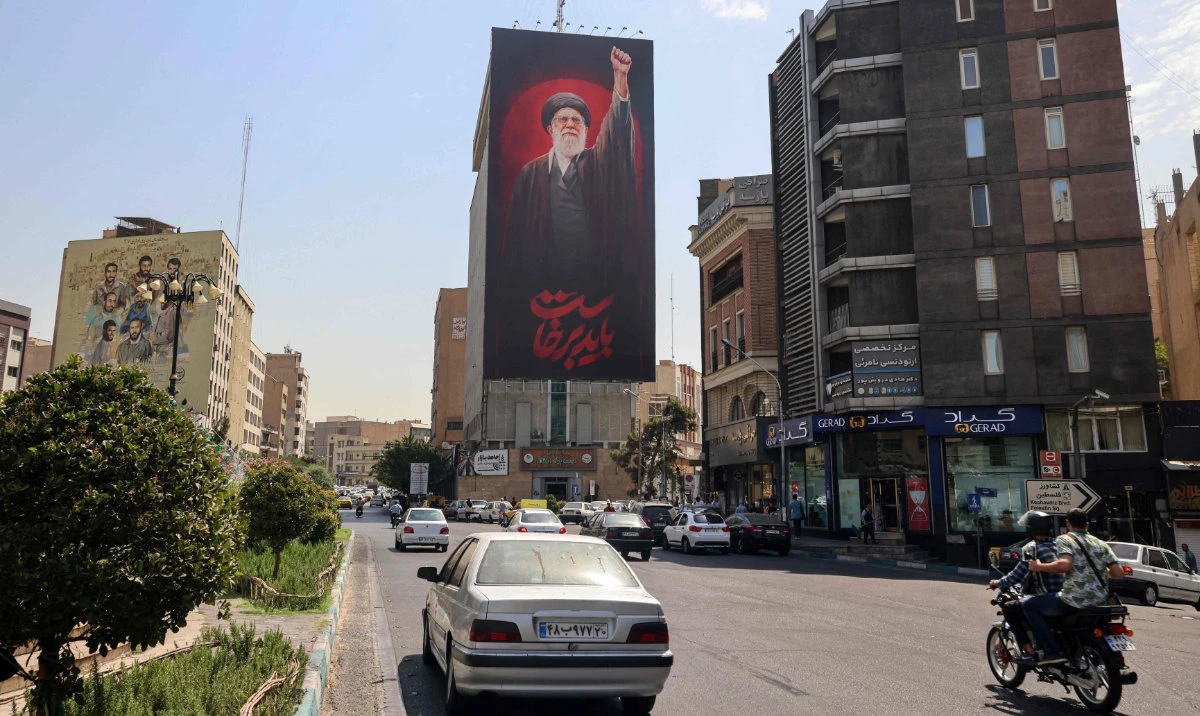

Truth has become one of the first casualties of Iran’s regional strategy. For decades, the Iranian regime has relied not only on military force, proxy groups and political pressure to expand its influence across the Middle East, but also on a sophisticated campaign of misinformation designed to justify its actions, confuse international audiences and shift blame onto others. Whenever Tehran finds itself under pressure or seeks to rationalize an act of aggression, it reaches for the same familiar tool: fabrication.
The latest claims emerging from Tehran follow this well-established pattern. Rather than presenting verifiable facts, Iranian officials have once again constructed a narrative intended to portray their actions as defensive and legitimate. Their recent assertion that they struck a US military command center at Syria’s Al-Tanf base is merely the latest example of a long history of misleading statements designed more for propaganda than for truth.
The claim itself raises serious questions when viewed against publicly reported developments regarding the status of the facility. Whether intended for domestic audiences, regional allies or the international community, such statements reinforce a broader strategy in which questionable narratives are used to justify military actions while avoiding accountability for their consequences.
This is hardly an isolated incident. Throughout the region, Iran has repeatedly denied involvement in activities that were later linked to its military or its proxies. It has routinely dismissed evidence of weapons transfers, military training, financial support for armed groups and involvement in attacks carried out by organizations operating under its influence. Time and again, Tehran initially denies responsibility, only for subsequent investigations, intelligence findings or even statements by its own officials to contradict those denials.
The pattern has become remarkably predictable. Facts are replaced with slogans. Evidence is dismissed as conspiracy. Victims are recast as aggressors. Every military escalation is described as “self-defense,” regardless of where it occurs or who bears its consequences. Such narratives are carefully crafted not because they withstand scrutiny but because they serve immediate political objectives.
This pattern extends beyond Syria. Iranian officials have repeatedly sought to rationalize hostile actions or threats directed at countries such as Jordan, Kuwait and Bahrain through allegations that these sovereign states somehow facilitate foreign military operations against Iran. These accusations are often presented without credible evidence, relying instead on political rhetoric designed to manufacture justification for hostile acts or inflammatory statements.
Such arguments rest on a fundamentally flawed premise: that sovereign nations must seek Tehran’s approval before determining their own security arrangements.
Every independent state possesses the sovereign right to determine its foreign policy, enter into defense partnerships, host military cooperation and conclude security agreements based on its own national interests. This principle is neither selective nor conditional. It applies equally to every member of the international community.
Iran itself regularly exercises this very right. It has expanded military cooperation with Russia, strengthened strategic ties with China, conducted joint naval exercises and pursued defense agreements that serve its own strategic objectives. At no point has Tehran argued that these partnerships require the consent of neighboring Arab states or the broader international community. Nor should they.
Regional stability cannot be built on selective interpretations of sovereignty or on manufactured realities.
Hani Hazaimeh
While objecting to legitimate defense partnerships between sovereign Arab states and their international allies, Tehran has spent years establishing an extensive network of influence across the Arab world. In Lebanon, it has provided political, financial and military support to Hezbollah. In Iraq, it has cultivated and armed multiple militia groups that often operate outside the full authority of the state. In Yemen, it has supplied the Houthis with increasingly sophisticated military capabilities. In Syria, the Islamic Revolutionary Guard Corps and affiliated militias entrenched themselves militarily for years, becoming central actors in the country’s long civil conflict.
Against this backdrop, Iranian criticism of the security choices made by Arab governments appears deeply contradictory. While objecting to defense cooperation between sovereign states and their international partners, Tehran continues to justify its own extensive military presence, proxy networks and political interventions across the Arab world.
Indeed, one of the defining characteristics of Iranian state messaging has been its willingness to distort reality whenever doing so advances its strategic interests. Military setbacks become victories. Proxy attacks become spontaneous acts of local resistance. Foreign intervention is rebranded as humanitarian assistance. Diplomatic isolation is portrayed as strategic independence. This deliberate manipulation of facts is not simply political spin — it has become an instrument of statecraft.
The danger of these fabrications extends beyond public relations. False narratives create dangerous miscalculations, inflame regional tensions and provide political cover for actions that might otherwise face greater international scrutiny. When misinformation becomes official policy, diplomacy becomes more difficult and regional trust becomes almost impossible to rebuild.
Regional stability cannot be built on selective interpretations of sovereignty or on manufactured realities. States cannot condemn foreign military cooperation while simultaneously projecting influence through armed proxies beyond their own borders. Nor can they demand respect for international law while disregarding its most fundamental principles whenever it suits their geopolitical ambitions.
Jordan, Kuwait, Bahrain and other Arab states have consistently based their security partnerships on recognized bilateral and multilateral agreements designed to strengthen national defense, deter external threats and preserve regional stability. These relationships are sovereign decisions made in accordance with international law — not matters subject to Tehran’s approval or political intimidation.
Constructive regional dialogue remains essential. Lasting security in the Middle East will require diplomacy, confidence-building measures, transparency and genuine respect for sovereignty. However, meaningful dialogue cannot coexist with disinformation campaigns designed to manufacture pretexts for confrontation or justify attacks against neighboring countries.
If Tehran genuinely seeks a more stable Middle East, the first step is straightforward: abandon fabricated narratives, end the politics of deception, acknowledge the equal sovereign rights of neighboring states and apply to itself the very standards it expects others to follow. Until then, its repeated claims will continue to be viewed not as credible explanations but as yet another chapter in a long history of misinformation, contradiction and calculated deception.
• Hani Hazaimeh is a senior editor based in Amman.
X: @hanihazaimeh


