- Participants built over 3,400 apps during record-setting training program
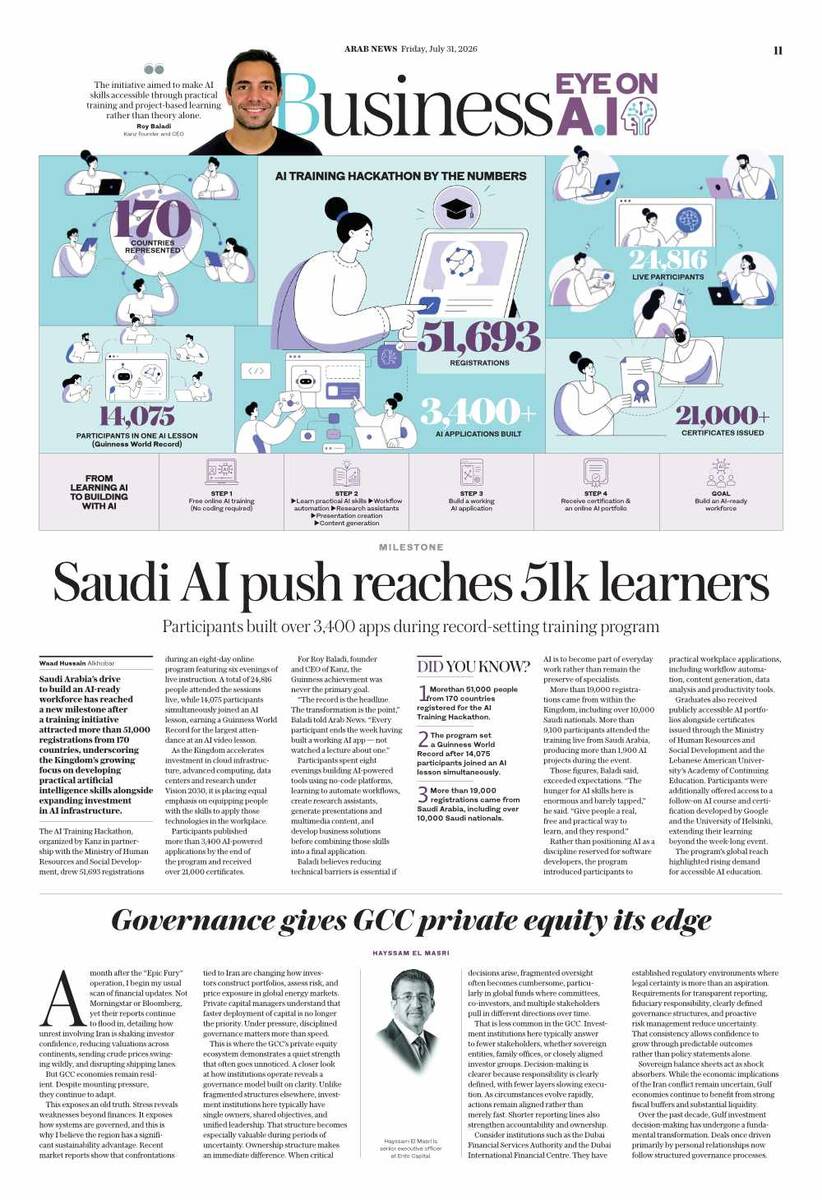
ALKHOBAR: Saudi Arabia’s drive to build an AI-ready workforce has reached a new milestone after a training initiative attracted more than 51,000 registrations from 170 countries, underscoring the Kingdom’s growing focus on developing practical artificial intelligence skills alongside expanding investment in AI infrastructure.
The AI Training Hackathon, organized by Kanz in partnership with the Ministry of Human Resources and Social Development, drew 51,693 registrations during an eight-day online program featuring six evenings of live instruction. A total of 24,816 people attended the sessions live, while 14,075 participants simultaneously joined an AI lesson, earning a Guinness World Record for the largest attendance at an AI video lesson.
Beyond the record, the initiative reflects Saudi Arabia’s broader AI ambitions. As the Kingdom accelerates investment in cloud infrastructure, advanced computing, data centers and research under Vision 2030, it is placing equal emphasis on equipping people with the skills to apply those technologies in the workplace.
Participants published more than 3,400 AI-powered applications by the end of the program and received over 21,000 certificates. Graduates also left with online portfolios designed to showcase their work to prospective employers.
For Roy Baladi, founder and CEO of Kanz, the Guinness achievement was never the primary goal.
“The record is the headline. The transformation is the point,” Baladi told Arab News. “Every participant ends the week having built a working AI app — not watched a lecture about one.”
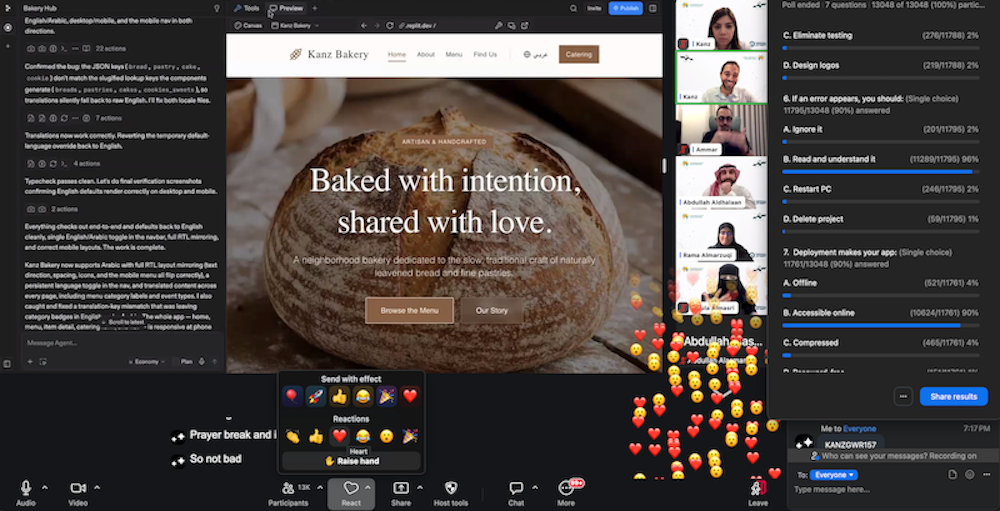
Unlike many AI courses centered on theory or demonstrations, the hackathon emphasized hands-on learning. Participants spent eight evenings building AI-powered tools using no-code platforms, learning to automate workflows, create research assistants, generate presentations and multimedia content, and develop business solutions before combining those skills into a final application.
The program required no previous coding experience and was delivered in both Arabic and English, enabling students, entrepreneurs and professionals from diverse backgrounds to participate.
Baladi believes reducing technical barriers is essential if AI is to become part of everyday work rather than remain the preserve of specialists. “If you can write an email, you can build with AI.”
Saudi Arabia accounted for a significant share of participation. According to organizers, more than 19,000 registrations came from within the Kingdom, including over 10,000 Saudi nationals. More than 9,100 participants attended the training live from Saudi Arabia, producing more than 1,900 AI projects during the event.
Those figures, Baladi said, exceeded expectations. “The hunger for AI skills here is enormous and barely tapped,” he said. “Give people a real, free and practical way to learn, and they respond.”
The initiative comes as AI becomes increasingly integrated across industries including finance, healthcare, manufacturing, education and government services, driving demand for workers who can use AI tools regardless of their technical background.
Rather than positioning AI as a discipline reserved for software developers, the program introduced participants to practical workplace applications, including workflow automation, content generation, data analysis and productivity tools.
Graduates also received publicly accessible AI portfolios alongside certificates issued through the Ministry of Human Resources and Social Development and the Lebanese American University’s Academy of Continuing Education. Participants were additionally offered access to a follow-on AI course and certification developed by Google and the University of Helsinki, extending their learning beyond the week-long event.
The program’s global reach highlighted rising demand for accessible AI education. Participants represented more than 170 countries and 140 nationalities, with organizers designing the initiative to be accessible regardless of age, profession or previous technical experience.
Baladi said the response showed AI education is no longer the preserve of technology professionals.
“Every registration represents someone who can now build with AI when they couldn’t before,” he said.
As Saudi Arabia seeks to establish itself among the world’s leading AI economies, initiatives such as the AI Training Hackathon indicate that the next phase of its strategy extends beyond building advanced infrastructure to developing the talent needed to use it. The Guinness World Record captured a single achievement, but the broader objective is long-term: creating a workforce capable of moving from consuming AI to building with it.