

This year, the people of the Middle East have lived under the same sky of fire. Missiles have fallen on Riyadh’s neighbors and on Tel Aviv, on Dammam and on Haifa. Families in the Gulf, in Israel and, above all, in Gaza and the West Bank have buried loved ones and comforted frightened children. Whatever divides us, we have been reminded — brutally — of what we share: vulnerability, grief and the stubborn hope that our children might inherit something better.
I write these words as an American Jew, the head of a global Jewish organization and someone who spent years in American public life.
I do not write to defend any government's policies, nor to ask anything of Saudi Arabia or its neighbors that they have not already chosen for themselves. I write because I believe this is a moment of decision for the region — and because my community has obligations in it, too.
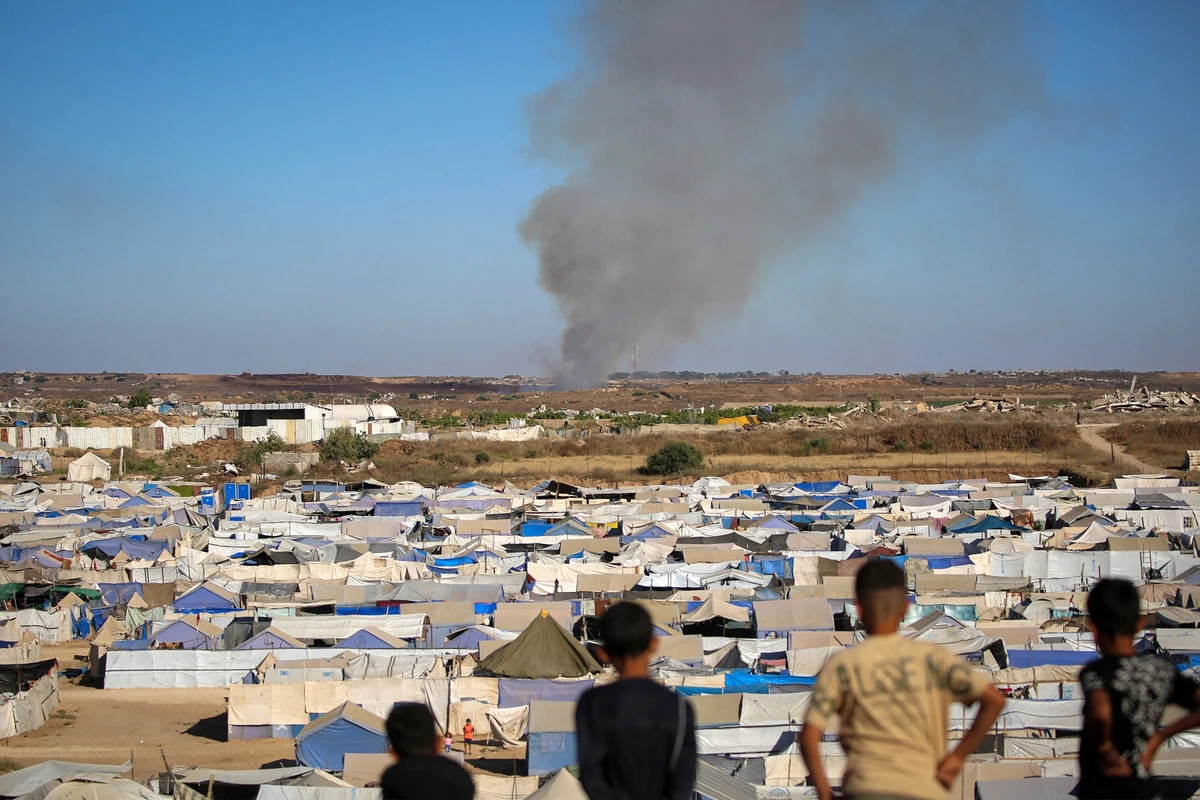
Gaza first. The ceasefire is nearly a year old. Seventeen billion dollars pledged, $70 billion needed, 2 million people in the rubble — that is the whole story and no communique can dress it up. I have watched too many pledges quietly become press releases over the course of my career.
This cannot be one of them. The ceasefire stopped the dying. Rebuilding is what starts the living.
Israel must open the gates for reconstruction at scale and match its legitimate security needs with genuine urgency about Palestinian life
Ronald S. Lauder
Money alone will not close that gap. Trust will. And here I want to say something plainly to Arab readers that they may not often hear from someone like me: the burden of building that trust does not fall on the Arab world alone. It falls on Israel, which must open the gates for reconstruction at scale and match its legitimate security needs with genuine urgency about Palestinian life.
It falls on my own community in America, which must use its considerable voice — in Washington, in Jerusalem, in the philanthropic world — to insist that rebuilding Gaza is not charity but the foundation of everyone’s security.
And I will say with equal honesty: continued settlement expansion in the West Bank moves us away from peace, not toward it. Friends of Israel serve her best by saying so.
Honesty also compels me to say what Gaza’s recovery requires from the other direction.
Reconstruction cannot succeed in a territory where an armed group answers to no one.
The demilitarization of Hamas — the principle of one authority, one law and one weapon that the international ceasefire framework enshrines and that Arab states themselves have championed — is not an Israeli demand imposed on Palestinians.
Without it, nothing else works. Palestinians cannot govern themselves while a militia outguns their government. No stabilization force can deploy into a territory where it may be shot at from behind.
And no donor — no Gulf state, no organization, mine included — will build a school or a hospital that might end up as a firing position or a human shield.
The region has already run this experiment more than once.
Saudi families spent years listening for Houthi drones over their cities.
Lebanon, a country that should be prospering, cannot even control its own borders because Hezbollah’s arsenal outweighs its army’s.
A Middle East at peace cannot be one where militias armed by Tehran hold nations hostage — whether in Gaza, Sanaa or Beirut. Disarming them is not a favor to Israel; it is the liberation of Palestinians, Yemenis and Lebanese to govern themselves.
There is something I would ask Arab readers to understand in return.
Israel’s wounds will take time to heal and the deepest of them is not what many assume. Where Israelis have met the Arab world as partners — in the UAE, in Morocco or in Bahrain — trust has grown faster and warmer than anyone predicted; I have seen it myself. The broken trust is with the Palestinians and here is the bitter part that your readers may not know: the communities that were butchered on Oct. 7 — the people murdered in their homes, the women assaulted, the grandparents and children dragged into tunnels — were, more than almost anyone in Israel, the people who had spent their lives working for peace with Palestinians.
They drove sick Gazans to Israeli hospitals. They marched, they petitioned, they believed. Hamas knew exactly who they were. That was the point. The aim was never Palestinian freedom — Hamas spent Palestinian lives without a second’s hesitation.
The aim was to murder the very idea that Arabs and Jews could live side by side and to make hatred permanent. Every day we refuse to hate is a day they lose.
Where Israelis have met the Arab world as partners, trust has grown faster and warmer than anyone predicted
Ronald S. Lauder
Let me also give credit where it is too rarely given.
Through this whole crisis, Saudi aid kept moving into Gaza while others were still drafting statements. On the larger question, the Kingdom has said the same thing for decades, in good seasons and bad: there will be no real peace in this region until Palestinians have justice and a state.
I will be honest — not everyone in my community wanted to hear that. But that kind of consistency is what leadership sounds like. And what Saudi Arabia has done at home these past years proved something to the entire region, myself included: a society is not a prisoner of its past.
It can decide to become something else.
That is why I believe the Gulf is not merely a funder of the region’s recovery but its natural convener. The institutions taking shape here — in education, in interfaith dialogue, in technology and development — are precisely the infrastructure that peace requires. Governments sign agreements; people build peace.
They build it in classrooms and hospitals, in joint ventures and shared research, in the quiet dignity of neighbors who come to know one another.
I am prepared to be a partner in that work — humbly and on terms our Arab partners find honorable. We can mobilize philanthropy for reconstruction. We can advocate in Washington for the resources and political attention this effort demands, beyond any single administration.
We can bring Jewish communities around the world into people-to-people initiatives with Arab counterparts: young leaders, clergy, entrepreneurs and physicians. Where we are not wanted, we will wait. Where we are welcome, we will show up.
I am under no illusions. The wounds of these past years are deep and skepticism toward voices like mine is understandable. Jewish tradition teaches that the world stands on three things: truth, justice and peace — and that the three cannot be separated.
Islamic tradition, as I have learned from Muslim friends and colleagues over many years, teaches much the same. Our shared father Abraham pitched his tent open on all four sides, so that a traveler from any direction would find welcome.
The region stands at such a tent today. Iran’s missiles this year were aimed at closing it — at proving that fear, not cooperation, governs the Middle East. The answer to that is not triumphalism from anyone. It is the patient, unglamorous work of rebuilding: Gaza first and, with it, the confidence that Arabs and Jews can be partners in something larger than survival.
My grandchildren and yours will not ask us who won the argument. They will ask what we built. Let us be able to answer them.
- Ronald S. Lauder is president of the World Jewish Congress. X: @lauder_ronald


