

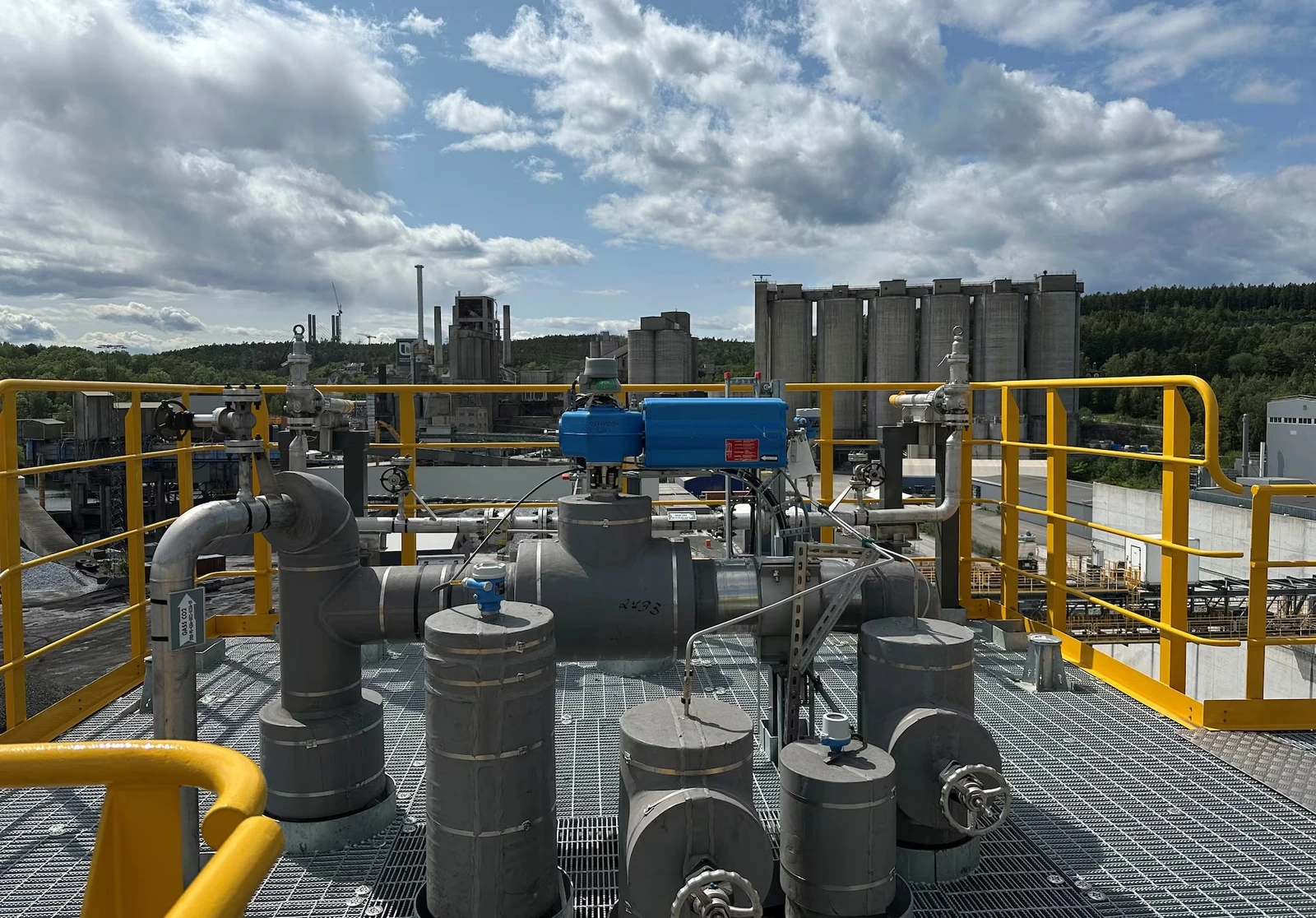

Governments and companies are moving from climate promises to practical plans. Nearly every major strategy to decarbonize heavy industry now relies on carbon capture, an industrial process that traps carbon dioxide before it escapes into the atmosphere and stores it underground.
Industries such as steel, cement, chemicals and gas processing cannot easily avoid producing carbon dioxide, making capture at the source one of the few practical options. Regardless of a project’s scale, carbon capture essentially involves one task: separating carbon dioxide from a mixture of other gases.
A practical question that deserves more attention is how much it will cost to remove all that carbon dioxide. The answer will determine how quickly carbon capture expands beyond a handful of flagship projects to the many smaller plants that make up an industrial economy. Membranes, long trusted in industry, could be a game-changer.
Today’s carbon capture plants typically use a chemical liquid that absorbs carbon dioxide from exhaust gases, much like a sponge. Although widely established, this technique consumes significant amounts of energy and requires large, costly equipment.
Membranes offer a different approach. These thin sheets allow carbon dioxide to pass through more readily than other gases, much like a fine filter. They require no liquid to heat, have fewer moving parts and use compact equipment. Membrane modules can also be installed incrementally and expanded over time without interrupting production.
This is not a new concept. The gas industry has used membranes to remove carbon dioxide from natural gas for decades. The same basic technology is widely employed in arid countries to convert seawater into potable water. This experience presents a valuable opportunity to extend membrane applications to climate efforts.
However, membranes do have limitations. They work best with gas streams that contain high concentrations of carbon dioxide and are pressurized. They are less effective with the dilute exhaust gases from power stations, where carbon dioxide makes up a relatively small proportion of the mixture. Natural gas processing, hydrogen and ammonia production, and some chemical and cement operations generate streams with higher carbon dioxide concentrations. These are generally among the least expensive emissions to capture, making them particularly suitable for membranes.
This is not a competition between technologies. In many cases, the most effective design combines both approaches: Membranes for an initial, lower-cost separation stage, followed by liquid-based capture for further purification. This combination gives engineers greater flexibility while helping project planners manage costs.
In my membrane research for carbon capture at the University of Jeddah, I am exploring new materials with one key objective: Allowing carbon dioxide to pass through quickly while keeping other gases out. Promising ideas can move quickly from concept to laboratory testing, but the transition from the lab to an industrial plant is much slower. Industrial gas streams are hot, humid and often contain impurities, meaning membranes must withstand these conditions for years.
Three steps could help close this gap:
Shared testing: Industry, government and universities should jointly test new membranes using real industrial gas streams at actual operating temperatures, through open testing facilities near operating plants.
People: Engineers and technicians must be trained to design, operate and integrate different separation technologies.
Common measurement: Fair comparisons between technologies require researchers, companies and regulators to agree on common standards for membrane testing and carbon accounting.
Carbon capture membranes share technological foundations with those used to purify hydrogen and treat industrial wastewater. Developing domestic manufacturing capabilities could therefore create new expertise, jobs, industries and export opportunities.
Targets alone will not deliver carbon capture at scale. Progress will depend on separation engineering, skilled people and measurable costs. Given the right support, membranes, alongside other solutions, could make carbon capture more cost-effective, faster to develop and easier to implement.
Dr. Rizwan Nasir is an associate professor of chemical engineering and head of the Climate Change and Environmental Monitoring Unit at the University of Jeddah, Saudi Arabia.


