


As of today, it appears that East Asia has largely contained the spread of the coronavirus disease (COVID-19) epidemic, while the West is approaching its peak and is expected to stabilize under current containment measures. In these circumstances, the numbers of global reported infections and deaths have stopped their exponential growth in the last few days and, while they are still going up for now, the situation appears to be under control.
But this hopeful picture does not account for the Global South. Because of the limited movement of people from the affected areas in the Global North into the south, the spread of the disease to places like South America, Africa, India and South East Asia has been delayed rather a long time. But the virus has reached all these areas and the patterns of tracking and reporting there resemble those of the most unprepared countries in the West, such as the US or the UK.
Africa looks the most vulnerable. Of the whole Global South, the continent has the weakest health care infrastructure and the least functional and effective governments to enforce nonclinical interventions, such as social distancing, closing borders or enforcing lockdowns.
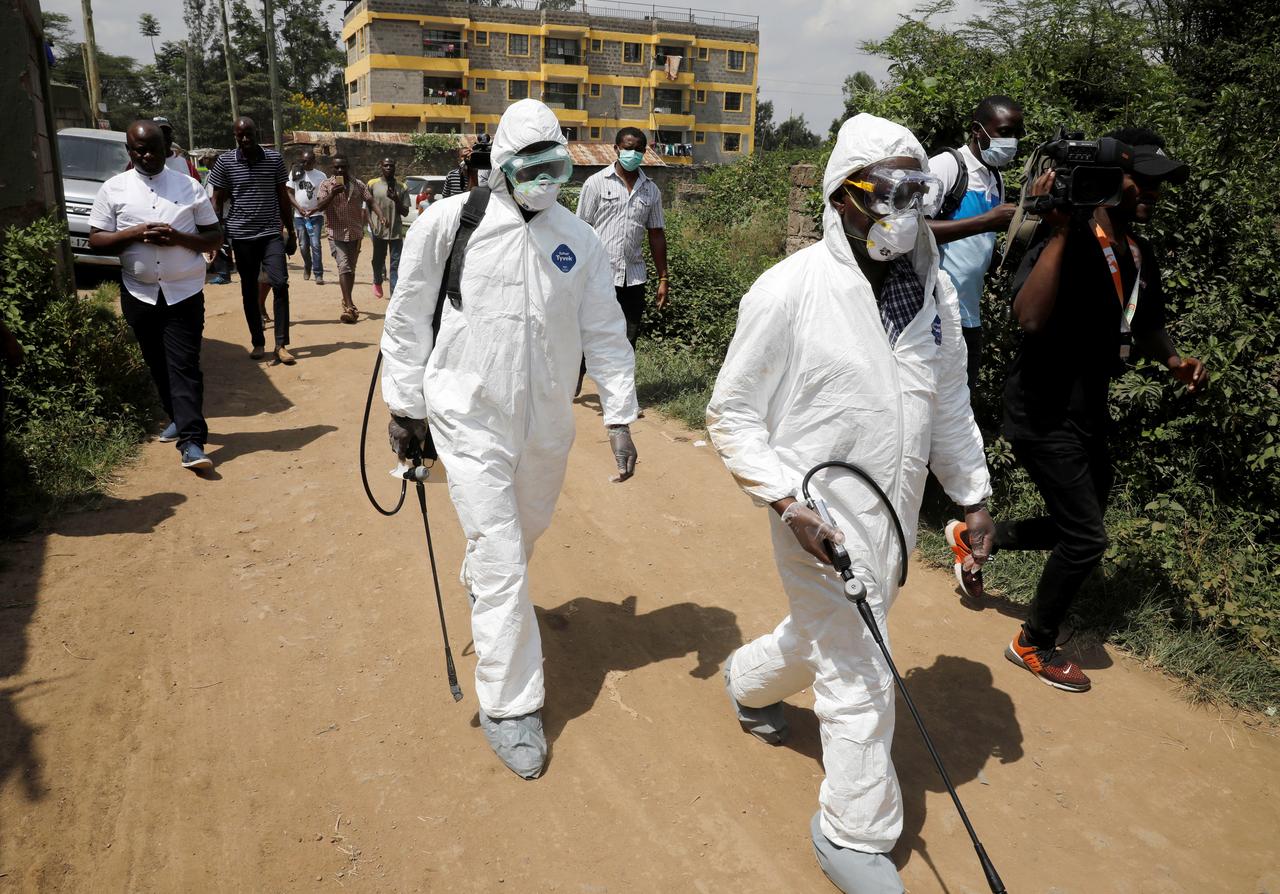
And the disease is already racing through the continent: The number of reported cases surpassed 10,000 on April 11. This is to say that Africa is well past being able to hope that somehow the pandemic will pass it by. The virus is well and truly planted on the continent, and we will soon start to see the graphs of exponential growth make an impression on the global numbers.
To make matters worse, Africa also has nowhere near the capacity to handle what is coming. This pandemic quickly overwhelmed the advanced and well-funded health care systems of Italy and Spain. Most African countries will not have a prayer of hope once the contagion starts spreading at scale.
If the global numbers do not come to reflect these expectations in the next couple of months, that will more likely be an issue of reporting — a failure of the local authorities to test and keep track of the spread of the virus — rather than a sign of success in the face of the pandemic.
To be fair, Africa does have some helpful demographic conditions to help her in the face of this crisis. Most notably, it has a very young population. As we know, the virus can still kill young people, but mortality rates correlate very strongly with age, so we might expect the ratio of infections to deaths in the region to be more favorable than in Europe, for example.
Conversely, the geographical distribution of people on the continent is extremely unhelpful. Africa is home to rapidly growing cities — for example, Lagos in Nigeria and Kinshasa in the Democratic Republic of the Congo have significantly larger populations than London or Paris. But these cities also lack the sanitation, infrastructure and even the physical space to limit the spread of an infectious virus like this. Once coronavirus takes root in these cities, it will rip through in ways much more dramatic, and deadly, than even New York City.
Next to these large cities are rural hinterlands that lack virtually all infrastructure and governance. If the virus spreads out of the cities to these areas, as it surely will, there will likely be no tracking or containing happening there, which means that these areas will act as a reservoir for the return of the virus to the cities at a later date.
Most African countries will not have a prayer of hope once the contagion starts spreading at scale.
Dr. Azeem Ibrahim
In the face of a virus to which we have no immunity, all policies of resistance and mitigation are efforts of social coordination. Those countries with the wherewithal, the infrastructure and the culture that allow such a degree and scale of social coordination, like in East Asia, have already taken control of the spread of the pandemic and, in some regions, are successfully driving the virus back. In the West, while we have the infrastructure to cope with this, we largely lacked the culture to pull together early, as was needed, and different countries have had governments with differing degrees of foresight regarding taking control of the situation at the right time.
For the most part, African countries have none of these things in place. The virus will stalk the continent for a long time, and there is no chance of taking control of its spread there until a vaccine is developed and deployed on a huge scale.
- Dr. Azeem Ibrahim is a director at the Center for Global Policy and author of “The Rohingyas: Inside Myanmar’s Genocide” (Hurst, 2017). Twitter: @AzeemIbrahim


