


Even for a political system that never shies away from drama and controversy, the events leading to the dissolution of the 21st Israeli Knesset last week were a true cliff-hanger, never seen before in the country’s history. Benjamin Netanyahu was left like the proverbial emperor with very few clothes left, if any.
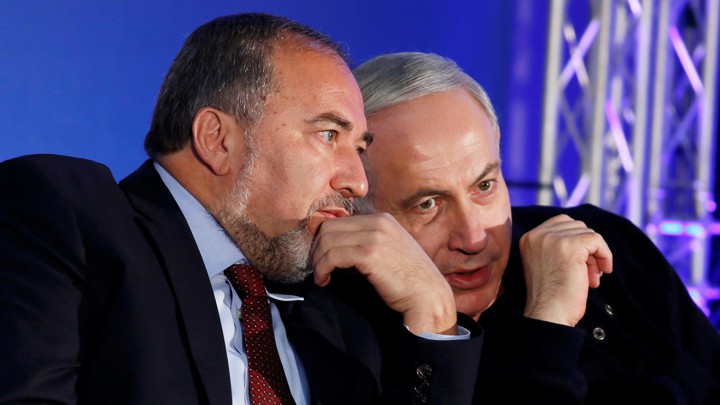
Who could have predicted back in early April, when the election results looked as if they had helped him stay in power, that this master manipulator of Israeli politics would fail in his attempt to form a fifth coalition government? Netanyahu is no stranger to tough political negotiations, but it became apparent that he was attempting to hijack the entire political system, and with it the country, for his own personal interests. In this instance, he met his no less manipulative and cynical match in former Defense Minister Avigdor Lieberman.
For all Netanyahu’s triumphalism following the April 9 elections, weeks later he finds himself defeated, humiliated and out of sorts. Between now and the forthcoming Sept. 17 elections, he will mount the political battle of his life, which may be his last, and he has a reasonable chance of losing it. Anyone hoping for a quiet summer’s respite from Israeli political intrigue and strife can now expect to endure a long, hot season of electioneering.
Netanyahu’s main mistake was that he and his team applied previous negotiation tactics to a situation that was fundamentally different. In past years, such talks were mainly about parties jockeying for more influential ministries, a bigger slice of the budget and more say in legislation. This time around, a strong and crucial personal element was added to the customary “grab as much as you can” approach of potential coalition partners. This was Netanyahu’s desperation to avoid indictment on corruption charges, many months in court, possible conviction and years behind bars.
Perhaps inevitably, the confusion between his struggle for political survival and his search for a “get out of jail” card clouded his judgment and made him blind to his vulnerability. Over the course of his long years in power, he has accumulated a collection of enemies and potential nemeses who can’t wait for him to vacate the political scene. Not many know Netanyahu better — or despise him more — than Lieberman, his former close aide and confidant, who is equally opportunistic and unscrupulous. There was little doubt that, once Lieberman smelt Netanyahu’s blood, he would move in for the kill. After all, he did his political tutoring with Netanyahu, from whom he learned such a buccaneering approach. And now the disciple has outwitted his former master.
Not many know Netanyahu better — or despise him more — than Lieberman, who is equally opportunistic and unscrupulous.
Yossi Mekelberg
It would be beyond naive to believe that Lieberman refused to join a coalition government because of the contentious proposal to reinstate ultraorthodox youths’ exemption from military service. His populist instincts told him that this is a hot issue with his support base, mainly immigrants from the former Soviet Union, and it touches a raw nerve with most secular voters, who carry the burden and risk of serving in the military.
Lieberman sensed an opportunity to position himself as the champion of the dwindling secular majority in a country increasingly caving in to the demands of the ultraorthodox, including exempting their youth from conscription while many of them live on state benefits for the duration of their religious studies and often beyond. For Lieberman, it was an opportunity to take personal revenge and, along with a cold political evaluation of Netanyahu as being beyond the zenith of his power, it might propel Lieberman to a more influential position. However, it may also bring about the downfall of both men.
Make no mistake, Lieberman might be remembered for his part in the demise of Netanyahu, but he is a very unlikely and unsuitable champion of liberal, democratic secularism, let alone of good governance. He is a settler who has supported the deportation of Palestinians and his party is riddled with corrupt politicians. He himself was investigated for years regarding inappropriate deals with unsavory businessmen.
Lieberman is only part of the story. It was also the deceptive number of 65 right-wing members of Knesset elected to what is now the quickest Knesset to dissolve itself that eclipsed the judgment of Netanyahu and his fellow Likud party negotiators. They, like the narcissistic prime minister and his decadent “L’Etat, c’est moi” attitude, fell into the trap of believing that they too were irreplaceable and beyond reproach, Louis XIV-style.
Nevertheless, Netanyahu’s behavior in trying to ensure, through legislation, first his immunity from prosecution and, second, that the Supreme Court would be prevented from overruling any legislation it considered unconstitutional — and which might also shield him from facing the court — resembles that of a fugitive from justice, rather than a leader of a democratic country. It has exposed him for what he really is.
As the deadline for forming a coalition began to approach, the Israeli prime minister was reduced to groveling, as he revealed his most desperate and pathetic self, offering almost every party or individual member of Knesset the earth and, as a bonus, the moon if they would only join his government. No semblance of ideals or values, no self-respect, no respect for his voters, or for the country and its democratic processes and institutions.
However, it is not all doom and gloom. Almost by miracle, it has also become an opportune moment to bring the curtain down on Netanyahu’s divisive and hugely damaging premiership. Lieberman, in his brutish way, has shown that it is possible. Now it is for decent would-be leaders from his own party to show courage and, if they can’t find it in themselves, it is for Israel’s voters to see a future for themselves and their country — a future that surpasses the vision of both men.
- Yossi Mekelberg is professor of international relations at Regent’s University London, where he is head of the International Relations and Social Sciences Program. Twitter: @YMekelberg


