

I always thought it was Americans who were confused about who the Arabs are. But now I suspect it is the Arabs themselves who are confused.
Arabs come from 22 different countries, which generally all have very complex histories involving foreign domination, military control and a semblance these days of democracy. Each Arab country has ethnic and even racial sub-groups. Syrians, Palestinians, Jordanians, Lebanese and Egyptians, for example, have different subcultural traits and heritage. And, within these groups, there are even more divisions.
Arabs have two major religions, Islam and Christianity, both of which are divided into major sects: Sunni and Shiite Muslims, and Orthodox, Coptic, Protestant and Catholic Christians. Our political views are more recent, having been suppressed for so many centuries. We define Arabs as people whose first language is Arabic: A definition that causes problems for expats and diaspora Arabs, whose first language is often that of the nation where their parents left behind.
For years, I believed that Americans could not see these major differences, instead viewing all Arabs as being the same regardless of their religion or national origin.
Trump’s ‘Muslim ban’ seems to bother the Arabs more than the reality of Israel’s racist policies
Ray Hanania
All Arabs were blamed for the terrorism of Sept. 11, 2001, not just Muslims. Christian Arabs faced the same politically driven anger and racism that fueled America’s military responses.
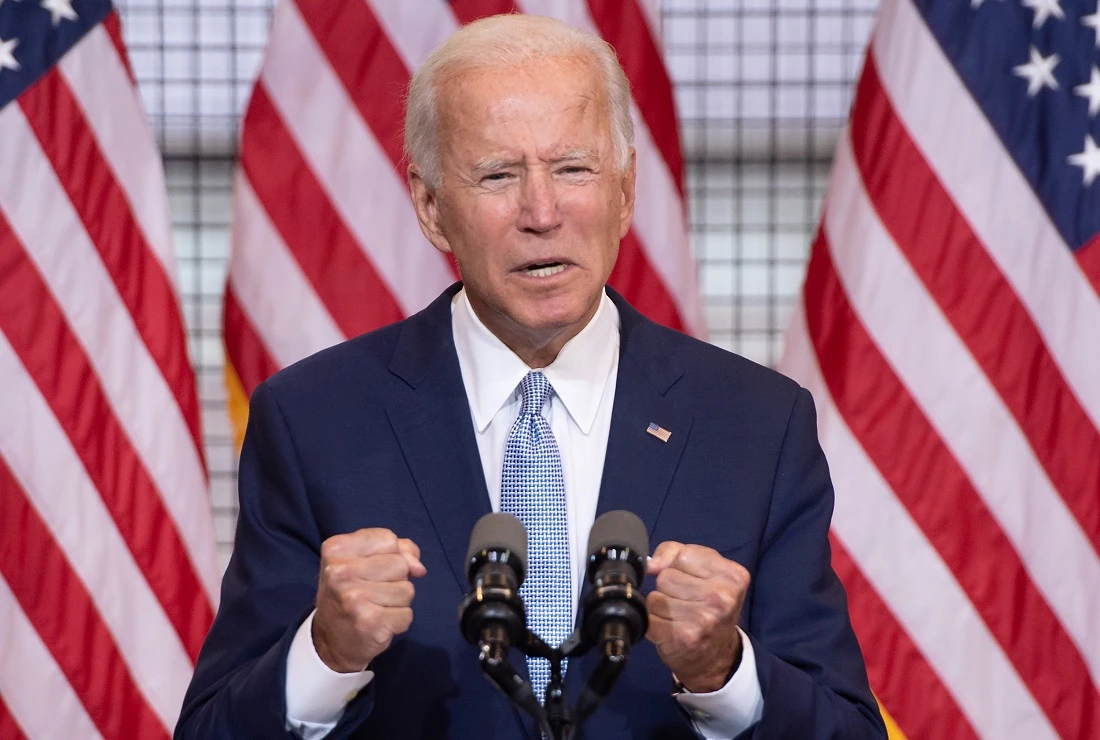
But now I realize that many Americans see those differences far better than we do. This is why a seasoned politician like former Vice President Joe Biden, who is now the Democratic candidate for president, challenging incumbent Republican Donald Trump, can discriminate against Arabs at the same time as offering empathy and support. That is exactly what Biden did on Saturday, when he offered a “Plan for Partnership” to the “Arab American” community, even though we are not so monolithic.
Biden promised to include Arabs in his administration. He said he would roll back policies targeting Arabs. He vowed to eliminate Trump’s dreaded “Muslim ban” on his first day in the White House, if elected on Nov. 3. And he said he would support refugees and recognize immigrant rights.
But Biden understands Arabs are divided into many disparate groups. We’re not so monolithic, but we are very emotional. We allow our emotions to “trump” our reason — pun intended. He didn’t hesitate to push aside a small segment of the Arab American community and declare he would not reverse his opposition to the BDS (Boycott, Divestment and Sanctions) movement, which protests Israel’s racist and violent settler movement.
By offering support, compassion and empathy with one hand, he is able to deny justice, the rule of law and fairness to Arabs with the other.
Biden had already reinforced his support among American Jewish voters by selecting Kamala Harris as his vice presidential running mate. A US senator from California, Harris is one of the most anti-Palestinian legislators in America.
And he knows that Palestine is not the sacred cause it once was to many Arabs or Arab Americans. Now, Arab Americans are more concerned with the emotions of US politics, such as when Trump does something they don’t like. They get upset with Trump because he officially recognized Jerusalem as the capital of Israel and moved the US embassy there. Yet, in reality, Jerusalem has been the capital of Israel since 1967 and who really cares where the US embassy is located, especially since the US continues to fund Israel to the tune of nearly $4 billion a year?
Arab Americans get upset with Trump because he declared an immigration ban from only a handful of the world’s 50-plus predominantly Muslim nations. This act seems to bother the Arabs more than the reality of Israel’s racist policies, which fuel the growth of the violent settler movement and the ethnic cleansing of Christians and Muslims from Jerusalem, which no US president has ever tried to stop.
Biden is certainly not going to stop Israel. He knows he can throw the crumbs of popular but limited promises to the emotionally driven Arab Americans and that they will treat those crumbs like loaves of bread. He does so because he knows that the Arabs are divided. He can appeal to the majority while ignoring the Palestinian segment that needs help the most.
- Ray Hanania is an award-winning former Chicago City Hall political reporter and columnist. He can be reached on his personal website at www.Hanania.com. Twitter: @RayHanania


