
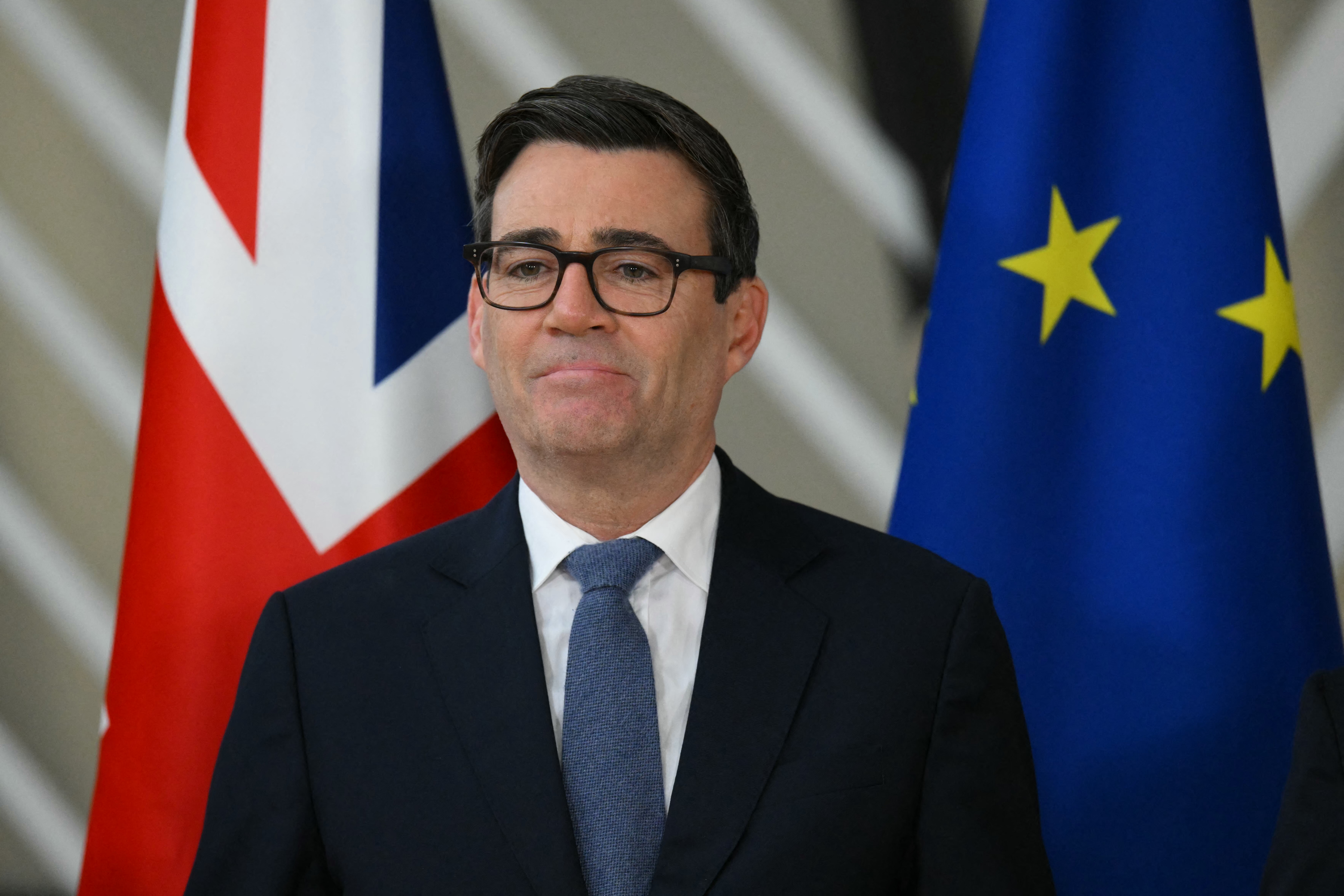

Winston Churchill famously declared in 1939 that Russia “is a riddle wrapped in a mystery inside an enigma.” Fast forward to today and many argue much the same about the often puzzled, complex, and unpredictable debate about Brexit.
At the EU-UK reset summit on Nov. 20, the biggest set of changes were announced since London left the Brussels-based club and signed a new post-Brexit cooperation agreement in 2020. To be sure, this is not a fundamental realignment of the UK’s relationship with the EU given the Labour government’s current “red lines” on joining the Customs Union, single market, let alone full EU membership.
Nonetheless, critics argue it is a dilution of Brexit freedoms. Moreover, Conservative leader Kemi Badenoch has accused Prime Minister Andy Burnham of “reopening the divisions” of the 2016 Brexit referendum, while Reform UK leader Nigel Farage claimed that the prime minister has no mandate for the package.
Example measures announced include the scrapping of checks on UK food exports, which have fallen since Brexit, in return for the UK following some EU laws, plus also aligning each side’s emissions trading schemes.
Meanwhile, a youth mobility scheme will allow 100,000 young people from the EU to travel, work, and study in the UK. The same number of young UK citizens will be permitted to head in the opposite direction.
More than a half decade after leaving the EU, Burnham is thinking through an even bigger realignment of ties, possibly including joining the Customs Union, single market, or even full EU membership. Farage flagged this on Friday, saying “I’m afraid that the great Brexit debate has just started again … it’s perfectly clear that this very, very soon becomes a debate about: Do we rejoin or do we stay out?”
A more constructive UK-EU partnership, even if London remains outside the bloc, may bring benefits for both at a time of significant economic and geopolitical flux.
Andrew Hammond
Despite Farage’s characterization, there is a significant possibility that Burnham may decide it is not politically possible for the UK to rejoin the EU, and seek instead a closer relationship outside the bloc, as some key Conservatives like former Prime Minister David Cameron have advocated. Come what may, no further big actions would formally take place until at least after the next UK election, which must happen no later than 2029.
This underlines the continued UK political sensitivity of Brexit. One of the paradoxes of the last UK general election campaign, in 2024, was the absence of discussion of this issue.
One reason Labour has tended not to talk too much publicly about Brexit is concern about this issue which led to its 2019 landslide defeat when Prime Minister Boris Johnson won a mandate to formally take the UK out of the EU in 2020. Johnson secured the largest parliamentary majority for the Conservatives since Margaret Thatcher in the 1980s.
However, Brexit has also divided the political right in the 2020s given the widespread perception that the UK has not prospered since leaving the EU. Even Farage, who co-led the Leave campaign in the 2016 referendum, declared “Brexit has failed.”
Farage’s argument is that Conservative and Labour prime ministers after 2016, including Johnson, have failed to take advantage of what they perceive as the significant freedoms of Brexit. This includes the opportunity to diverge economically from the EU to seek to drive UK competitive advantage.
While a significant number of opinion polls now indicate that the UK public would support rejoining the EU, a key challenge is that the terms of reentry would probably be different from those on which the UK exited the club in 2020. London negotiated a series of opt-outs, including of the eurozone single currency, that may no longer be collectively available.
It is unclear that a majority could be secured for such revised terms of membership in any referendum that might be required to ratify potential UK membership in the future. Growing support for the EU since 2016 appears wide but may be shallow.
So Burnham’s predecessor as Labour leader and UK prime minister, Keir Starmer, sought to reshape the center of debate away from “Leave versus Remain” toward how best to try to make Brexit work. What is clear is that the 2020 deal created significant EU-UK trade problems that do not appear to be improving.
The EU got much of what it wanted from the 2020 deal, including a zero-tariff, zero-quota deal for goods, in which it runs a surplus with the UK. Meanwhile, Brussels gave away little on services which is the UK’s strength.
Burnham has continued down this path, arguing that “the Brexit we were given has not worked. We have lost more than we gained.” Much will now depend on what his exact policy prescription is to remedy this, and whether he can mobilize popular support for it.
Amid all the uncertainty, the stakes remain high. A more constructive UK-EU partnership, even if London remains outside the bloc, may bring benefits for both at a time of significant economic and geopolitical flux, from Ukraine to the Middle East.
Andrew Hammond is an associate at LSE IDEAS at the London School of Economics.


