
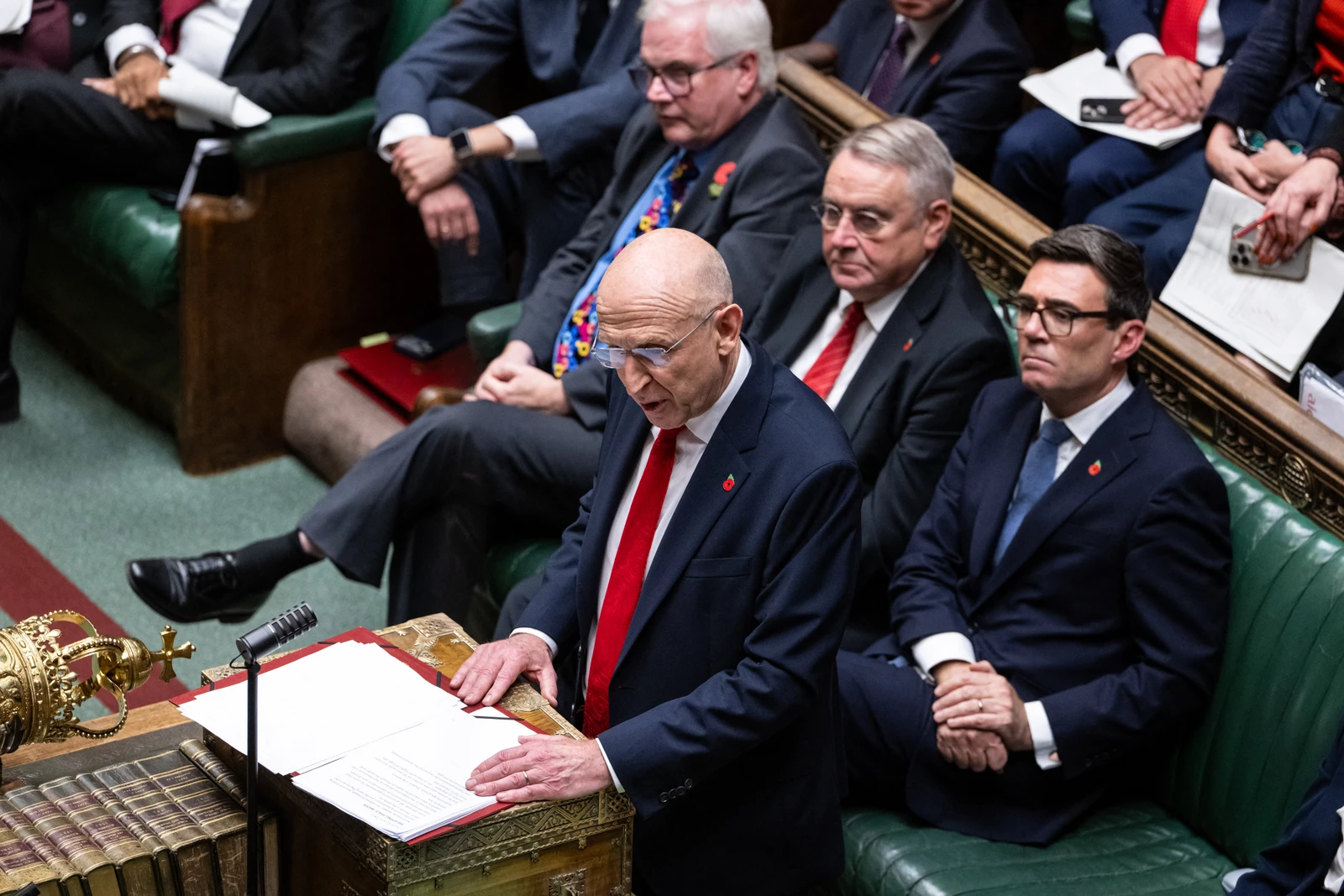

UK Prime Minister Andy Burnham’s first budget, delivered this week by the Chancellor of the Exchequer, John Healey, comes at a time of growing public discontent over the British economy as well as worries about higher inflation, cost of living and rising energy prices.
Some of these challenges have been exacerbated by recent global events. However, many are rooted in systemic problems in the national economy that successive governments, both Conservative and Labour, have failed to address. Growing public dissatisfaction with the economy was one of several factors contributing to the downfall of Burnham’s predecessor, Keir Starmer. Burnham will be keen to avoid a similar fate, as he faces difficult choices about public spending. But public frustration with the economy does not make the security threats facing Britain any less serious.
One of the most politically contentious aspects of the budget was what the government would do about defense spending. With Russia continuing its war in Ukraine, the conflict with Iran remaining unresolved, and questions about stability and security in East Asia, now is not the time for a power like Britain to retreat from its defense obligations.
This is especially true in the context of the broader NATO debate over meeting spending targets. With President Donald Trump in the White House pushing for greater European defense spending, Britain’s budget decisions will be watched beyond Westminster.
Public discontent over the economy is growing
Luke Coffey
The UK currently spends about 2.6 percent of gross domestic product on defense. The previous government under Starmer had plans to increase that figure to 2.7 percent by 2028. This remains well below NATO’s target of spending 5 percent of GDP on defense and defense-related security by 2035.
In a twist of political irony, Healey, who delivered the budget in the House of Commons, previously served as defense secretary under Starmer. He resigned in June over what he described as a lack of commitment to defense spending.
In his resignation letter, Healey argued that Britain needed to spend at least 3 percent of GDP on defense by 2030 to meet the country’s security requirements and establish a credible path toward meeting NATO’s spending commitments by 2035.
Following Healey’s resignation, his successor announced a new Defense Investment Plan that would inject £15 billion in additional spending into the defense budget. However, even this plan came up short, leaving a £4.7 billion funding gap. Consequently, the two big questions heading into the budget were whether the government would close this shortfall and what concrete plans it would announce for reaching NATO’s defense spending targets.
In this context, Healey’s budget was a mixed bag for defense. He closed the £4.7 billion funding gap in the Defense Investment Plan announced by Starmer’s government last June. This will be welcomed by the generals and admirals running Britain’s military, as well as by the defense industry that equips it.
The PM faces tough choices on public spending
Luke Coffey
Healey also made a clear pledge at the dispatch box in the House of Commons to spend 3 percent of GDP on defense by 2030. This goes beyond the plans of the previous Labour government and reaffirms Healey’s personal conviction that this level of spending is necessary.
However, what remains unclear is the credible path toward achieving that goal. According to Healey, the details will not be announced until next year’s spending review. That opens him to criticism from opposition political leaders that he is once again kicking the can down the road on defense. In addition, after reading the fine print of the budget, there is a concern that defense spending will actually fall in nominal terms by 2028, leading to a real-terms defense spending reduction — not a good look for the UK at a time when Europe is expected to do more.
There is an interesting historical parallel worth considering alongside this week’s budget speech. In April 1937, Neville Chamberlain delivered his sixth and final budget speech as the UK’s chancellor of the exchequer. Unknowingly, only weeks later he would become prime minister.
Although Chamberlain is now infamous for his policy of appeasement toward Adolf Hitler, he should also be recognized for his commitment as chancellor to modernizing and funding the British military. Much like today, 1937 was a dangerous time for the UK.
Hitler had remilitarized the Rhineland the previous year and was investing heavily in the German military, despite the restrictions imposed by the Treaty of Versailles following the First World War. The Spanish Civil War was raging on the European continent. Further afield, Italy had invaded Ethiopia, and Japan was expanding its military activities in East Asia, where Britain maintained colonial possessions.
Although the worst of the impact from the Great Depression was behind it, Britain continued to grapple with the economic consequences. Therefore, the rearmament debate came at a time when the government was already facing difficult choices about the public finances — not too dissimilar from today. Yet even Chamberlain, now remembered as a leader who failed to confront Nazi Germany, recognized the importance of investing in national defense.
Within the first few sentences of his 1937 budget speech, Chamberlain declared that Britain’s national finances had to be “dominated and governed by one overshadowing consideration, namely, the vast expenditure upon Defense in which we are engaged,” leaving no doubt about the government’s top priority at the time.
Healey’s budget speech did not place the same emphasis on the need to invest in defense. However, it did fill the immediate funding gap in the Defense Investment Plan, offering reassurance to Britain’s armed forces. He also made an important commitment in the House of Commons to meet NATO’s defense spending targets. But the strategy for reaching these spending goals remains unclear and too many questions remain about the defense budget in coming years.
Until there is greater clarity, this uncertainty will concern Britain’s friends in Washington and Europe, while potentially signaling weakness to its adversaries around the world.
Luke Coffey is a senior fellow at the Hudson Institute. X: @LukeDCoffey


