
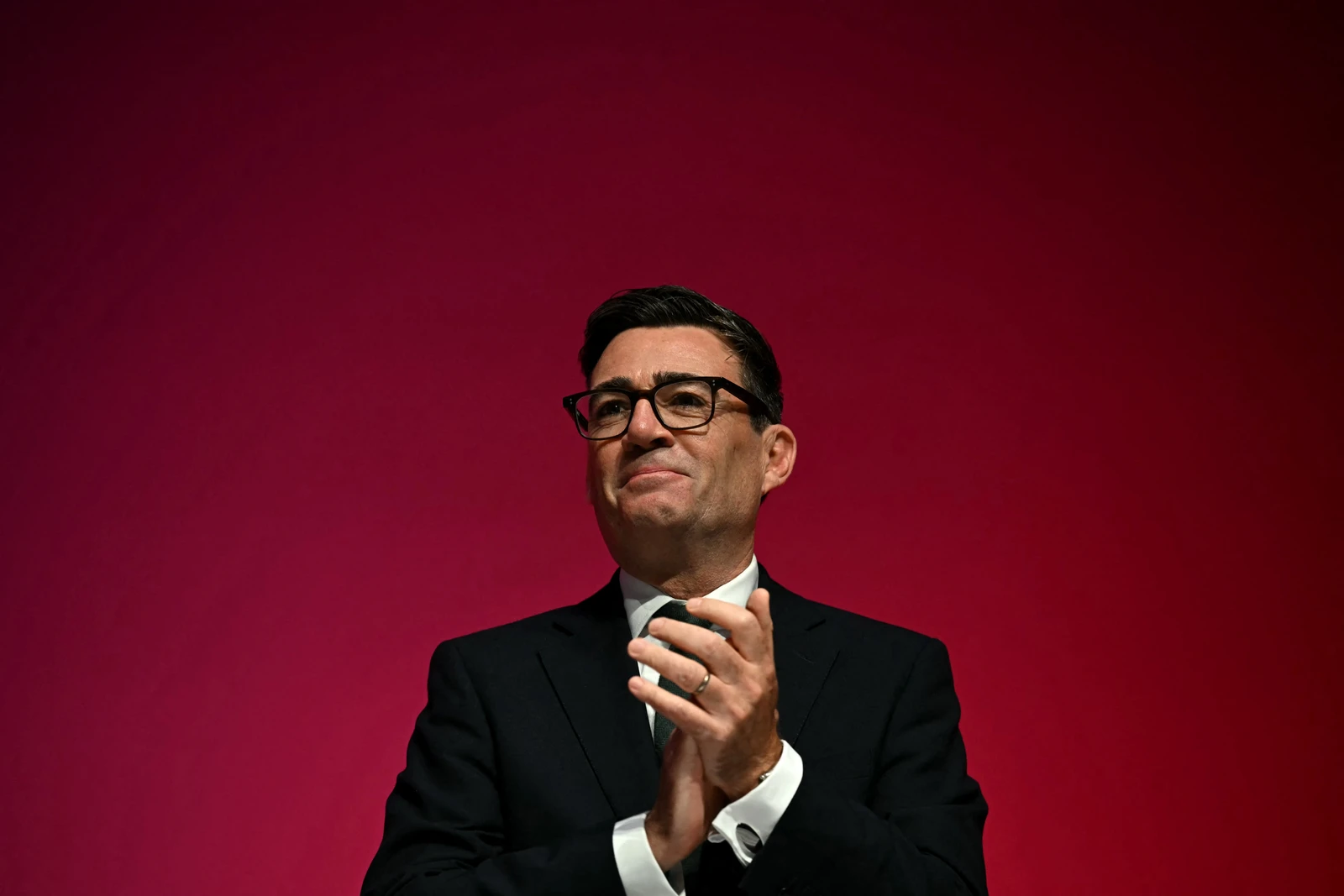

The speech British Prime Minister Andy Burnham gave to the Labour Party’s annual conference in Liverpool last week may come to be seen as seminal. It charted where Burnham’s Britain may head. Yet, in a speech laden with audacious ideas on pension and voting reform and nationalization, Burnham went where his predecessor, Keir Starmer, feared to tread. He laid the ground for revoking Brexit and rejoining the EU.
It has been 10 years since the infamous referendum that saw 52 percent of UK voters opting to leave. It was another four until this exit was realized. Every step was fought over. It was the most polarizing issue in Britain in a generation, especially if you link it to immigration and culture wars. Starmer dodged the issue. He always sounded as if he did not like Brexit but that he would try to make it work for the country.
Burnham’s view was much sharper. “Brexit has done more harm than good,” he said last week. Ardent Brexiteers are struggling to make the case for it any longer. The prime minister was in tune with public sentiment.
At a UK-EU summit later this year, Burnham has pledged to outline Britain’s options. These will include, he later stated, staying with the status quo, joining a customs union or the single market and going “all the way” by rejoining.
The door to a full return has been opened, even if it will be some time before we know if the UK will jump through it or if it will slam shut once more. The half-in, half-out option is there, no doubt inspired by the possibility of Canada becoming the EU’s first associate member. European leaders such as France’s President Emmanuel Macron have given the comments a cautious welcome.
Brexit was the most polarizing issue in Britain in a generation, especially if you link it to immigration and culture wars
Chris Doyle
Why did Burnham dangle this possibility? Was it just a trial balloon? He certainly was not afraid of rekindling this toxic debate.
Burnham vociferously opposed leaving in 2016. In one speech, he stated that if the UK left the EU: “Britain would be instantly diminished as a nation. We would lose influence on the world stage and in the eyes of other countries. Britain would be a lesser force … It would leave Britain more vulnerable to external aggression and attack.” Many believe he has been proved correct.
Public opinion must have been a factor. A poll at the end of September showed that 70 percent of the British public wanted closer relations with the EU. Another found that 59 percent favored rejoining. Essentially, there is less enthusiasm for Brexit, even among far-right Reform UK voters.
Yet what would the terms be? If the UK had to adopt the euro, support would start dropping. To join the single market again, the UK would have to accept freedom of movement and freedom to work across the bloc.
Significantly, it remains the younger age groups that favor rejoining. Older voters have tended to head to the right-wing parties and reject Brussels.
Are British voters right to feel Brexit has not worked? The key driver of votes for Brexit was immigration. Here, few claim Brexit has delivered. Burnham tapped into this perception. “We’ve lost some of our control over immigration … control over immigration was weakened when we lost collaboration with our European partners.” However, it will be a hard sell to market a plan that argues rejoining the EU will calm the fears over immigration.
Whether voters buy into it or not, Burnham does have a vision for the UK, backed up by a skeleton plan
Chris Doyle
The economic argument was the remainers’ strongest weapon. Their warnings have broadly been proved correct. Britain’s economy has not prospered outside the EU. Small exporters have been overwhelmed by the tsunami of paperwork, rules of origin and food standards checks, all required when trading with the EU.
The quick and easy trade deals promised by arch-Brexiteers have not materialized as hoped. Deals with India, Australia and New Zealand cannot make up for the higher costs of trading with the EU, which is still the UK’s largest trading partner.
Back in 2016, the security argument that London should remain united with the rest of Europe did not make a mark. In essence, British voters did not feel under threat. Has this changed since the Russian invasion of Ukraine? Has the unreliability of the Trump administration forced voters to back a security future with Europe rather than the US?
Many have portrayed Burnham as a people pleaser, able to conjure positive vibes and goodwill. Yet what he showed in Liverpool was that he is prepared to risk division where he sees it as necessary. He was not under pressure to make promises about the EU. He could have just played it safe by saying the government would find ways to work closer with Brussels.
Whether voters buy into it or not, Burnham does have a vision for the UK, backed up by a skeleton plan. The detail is sparse. But it does promise one thing voters crave — drastic change. Many do see a broken Britain. They are tired of the same old fare promised by the main political parties. Treading water does not cut it. Burnham gets this. But it is one thing to talk big, it is quite another to deliver.
Chris Doyle is director of the Council for Arab-British Understanding in London. X: @Doylech


