


The coronavirus crisis has not only caused great changes to our lives on a personal level, it has also transformed the tools of diplomacy at state level.
In recent years, “medical diplomacy” has become a significant soft-power tool adopted by nations in an attempt to garner symbolic influence and prestige. The emergence of the novel coronavirus has created an opportunity for some states to engage in “pandemic diplomacy” with countries that lack the resources required to battle the virus.
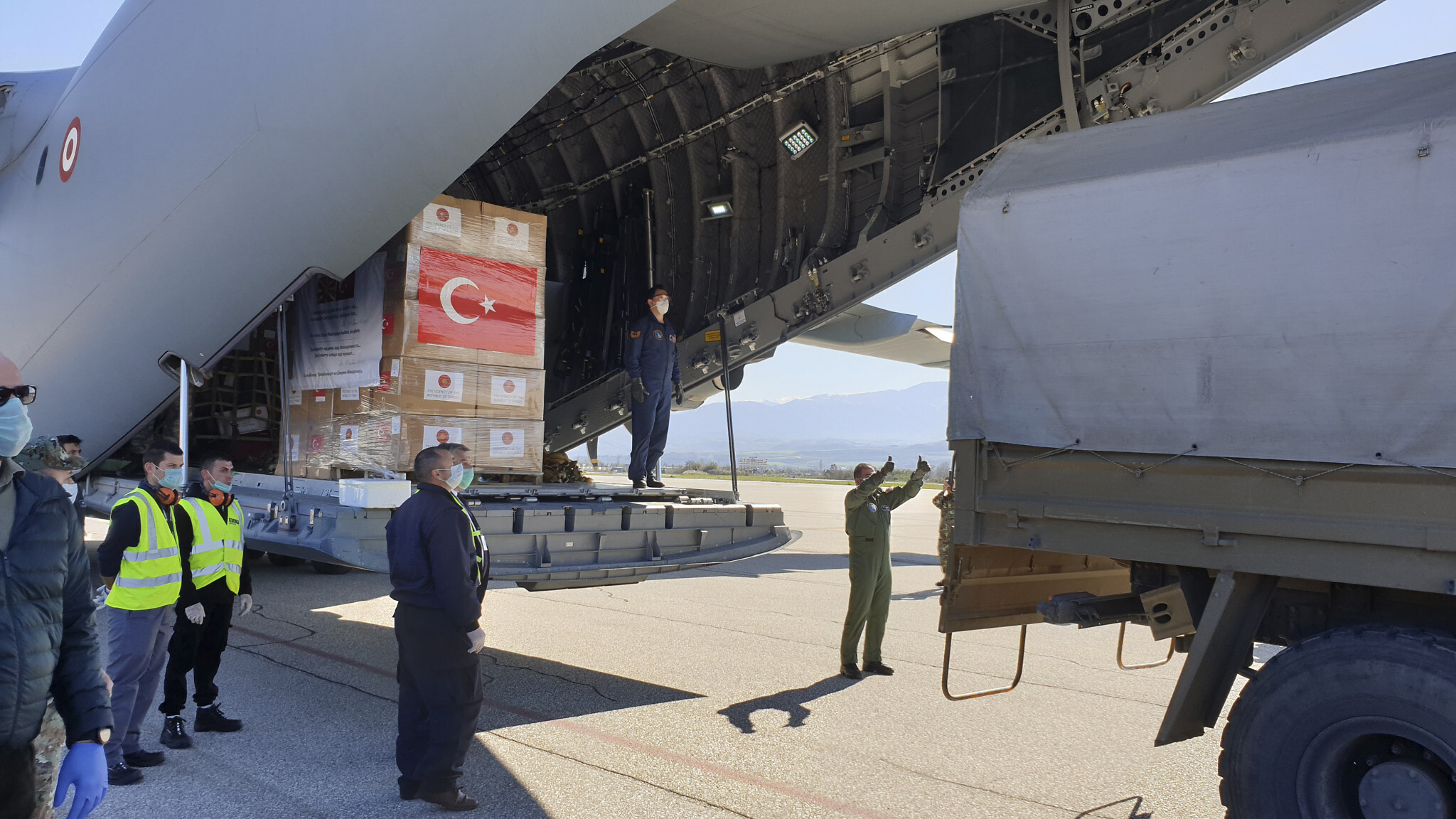
Turkey, like many countries, has been sending medical aid to other countries in a show of solidarity as part of a collaborative approach to overcoming the pandemic.
In times of crisis, any signs of goodwill between countries that are normally at odds are symbolically significant gestures, because such times offer a great opportunity to extend olive branches. Last week, for example, the news that Turkey is sending medical equipment to Armenia and Israel — two countries with which Ankara has been locked in a diplomatic standoff for years — grabbed significantly more attention than the similar assistance it is sending to other countries. This raised hopes that the aid might help to break the ice and lead to better relations. Unfortunately, politics quickly intervened.
The Armenian situation began when, in a recent TV interview, presidential spokesman Ibrahim Kalin said that Turkey had received a request for medical assistance from the authorities in Yerevan. President Recep Tayyip Erdogan approved the request, he added, and the Turkish Health Ministry was tasked with coordinating the aid process.
The Armenian government, however, denied asking Ankara to send medical supplies and added that such an appeal for help “was not on their agenda.”
Given these mixed messages, I asked Richard Giragosian, the director of the Yerevan-based Regional Studies Center, what the diplomatic atmosphere is like in Armenia. He noted that humanitarian gestures such as the offer of medical assistance during a pandemic are symbolically important, and generate a degree of fresh optimism that an opportunity might exist for diplomatic re-engagement in this time of crisis. However, he added that problematic lines of communications between the two nations had created a serious misunderstanding.
“Official communication between Armenia and Turkey has always been difficult and most often devolves into a war of words, with competing statements countering different interpretations,” he said. “Most recently, this difficulty in diplomatic communications has resumed over the issue of aid to Armenia during the COVID-19 crisis.”
The Armenian Foreign Ministry said its officials contacted the Turkish authorities with the sole aim of arranging the repatriation of Armenian citizens in Turkey, and added that any potential Turkish-Armenian cooperation would be “significantly limited.”
Erdogan and the Armenian patriarch, Archbishop Sahak Mashalian, discussed the matter of Armenian citizens in Turkey during a telephone conversation on April 8. The following day, 73 Armenians were taken to their home country on buses that traveled via Georgia because the border between Turkey and Armenia is closed. During the call, Erdogan also expressed a willingness to provide assistance to Armenia in the form of medical aid.
Adding to the controversy, Turkey also asked Beijing for clarification about aid packages sent to Armenia that included a reference to Mount Ararat, which Turkey refers to as Agri Mountain. It is located in the Turkish province of Agri, but the Armenians consider it an important national symbol. The Chinese said that the aid was prepared by a local authority and the Ararat reference was added later.
As a journalist who has covered Turkey’s relationship with Armenia, and participated in projects between 2012 and 2015 that aimed to normalize relations, I believe there is an ongoing optimism and desire on both sides for the development of bilateral ties. However, this is often held hostage by domestic political dynamics in both countries.
Given the difficult history of the relationship between the nations, this minor — yet pleasing — example of cooperation to arrange the repatriation of Armenian citizens is significant. It is worth noting that it came less than two weeks before April 24, which marks the 105th anniversary of the tragic events of 1915. Therefore, whether a request for assistance was made or not, Yerevan would not favor any publicity about such a thing at such a sensitive time.
In times of crisis, any signs of goodwill between countries that are normally at odds are symbolically significant gestures, because such times offer a great opportunity to extend olive branches.
Sinem Cengiz
Giragosian describes the complicated coronavirus-related situation between Turkey and Armenia as not only a missed opportunity, but also a case of miscommunication marked by a case of the nations taking “two steps forward and one step back.”
A similar controversy arose on April 9, when Bloomberg reported that medical equipment was being sent from Turkey to Israel, and a similar shipment was expected to be sent to the Palestinian territories. It added that three Israeli aircraft were due to land at Incirlik Air Base in southern Turkey to pick the cargo.
According to the report, Ankara approved the shipment of medical equipment to Israel for “humanitarian reasons,” in return for the Israelis allowing similar aid to be sent to the Palestinians. However, the Israeli media reported the supplies were purchased by private organizations, not the state, and that the deal was purely commercial, not a humanitarian gesture.
In an article about the controversy published by media site Al-Monitor, an Israeli journalist wrote that the Israeli side “might be reluctant to credit Erdogan with battling the virus that causes COVID-19.” It continued: “With the deterioration of bilateral ties over the past decade, Israeli diplomats consider every step forward, as small as it may be, as extremely fragile and sensitive. For Jerusalem, the less publicity, the better.”
Whatever was going on behind the scenes, it is clear that in both cases communication problems overshadowed any steps toward Turkey’s reconciliation with Armenia and Israel.
- Sinem Cengiz is a Turkish political analyst who specializes in Turkey’s relations with the Middle East. Twitter: @SinemCngz


