

One can say there is democracy in Kuwait as there is a Parliament whose members are elected and a government, which is held accountable by the members of the Parliament.
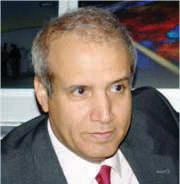
An extremist member of the Parliament, Abdul-Hamid Dashti, is allowed to attack and accuse others and incite against whosoever he wants to just because he is elected and represents a section of the Kuwaiti population as the constitution guarantees him this right.
One can also argue that Dashti has crossed the acceptable limit, exposed the country’s larger interests with its neighbors to great threat and paved a dangerous path of domestic sectarian strife between Sunnis and Shiites.
Kuwaiti authorities have previously interfered in other similar cases by stripping the nationality of those who were considered a threat to the country. They have also shut down institutions, which exceeded acceptable limits, jailed some over their tweets and canceled some Parliament members’ immunity and sentenced them to jail.
Relatively speaking, we can consider Kuwait’s democracy reasonable but it’s not like the Westminster system. And here in the region, no one accepts violations against others in the name of democracy.
Kuwait and other countries in the region are passing through a period of dangerous political and security scenario where it has become difficult to maintain a middle ground. The skillfulness of Kuwaiti politicians, who are well-known for resolving the country’s and region’s crises, may not be of help as the situation is bad and affects everyone. It is hence not wise to confront it.
However, taking extraordinary measures during unusual circumstances does not harm respect for the state or weaken its institutions for the sake of protecting them. Even countries that are extremely protective of high democratic values draw limits when it comes to its security situation during difficult times.
US Republican presidential front-runner Donald Trump has not violated the constitution by making statements such as banning Muslim foreigners from entering the country until the “government can figure out what’s going on” or deporting all illegal immigrants and building a wall with the country’s neighbor, Mexico. These are all promises, which do not contradict the law; the problem lies with the rhetoric. Some high-ranking Republican members are so worried that they have said they will work to topple Trump even if he wins the nomination. They also criticized his refusal to denounce endorsement of former Ku Klux Klan figure David Duke even as Trump blamed a faulty earpiece.
There are moral and ethical codes, which we expect politicians and other public figures to follow particularly against incitement. When they fail to do so, it is logical to deprive them of the privileges they attain by virtue of their public positions. Wherever necessary, Kuwaiti authorities have been skilled at devising legal arguments that justify bans and stripping nationality.
Frankly, I do not think the statements of silly people like Dashti are significant. However, his act of inciting public opinion in the region, which is now witnessing sectarian tensions, is dangerous and may harm Kuwait and the region.
There are two reasons why Kuwaitis are being patient with him and others like him making sectarian, racist and provocative statements. The country wants to protect the system. It also does not want any confrontation with a foreign power by siding with another foreign party and wants to avoid getting involved in the region’s problems or even hinting that it will.
This may be a wise thing to do. However, allowing Dashti and similar extremist Shiite and Sunni figures to continue with their provocations at this time does not protect the constitution and does not safeguard Kuwait from the region’s problems. On the contrary, it produces more rivals.


