

Governments, economies and societies have become dependent on internet connectivity for every aspect of our lives, including formal and informal transactions, our personal and impersonal communications, and even our home thermostats and the fridges at the local supermarket.
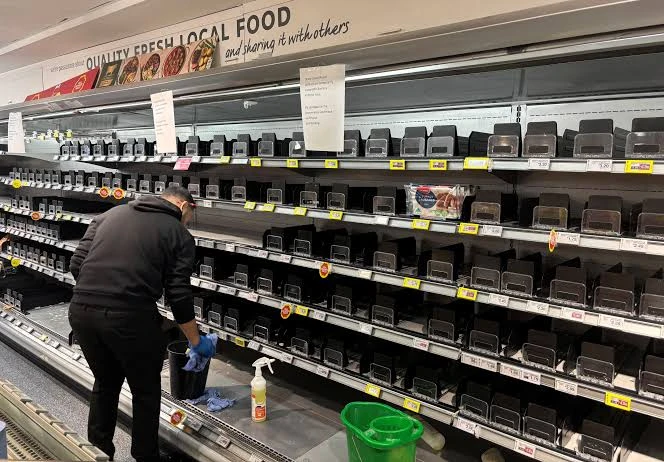
Many of us have already been the victim of organized criminal acts, such as hacking and scamming, incurring material losses as a result. Last month, our collective food security was tested. A cyberattack on 700-plus supermarkets in France destroyed millions of euros of food that could have fed the poor instead of perishing in fridges that were remotely turned off. This week, the hackers hit supermarket fridges in another seven countries. So, who is hacking Europe’s supermarket fridges and why?
Above all, are we now totally at the mercy of an unregulated tech realm that is an indispensable conduit to all actions us humans need to take to run our lives? Has the tech realm, along with all its great advantages and services to science, medicine and modern life, also exposed us to new vulnerabilities? Who is responsible for warding off the dangers: states, companies or international watchdogs?
Unfortunately, tech controls and safety assurances remain murky, sporadic and unconvincing as the rollout of fast-evolving technology continues apace. Calls for control and sovereignty to shape the UK’s approach to artificial intelligence and other tech development will require other countries to pull in the same direction. Prime Minister Andy Burnham this week announced that the UK’s approach to AI ought to be shaped by British interests, control and sovereignty. But the task is colossal if it is not part of a global effort, including the corporate realm.
Tech controls and safety assurances remain murky, sporadic and unconvincing as the rollout continues apace
Mohamed Chebaro
Burnham’s bid to approve a framework to govern the domestic adoption of the fast-evolving technology and its infrastructure is a no-brainer. But this endeavor is too complex and might be too little, too late in a chaotic sector that could threaten the peace and security of our planet if it falls into the hands of rogue elements or malign states, let alone the superintelligent machines and their warped algorithms.
It is too early to judge whether the manipulation of the temperature of Europe’s supermarket fridges was a result of a criminal act, a state effort to sow chaos or simply a lack of software updates and the need to upgrade the infrastructure.
But I would not be revealing a secret if I were to say that individuals and communities are today living in fear of the next hack or the next scam. There is also a feeling that we are at the mercy of the next upgrade or update, as well as a system reboot. Companies share the same fears and are also at the mercy of the often-costly process of constant upgrades and updates during what are already testing economic times.
A review of recent events shows how exposed our societies and states have become. AI tools hacking other AI tools autonomously has become a frequent occurrence. Attacks on undersea communication cables are a constant threat. Incidences of hacking thermostats or transport and electrical systems are also common and not just in Europe.
Iran and Russia are the prime suspects in the low-intensity attacks on transport, banking and utilities in the West, such as the cyberattack by Iran-linked hackers that shut down a UK power plant in July. Though the government explained that the incident involved a small generator, the incident came at a time of rising threats from Tehran concerning London’s decision to host some of the American bombers involved in hitting Iran.
The cost of cyberattacks, even on fridges, should not be belittled, just as attacks on banks should not be accepted
Mohamed Chebaro
It is important for leaders like Burnham to put digital fraud and all its harmful extensions, especially those boosted by AI, at the top of their agenda and to call for sovereign and global solutions to limit disruptions, harm and chaos.
French fridges going rogue should become a talking point for leaders, security establishments and tech giants everywhere, as well as political and economic officials. The cost of cyberattacks, even on fridges, should not be belittled, just as attacks on financial institutions should not be accepted. The guardrails must be strengthened if the world is to prosper.
Since the dawn of history, bad actors have sought to undermine peace and security for criminal or geostrategic gains. In our rapidly changing and heavily interconnected world, with AI rapidly progressing, hacking and cyber disruptions have put digital threats on steroids. World leaders ought to know that, in such a time of transition, geostrategic discord, conflict and the flouting of the rules-based order are all contributing to increased volatility and the success of the agents of chaos.
Seeking sovereign solutions and national controls is all well and good but for those steps to secure our defenses, limit disruptions and protect state and society, world leaders need to put their competition and natural instinct to vie for power aside. They must work with corporations and tech giants to make society’s protection integral in their business model, regardless of how difficult that might be.
Mohamed Chebaro is a British-Lebanese journalist with more than 25 years of experience covering war, terrorism, defense, current affairs and diplomacy.


