

The results of Tuesday’s midterm elections in America sent shock waves across the country. While polling indicated Democrats would do well, no one expected such a significant victory. Even in places where Republicans have held positions for decades, such as in Texas, Kansas and South Carolina, Democrats were successful. The results will completely alter the political ecosystem in Washington.
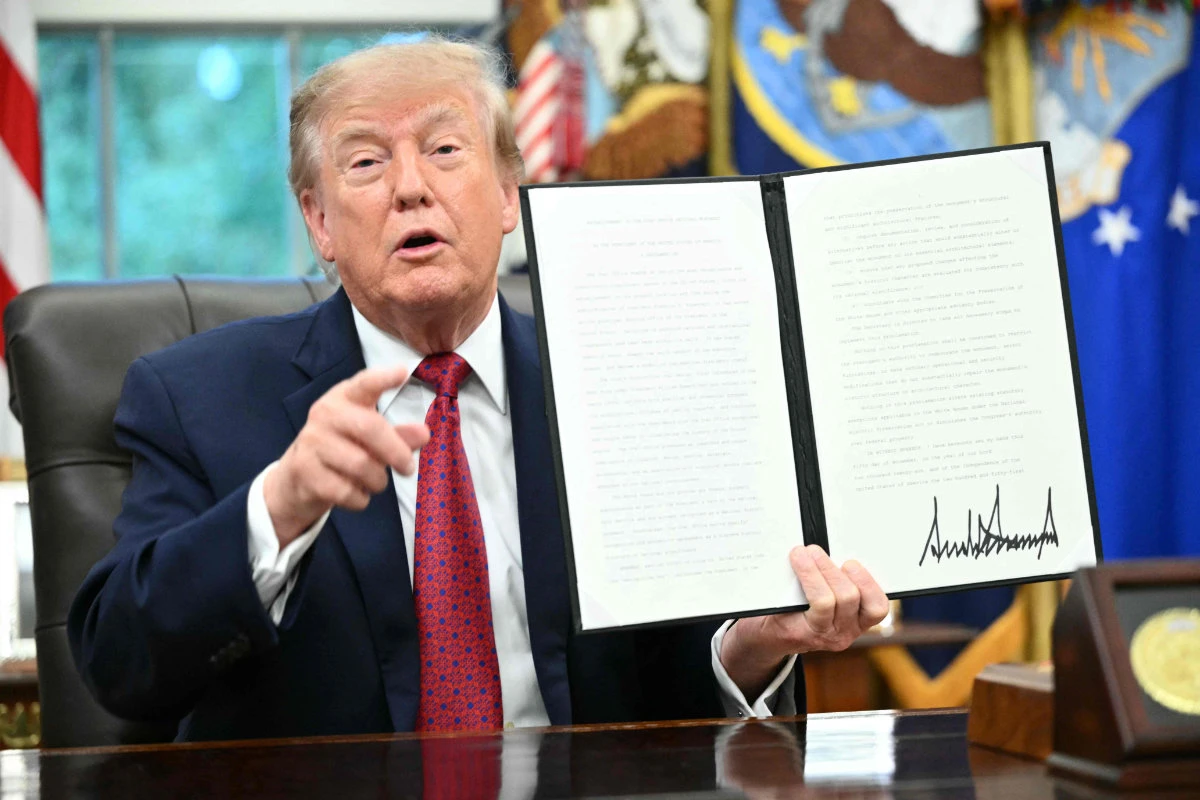
With Democrats solidly controlling the House of Representatives and Senate and President Donald Trump remaining in the White House for the next two years, the checks and balances that America’s Founding Fathers envisioned in the Constitution between the executive, legislative and judicial branches will be significantly tested.
It is understandable that America’s friends and partners around the world will wonder what might or might not change in US foreign policy after these elections. America, after all, is a global power with global interests and Trump has shown himself to be very active on the international stage.
But to answer this question, one must first understand how foreign policy powers are divided among the three branches of government under the US Constitution.
With Democrats commanding majorities in both houses, more funding for Ukraine could be more likely
Luke Coffey
Article I grants Congress several important foreign policy powers, including declaring war and regulating international trade. Congress also has the right to investigate and conduct oversight of the executive branch on foreign policy matters through hearings, investigations and subpoenas. Democratic leaders have already said they plan to use these powers — especially on the more controversial foreign policy decisions taken by Trump, such as withholding support for Ukraine.
But perhaps Congress’ most powerful tool is the power of the purse. In the US presidential system, the legislative branch determines funding for government spending, including on the military, foreign aid and diplomatic initiatives. So, if Congress does not like a particular policy, it can withhold funding to force the White House to change course.
Meanwhile, Article II outlines the president’s powers. The president is commander in chief of the military and may direct military operations. The president is responsible for conducting American foreign policy and representing the country abroad. The executive branch also negotiates treaties, although these require Senate ratification, and the president appoints ambassadors, subject to Senate confirmation.
The third branch, the judiciary, can test the legality of actions taken by the president or Congress but has historically refrained from getting too involved in US foreign policymaking.
Look out for Congress considering legislation to repeal some authorities granted to presidents in recent decades
Luke Coffey
So, when considering how American foreign policy might change, one must understand these different powers and competencies as a whole and how one branch can influence another.
There is no doubt the midterm elections will result in changes. Looking at the big issues in turn, it is possible to sketch what these might be.
First, the war against Iran and American support for Israel. The election outcome has brought Democrats and Republicans toward common ground on the consequences of the Iran war. The conflict has helped drive up prices and inflation in the US. Democrats were quick to blame the war for the country’s cost-of-living crisis, an explanation seemingly validated by the election results and by Vice President J.D. Vance’s social media post blaming the war for Republicans’ disastrous outcome.
If the war does not end before the new Congress takes office, it could use its authority to withhold funding for additional military operations or hold up presidential nominations until lawmakers believe the war has ended satisfactorily.
On US support for Israel, there is so much confusion in American political discourse that it is difficult to know what the situation will look like. A sizable portion of the public still supports Israel but many newly victorious Democrats campaigned on questioning, if not outright ending, this support. This latter view is increasingly shared by much of Trump’s political base too. With the president’s eleventh-hour announcement on Election Day that the US will no longer provide $4 billion annually in direct aid to Israel, it is uncertain where this relationship will go.
On Ukraine, there has never been too much of a problem in Congress regarding support. However, while many Republicans supported providing military assistance more than the White House, they were never willing to challenge the president. With Democrats commanding majorities in both houses, more funding for Ukraine could be more likely — and supported by their fellow Republicans. Ironically, this could help Trump broker a peace deal, as increased American assistance for Ukraine might indirectly put more pressure on Russia to come to the negotiating table.
And then there is China. This is one area where there is unlikely to be much change, because bipartisan support exists for addressing the challenges and threats China poses to US interests. This includes issues connected to China, such as missile defense, shipbuilding in America and modernizing the US nuclear deterrent. Many incoming Democrats share their Republican counterparts’ views.
Finally, trade and tariffs will become a hot issue. Although the Constitution gives Congress the ability to regulate international trade, much of that power has been delegated to the presidency. This has caused considerable friction between the executive and legislative branches over the past 18 months, with the Supreme Court even weighing in. Look out for a Democratic-controlled Congress considering legislation to repeal some authorities granted to presidents in recent decades.
Overall, however, no one should expect big changes in US foreign policy to happen quickly. As commander in chief and head of the executive branch, Trump still maintains substantial power and authority on foreign policy — despite the powers held by Congress. Trump has already suggested that he will work with Democrats in Congress on common interests.
He is one of the most transactional, and therefore flexible, presidents in American history. Do not be surprised if deals are made and consensus is found, especially on issues truly in America’s national interests on the global stage.
Luke Coffey is a senior fellow at the Hudson Institute. X: @LukeDCoffey


