
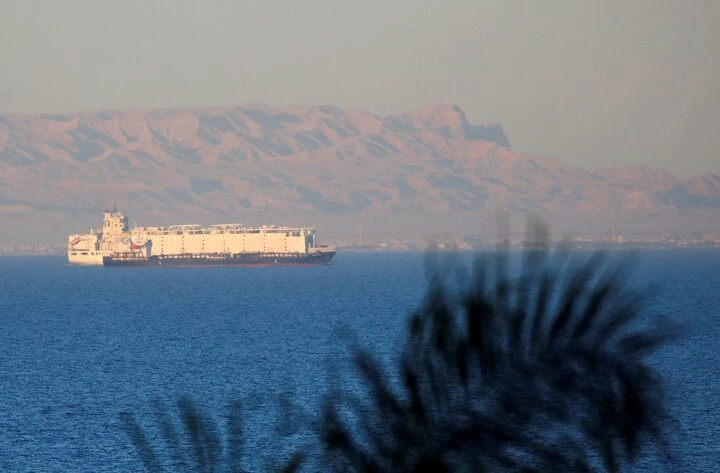

Long before the Red Sea became a strategic chokepoint, it was a passage connecting people and civilizations. For centuries, pilgrims from Egypt, Sudan and across Africa crossed its waters on their journey to Makkah, while merchants carried goods between the ports of Arabia and the African coast. Jeddah stood as a gateway to the holy cities and a vital hub for trade and cultural exchange. The ships and cargoes have changed but the waterway’s significance has only grown.
Today, the Red Sea carries Saudi energy exports to global markets, links Asian manufacturers to European consumers and sustains traffic through Egypt’s Suez Canal. What was once a historic crossroads has become one of the world’s most consequential maritime corridors — and its security is now inseparable from the economic future of the region.
The disruption of the Strait of Hormuz in 2026 has fundamentally altered the strategic importance of the Red Sea. Saudi Arabia’s East-West Pipeline, built to provide an alternative to vulnerable Gulf shipping routes, has proven invaluable, allowing crude exports through Yanbu to climb above 4 million barrels per day within weeks. The crisis has demonstrated the foresight of maintaining alternative export infrastructure, while also revealing how much of the region’s economic resilience now depends on the western coast of the Arabian Peninsula.
This extends well beyond energy. In July, nearly SR1 billion ($270 million) in new logistics investments were announced at Jeddah Islamic Port and the Al-Khumra logistics zone, alongside the development of industrial centers, tourism destinations and new transport networks. These illustrate the Red Sea’s growing centrality to Saudi Arabia’s Vision 2030.
For Egypt, the stakes are similarly substantial. Suez Canal traffic reached 1,490 vessels in October, generating $724 million in revenue, as shipping began recovering from earlier disruptions. The commercial interests of Riyadh and Cairo are therefore increasingly intertwined, with both dependent on a corridor whose strategic importance extends far beyond their own borders.
Both Saudi Arabia and Egypt are dependent on a corridor whose strategic importance extends far beyond their own borders.
Zaid M. Belbagi
Yet recent months have exposed a troubling paradox: the very route offering relief from the Hormuz disruption itself remains dangerously vulnerable. Houthi attacks and threats against commercial vessels have shown how instability around Bab Al-Mandab can reverberate along the entire waterway. In September, quoted war-risk insurance premiums for some Saudi-linked tankers calling at Yanbu climbed to about 3 percent of a vessel’s value, as per marine insurance estimates. A shipping lane does not need to be physically closed to become commercially unviable — punitive insurance costs and persistent uncertainty can throttle trade just as effectively as direct strikes.
Against this backdrop, geography and economic interests point toward a natural center of gravity. Saudi Arabia possesses the longest continuous coastline of any Red Sea state, extending along a waterway that has become indispensable to its energy, logistics and development ambitions. Few countries have such a comprehensive stake in the corridor’s stability or the diplomatic and economic capacity to mobilize cooperation across its shores.
Riyadh has already demonstrated this commitment. In 2020, it brought together seven other Arab and African coastal states and in July this year it spearheaded a multinational maritime defense initiative to strengthen the protection of regional shipping routes. These efforts offer a foundation for a more coherent security architecture that builds on existing partnerships rather than duplicating them.
Egypt remains an indispensable partner, combining control of the Suez Canal with considerable naval capabilities and a direct economic interest in uninterrupted shipping. Cairo last month announced its willingness to provide military support to Saudi Arabia, if requested, further illustrating the convergence of their security interests. Other coastal states, particularly Djibouti, Jordan, Sudan, Somalia, Eritrea and Yemen, have equally important roles in securing the maritime approaches within their reach.
The challenge now is to translate these shared interests into an effective and enduring system of cooperation. Maritime security cannot depend on separate national responses to threats that routinely cross territorial boundaries. A credible arrangement would require a common maritime operating picture, drawing on intelligence-sharing, coastal surveillance and timely information from naval forces, port authorities and commercial operators. Coordinated patrols, agreed procedures for responding to attacks and stronger protection for critical maritime infrastructure would allow participating states to act with greater speed and consistency.
Saudi Arabia’s resources and established partnerships could provide the continuity needed to sustain these efforts, while helping strengthen the capabilities of smaller coastal states.
There is already encouraging momentum. This month, signatories to the Djibouti Code of Conduct met in Mombasa and then in Jeddah, at a workshop supported by Saudi Arabia, to develop a unified regional maritime security strategy, building on their agreement in August to set up a combined task force. The priority should be to connect such initiatives to a coherent framework capable of addressing threats along the entire corridor, from Suez to Bab Al-Mandab, with regional countries setting the priorities and international partners contributing where their capabilities are most valuable.
Ultimately, the success of any maritime arrangement will depend as much on economics and diplomacy as on naval capabilities. Shipping companies and insurers must have confidence that threats can be anticipated, incidents managed and commercial operations sustained through periods of instability. Such confidence will require closer engagement between security authorities and the maritime industry, supported by clear procedures and dependable coordination.
Equally, the Red Sea’s insecurity cannot be separated from the conflict in Yemen, illicit arms flows and the fragility of institutions along parts of the African coastline. Military protection must therefore be accompanied by sustained diplomacy and efforts to strengthen coastal governance.
Saudi Arabia’s influence across the Arab and African worlds, combined with its economic resources and experience in regional diplomacy, gives it a distinctive ability to bring these dimensions together. The strongest security architecture will not simply defend shipping against immediate threats but also help address the conditions that repeatedly place it in danger.
For centuries, the Red Sea has connected the Arabian Peninsula to the wider world. Its waters now underpin a far greater share of the region’s economic future and their security can no longer be left to temporary responses whenever conflict threatens navigation. Saudi Arabia’s growing commercial presence along its western coast, its established regional partnerships and its ability to mobilize collective action have created an opportunity to shape a more dependable maritime order. With Egypt and the other coastal states as essential partners, this opportunity can be translated into lasting security arrangements that protect trade and strengthen regional stability.
The true measure of leadership will not be the number of ships deployed or agreements signed but whether the Red Sea becomes a corridor that the world can once again navigate with confidence.
Zaid M. Belbagi is a political commentator and an adviser to private clients between London and the Gulf Cooperation Council.
X: @Moulay_Zaid


