


Democracy is hard and multilateralism can be tricky. You overlay the two and the tasks at hand may seem insurmountable at times.
The EU has often been criticized for not being democratic enough and for brokering decisions, especially personnel decisions, in backrooms. So, in a quest of the European Parliament to assert its authority as the elected representatives of EU citizens, MEPs insisted that the new president of the European Commission needed to be appointed according to the principle of “spitzenkandidat.” This means in accordance with who was the top candidate of the leading factions among the various party groupings. Many liked the concept, others did not. French President Emmanuel Macron was a particularly vociferous critic.
The heads of state showed willing and tried. The choice was between the German Manfred Weber, of the conservative group of parties, and the Dutchman Frans Timmermans, of the social democrats. The leaders could not find a compromise. Weber was too little-known and Timmerman was deeply unpopular with the so-called Visegrad states, Hungary, Poland, the Czech Republic and Slovakia. Timmermans crossed swords with their rather authoritarian heads of government when, as the European Commissioner for Better Regulation, Interinstitutional Relations, the Rule of Law and the Charter of Fundamental Rights, he never tired of trying to enforce EU principles of democracy and the rule of law, especially in the Visegrad states. This was the time for Viktor Orban and his friends to get back at the Dutch politician.
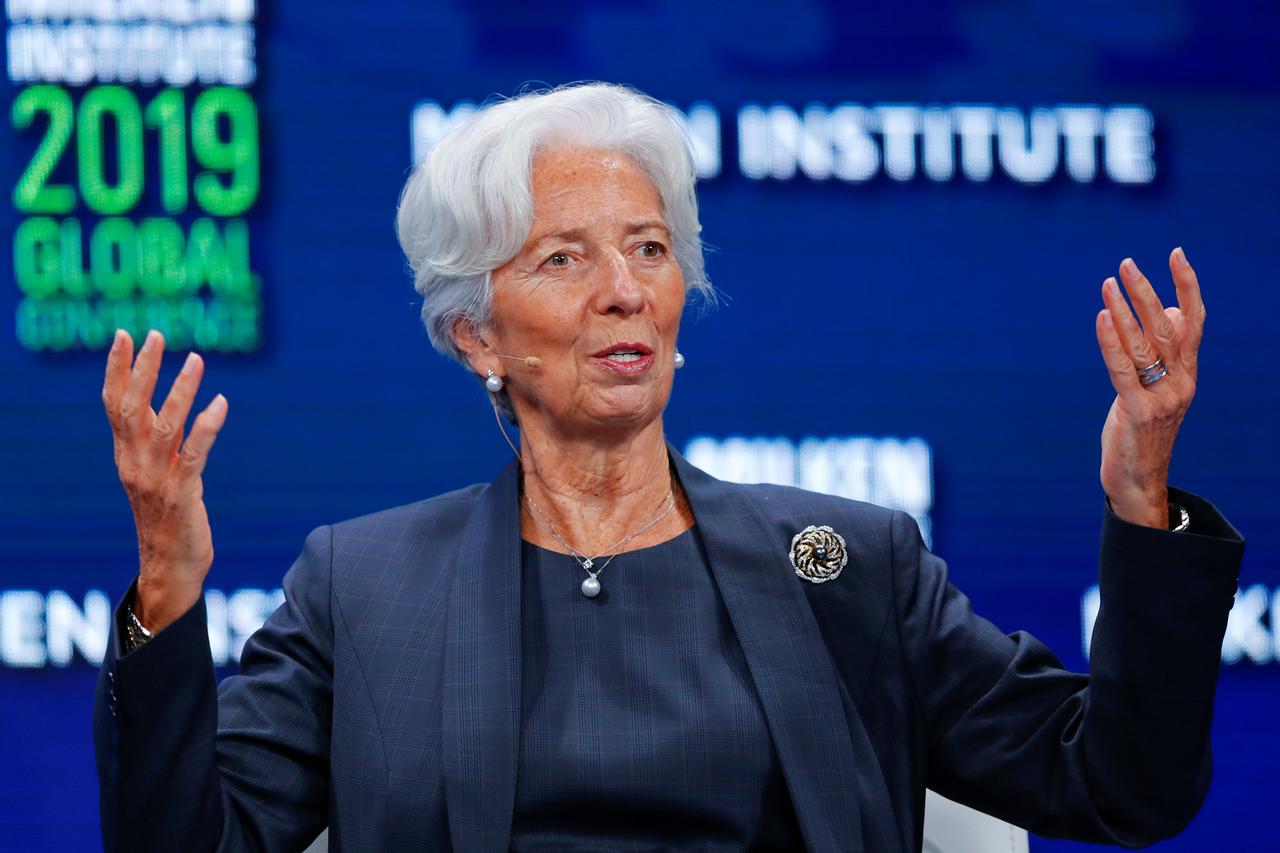
Lagarde is a politician who will go down well when trying to cajole the powers that be in the euro zone.
Cornelia Meyer
The leaders were cooped up for all of Sunday and could not find a compromise. In the end, Angela Merkel and the others who supported the concept of spitzenkandidat relented and, after two more days and late nights of backroom brokering, they came up with an elegant solution. German Minister of Defense Ursula von der Leyen is to be the new president of the European Commission; the Belgian Prime Minister Charles Michel will succeed Donald Tusk as president of the European Council; the Spanish Social Democrat Josep Borrell will take over Frederica Mogherini’s brief as the EU’s High Representative for Foreign Affairs and Security Policy; and lastly, but importantly, International Monetary Fund (IMF) chief Christine Lagarde is to head the European Central Bank.
The choices make a lot of sense, but are also hotly contested. Von der Leyen, a doctor and mother of seven, used to be Merkel’s protege until she forced the government to be more proactive in getting business to include women in leadership when she was minister of labor and social affairs. She is not universally rated as a defense minister, which is admittedly a difficult brief. Martin Schulz, former head of the European Parliament and ex-Social Democratic Party (SPD) spitzenkandidat to become chancellor, described her as the least successful member of the German Cabinet during a television appearance. But Macron likes her, as do many others. It is said that he proposed her. She shares Macron’s vision of a European army and also speaks fluent French.
Back home, Von der Leyen’s nomination resulted in a major political storm. The coalition partner SPD protested because their candidate, Timmermans, did not get the nod. Things got so bad that, in the end, Merkel could not vote for her compatriot and party ally in order to avoid the disintegration of her ruling grand coalition between Christian Democratic Union/Christian Social Union and the SPD.
Michel is eminently qualified to run the European Council. He hails from a dynasty that dipped in and out of Belgian and EU politics. One could also argue that Belgium has a lot of similarities with the EU, inasmuch as various political and ethnic groupings continuously jostle for power. The same holds true for Borrell. He is an intellect and a scholar, the Spanish foreign minister and a former member of the European Parliament.
Lagarde is an inspired, albeit unorthodox choice. The IMF head was previously the CEO of international law firm Baker & McKenzie and has held several ministerial positions in France, including being the first female finance minister of a G7 country. She is a politician who will go down well when trying to cajole the powers that be in the euro zone. She has also been quite vocal that the euro zone needed further fiscal integration and a banking union. She has, however, no practical experience in monetary policy, which will make it important that she is supported by a strong technical team.
The candidates will now have to be confirmed by the European Parliament, which elected its presidents and vice presidents on Wednesday.
These were not easy days in Brussels and they demonstrated the difficulty of uniting bottom-up democratic principles with high-stakes multilateral decision-making. Many in Europe worry that the way in which these candidates were selected will not go down well with the people. Voter turnout for the elections to the European Parliament was at an all-time high, precisely because people felt they finally had a say. It is also questionable that the Visegrad countries were able to penalize Timmermans for essentially doing his job.
In the end, the proof of the pudding will be in the eating — how the new leadership team performs on the job. But a big job it certainly is: There is the refugee crisis, the stuttering Italian economy, climate change and, oh yes, Brexit. A truly packed agenda.
- Cornelia Meyer is a business consultant, macro-economist and energy expert. Twitter: @MeyerResources


