
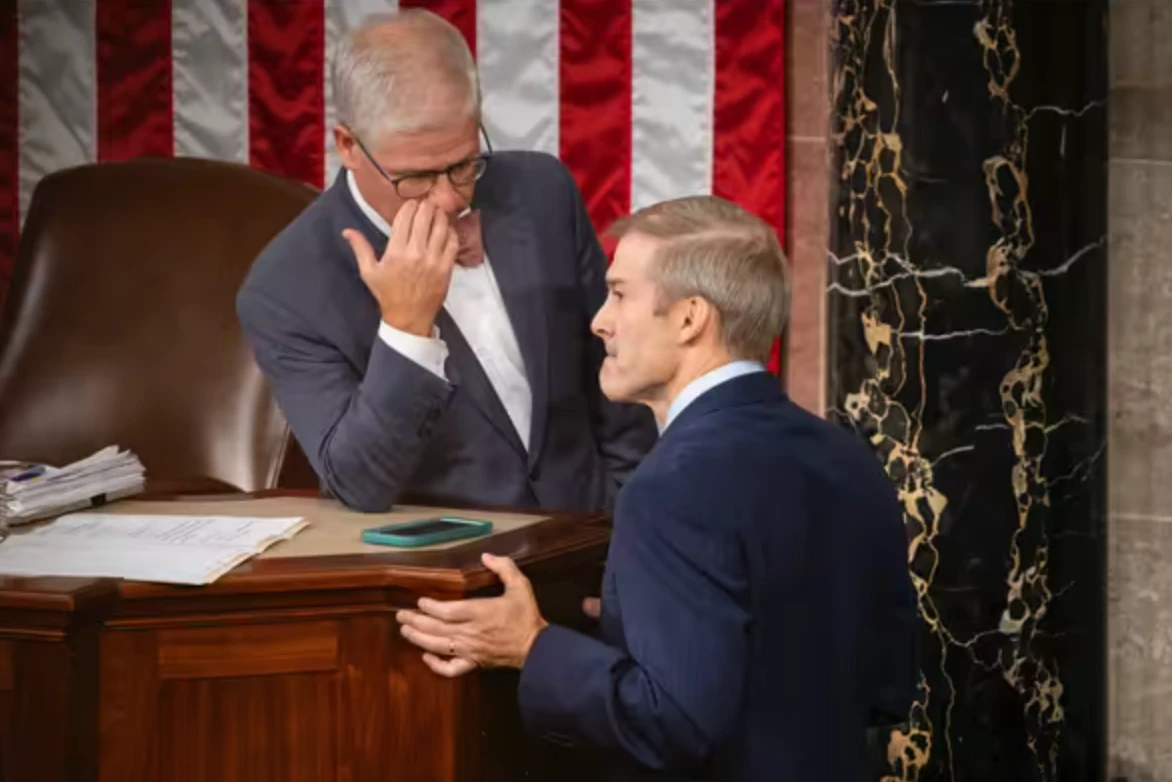

In the annals of American political history, this month’s removal of House Speaker Kevin McCarthy will forever be etched as a watershed moment. The past few weeks have witnessed a political maelstrom of historic proportions, with Rep. Matt Gaetz at the center of it all. His audacious move to oust McCarthy from the position of speaker of the House has shaken the very foundations of American democracy. While some argue that this upheaval was instigated by a few Republicans and elements within the Democratic Party, it is imperative to examine the crisis itself, the significance of the speaker’s position and what it means for the country when it remains vacant.
Gaetz, the firebrand congressman from Florida, arrived in the House of Representatives in 2017 with an anti-establishment mentality, eager to disrupt the status quo. For weeks, he had been brandishing the sword of McCarthy’s ousting, challenging the very core of the Republican Party’s leadership.
The Democrats, sensing an opportunity, decided to join forces in opposition to McCarthy and promote their own minority leader, Rep. Hakeem Jeffries, as the best candidate for speaker. The bipartisan move, though rare, was indicative of the dissatisfaction that had been simmering within the House.
McCarthy vehemently denied Gaetz’s allegations and accused him of a personal vendetta rather than focusing on substantive issues. “You know it was personal. It had nothing to do with spending,” he clarified, highlighting the deeply personal nature of the rift.
The removal of McCarthy was an extraordinary event. Eight Republicans combined with the Democrats to depose him, marking a historic and stunning turn of events. House Republicans subsequently abandoned Rep. Jim Jordan as their nominee for speaker, plunging the Grand Old Party into chaos and uncertainty. The rejection of multiple speaker nominees and the ensuing turmoil underscores a crisis that has engulfed the majority party, leaving the chamber in a state of paralysis.
The position of speaker of the House is pivotal to the functioning of the American government. The speaker is the leader of the majority party in the House of Representatives and plays a central role in shaping the legislative agenda, controlling the flow of bills to the floor for debate and presiding over House sessions. The speaker wields immense power and influence in Congress, both as a legislative leader and as a symbol of the party’s authority.
The speaker is second in the presidential line of succession, underscoring the gravity of the role. They are responsible for maintaining order in the House and managing the committee system, while ensuring that debates are conducted fairly. This position is a critical check on executive power and serves as a guardian of the US Constitution. Without an elected speaker, the House of Representatives struggles to function effectively and the entire legislative process is hampered.
When elected officials prioritize personal vendettas over substantive issues, the democratic process suffers.
Dalia Al-Aqidi
The chaos surrounding the speaker’s position not only reflects a fractured Republican Party but also exacerbates the existing divisions in American politics. Having a speaker in place is crucial to navigating the legislative process, upholding democratic norms and working toward bipartisan solutions. The absence of a speaker can lead to governmental paralysis, undermining the very foundations of democracy.
The current crisis also serves as a testament to the challenges facing American politics in an era of heightened polarization. When elected officials prioritize personal vendettas over substantive issues, the democratic process suffers. The inability of the Republican Party to settle on a speaker nominee raises concerns about how divided the GOP is and its effect on the 2024 elections.
The White House has expressed concerns about the legislative branch’s ongoing dysfunction. The failure to elect a speaker amid “chaotic infighting” is a stark contrast to President Joe Biden’s efforts to advance bipartisan legislation to protect national security interests, provide military aid to Israel and Ukraine, secure critical border funding and strengthen the economy.
The chaos surrounding the speaker's position should serve as a wake-up call for all Americans to demand a return to civility, cooperation and effective governance in the nation’s capital. The fate of American democracy hangs in the balance and the appointment of a new speaker is crucial in reestablishing order, unity and functionality in the House of Representatives.
However, amid this upheaval, fingers are being pointed, accusations are being hurled and the blame game is in full swing. While Republicans have been on the receiving end of much of the criticism, the responsibility for this political turmoil extends beyond party lines and lies mainly with the Democratic Party.
The Democrats’ involvement in this debacle began when they decided to play this political game. It was an uncalculated move, believing that it would result in a victory against their political rivals. But in this political chess game, they unwittingly fell into the trap of their own making.
The attempt to dislodge McCarthy may have been seen as a strategic move by the Democratic Party, but it was an uncalculated step with far-reaching consequences. By endorsing the challenge, it significantly contributed to the ongoing chaos and power struggle within the Republican Party. It was a clear example of how partisan politics often overshadows the need for effective governance. Instead of finding common ground and working together for the betterment of the country, the Democrats chose to engage in a risky gambit.
The consequences of this maneuver go beyond the internal strife within the Republican Party. This impasse has hindered the ability of Congress to make crucial decisions and pass legislation, and it has left the Democratic White House in a state of frustration and powerlessness.
In pursuit of political gain, the Democrats inadvertently hindered their own ability to govern effectively and contributed to the erosion of the democratic process. They lost sight of the broader picture, where the functioning of government should take precedence over partisan maneuvering.
That being said, it is high time both parties refocused on their core duty: serving the best interests of the American people and upholding the principles of democracy that underpin the nation’s governance. When partisan gamesmanship takes precedence over the common good, the American people suffer.
- Dalia Al-Aqidi is Senior Fellow at the Center for Security Policy. X: @DaliaAlAqidi


