
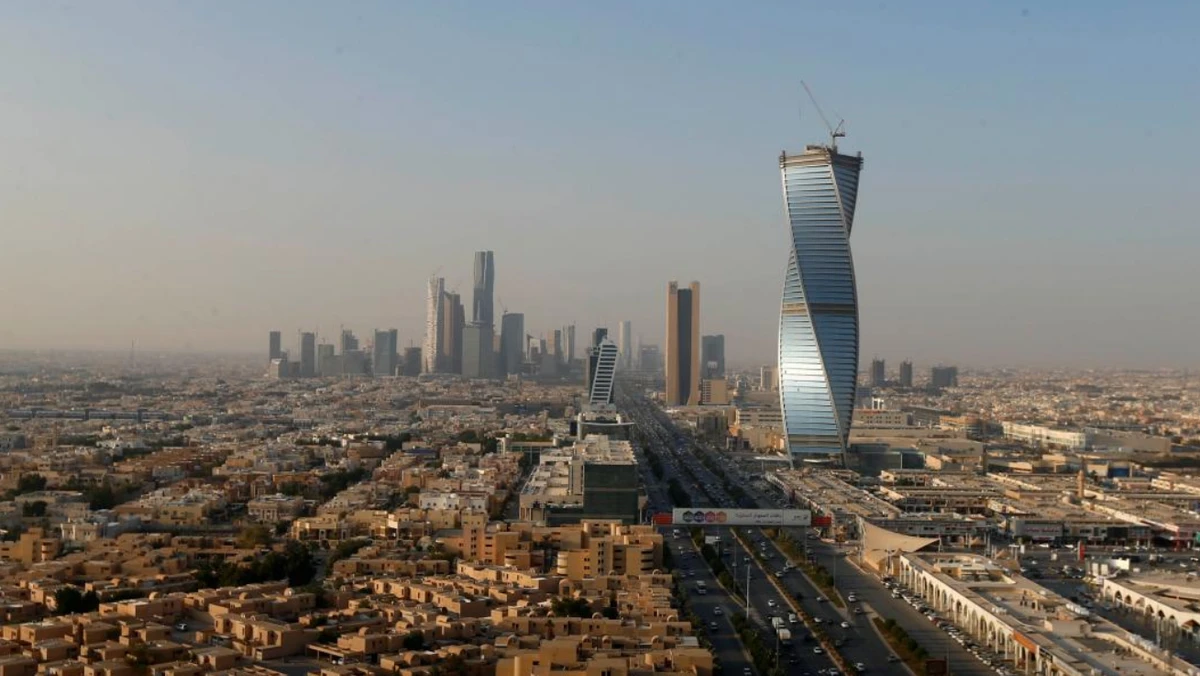

Markets dislike surprises, and the first half of October brought plenty. Between Oct. 6 and Oct. 12, Houthi missiles and drones struck three Saudi airports, including King Khalid International in Riyadh, the home base of Riyadh Air. At least 20 people were killed. Foreign carriers canceled flights, and one airspace-risk service told airlines to avoid Saudi skies altogether. The Future Investment Initiative, Riyadh’s showcase for global capital, was pushed back to next year. Brent crude rose to about $108 a barrel.
The quick conclusion was that Saudi Arabia’s plan to diversify through aviation, tourism, and finance had met geopolitical reality. That is too quick. Investors who price only the damage will miss the variable that decides how long the damage lasts: who has the law on their side, and whether that law will hold.
Capital can live with danger. What it cannot live with is uncertainty about the rules. A country that is attacked but whose sovereignty, alliances, and right of response are clear in law is a different credit from one whose positions are contested. On this measure Saudi Arabia scores well.
Start with airspace. Article 1 of the 1944 Chicago Convention gives every state “complete and exclusive sovereignty” over the air above its territory. That one sentence underpins every overflight right, every landing slot, and every leasing contract in global aviation. A state defending its airports is not raising the risk; it is enforcing the system that makes aviation finance possible.
Now look at the attacks. The 1971 Montreal Convention, its 1988 protocol on airports, and the 2010 Beijing Convention make violence against international airports a crime, with no exemption for non-state groups or political grievances. The laws of war say the same: Civilian terminals are protected, and missiles fired at crowded ones are indiscriminate by design. This matters for money as well as morality. It means the costs of escalation fall on the attacker and its suppliers, through sanctions, interdiction, and diplomatic isolation, rather than on the victim’s creditworthiness.
The Houthis can close a runway for a week. They cannot change the Kingdom’s credit fundamentals
Dr. Bashayer Al-Majed
The Kingdom’s response stands on firm ground, too. The coalition operates in Yemen at the invitation of the recognized government, whose legitimacy the UN Security Council affirmed in Resolution 2216, which also placed an arms embargo on the Houthi leadership. Article 51 of the UN Charter protects the right of self-defense against armed attack. When Turkiye and Pakistan agreed on Oct. 5 to put their joint defense commitments into effect, they did so at Riyadh’s request, which is what the International Court of Justice requires for lawful collective self-defense. For investors, that turns an apparent escalation into something easier to read: a legally anchored security guarantee from two large militaries.
Law explains why the shock should not compound. The numbers explain why the Kingdom can absorb it.
Public debt was about a third of gross domestic product in 2025, low by G20 standards, and it is backed by large sovereign assets. Last year’s deficit, about 5 percent of GDP, was blamed on weak oil prices. That problem has reversed: At more than $100 a barrel, every day of disruption elsewhere improves Saudi Arabia’s fiscal position. The non-oil economy, which Vision 2030 was designed to create, already accounts for more than half of real GDP. Before the war, the IMF expected growth was about 4.5 percent this year.
None of this makes the attacks cheap. Airport closures cost money, war-risk insurance premiums will rise, and tourism bookings will be set back. But the question that matters for capital is whether the losses are temporary or structural. After the attack on Abqaiq in 2019, which briefly knocked out half of Saudi oil output, production recovered within weeks and investor confidence soon followed. Riyadh’s airport reopened on Oct. 18, 10 days after it was hit. Markets have seen this before.
Sceptics treat Riyadh Air and the planned King Salman International Airport as costly vanity projects. The crisis suggests the opposite. With the Strait of Hormuz largely closed and Iranian airspace off-limits, Saudi airspace is one of the few dependable corridors between Europe and Asia. Its energy is also in demand: France has just secured diesel supplies from Riyadh. A state that controls physical routes and supplies scarce commodities at the same time does not have a weaker hand in a crisis. It has a stronger one.
Critics will point to the coalition’s own record in Yemen, and the law applies to everyone. That is exactly why it is valuable to Riyadh. A Kingdom building an aviation hub, a tourist industry, and a financial center has a lasting stake in a world where airspace is protected and treaties are enforced. Its adversaries do well only where rules fail.
For investors, the conclusion is simple. The missiles raised the risk premium on Saudi assets. The law, the balance sheet, and the alliances should bring it back down. The Houthis can close a runway for a week. They cannot change the Kingdom’s credit fundamentals.
Dr. Bashayer Al-Majed is a professor of law at Kuwait University, and a visiting fellow at Oxford.
X: @BashayerAlMajed


