
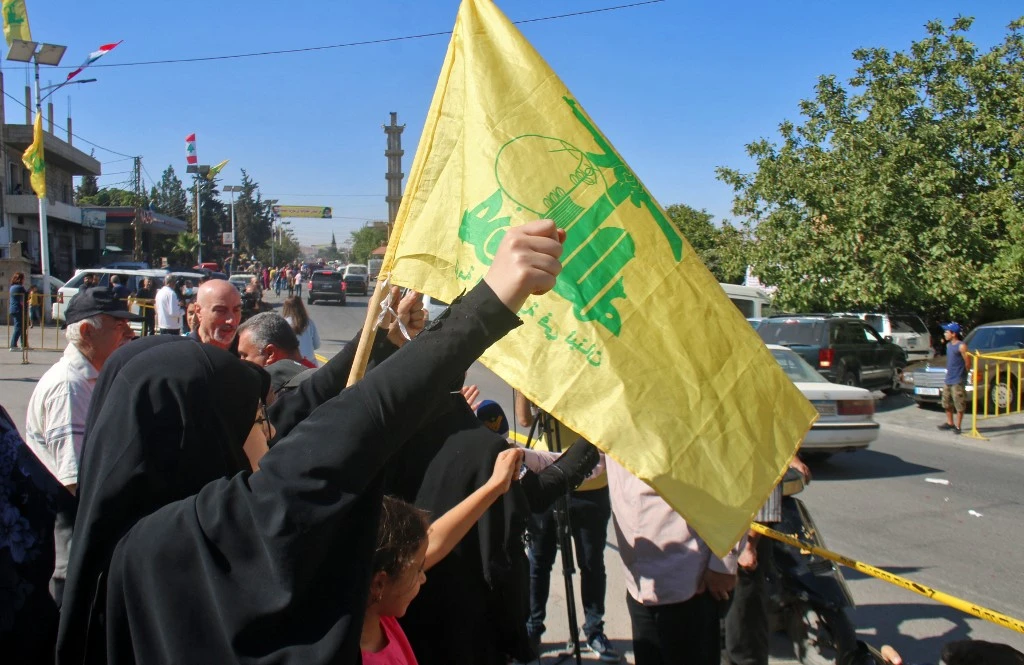

As the world is busy with the implications of the conflict in Ukraine, little attention is being paid to Lebanon. However, the country is set to witness, in just a couple of months’ time, parliamentary elections. If they happen, they will decide the future of the country. Though it is unlikely that the vote will totally eradicate the existing political class, it can end Hezbollah’s control of parliament and the government of Lebanon.
However, many hurdles stand in the way of achieving such a result. The first problem is the Sunni void in Beirut’s second district, which has 11 seats, with six set aside for Sunnis. Even though Saad Hariri lost a lot of popularity — as was demonstrated by the small number of supporters who protested when he announced in January that he was leaving politics — there is no immediate alternative. People will not vote for candidates they do not know and do not recognize.
The person who could have filled this void is Nawaf Salam, the International Court of Justice judge. Salam comes from a family of statesmen and he is highly regarded for his international position. In a nutshell, he has pedigree. He is also known for his integrity. However, following a recent trip to Beirut, Salam decided not to run in the elections. Nevertheless, this can be changed if he gets enough support to take on the role. Though the window for prospective candidates to declare is closing, he still has until March 15 to put his name forward. If Salam runs, he could have a list capable of capturing the Sunni vote in the capital.
The other problem is among the opposition groups, known as “Hirak,” regarding their position toward the existing political parties. While some adopt the slogan “killun yaani killun” (all means all) to signal a clean break with the establishment and all the parties involved in it, others are more open to cooperating with existing political figures, as long as they are not tarnished by corruption cases.
Each camp has its own rationale. The first rejects all the existing parties because it believes that even those who were not corrupt were a part of the system that created corruption and led to the decay of the state. They also believe that citizens who seek change will not vote for a hybrid list. According to Towards One Nation, which advocates this view, the combined opposition vote makes up 19 to 20 percent of the total, which is larger than any single party. They have the potential to garner 23 to 27 seats. According to a poll conducted by the group that involved a sample of 27,000 people, with data gathered by going door to door, 70 percent of respondents said they would prefer to vote for a “pure” list.
It is possible to change the majority in the Lebanese parliament and end Hezbollah’s grip on Lebanese politics.
Dr. Dania Koleilat Khatib
The other camp thinks that change should be more gradual and that those who were not corrupt deserve a chance and should not be matched with those who have been pillaging the country. This difference in the opposition’s views of existing political figures is creating divisions in a group that is supposed to be united as it pushes for change and fights corruption. The Kataeb Party led by Samy Gemayel is the main point of contention. While some protest groups want to associate with him, others strictly adhere to the principle of all means all.
Meanwhile, Kataeb is refusing to coordinate with fellow Christian group the Lebanese Forces. Its pretext is that Lebanese Forces President Samir Geagea voted for Michel Aoun to become president and hence the country is where it is today. However, the best way to save the Hirak groups would be for Gemayel to join Geagea’s list. This would remove the point of contention between the two camps, allowing them to agree on a joint list for the “Thawra” (revolution) in different areas.
Anyway, Geagea and Gemayel both have similar programs that cherish sovereignty, are anti-Hezbollah and seek to fight corruption at state level. This rearrangement would also make things clearer for voters. In each district, there is one list of “benign” parties that are not involved in corruption but are part of the regime and another list of new faces that are not part of the existing system. However, it would require a lot of courage from the leader of Kataeb to change his stance, which up to now has been antagonistic to Geagea. It would also require a major concession from Gemayel — if he were on the Lebanese Forces list, he would not be in the driving seat.
The Lebanese Forces party, on the other hand, needs to have better coordination with the Hirak. It needs to organize the division of votes and not to compete with the opposition groups. Lebanese Forces members have been offended by the groups that say “killun yaani killun.” Once, the spokesperson of the group was on a TV program with a young woman from the Thawra, during which he snapped at her and spoke to her in a condescending way, saying that they have offered martyrs and have a history, and what are her credentials to come and judge them. However, the Lebanese Forces should not look at themselves as the leaders of change, but as a partner of the civil society or the Hirak group in pushing for reform. Hence, coordination is very important. The key is not to maximize the votes for the Lebanese Forces, but the votes that push for change.
Those are steps that are executable. If taken, they can guarantee a change in the majority in the Lebanese parliament and an end to Hezbollah’s grip on Lebanese politics.
- Dr. Dania Koleilat Khatib is a specialist in US-Arab relations with a focus on lobbying. She is co-founder of the Research Center for Cooperation and Peace Building, a Lebanese nongovernmental organization focused on Track II.


