
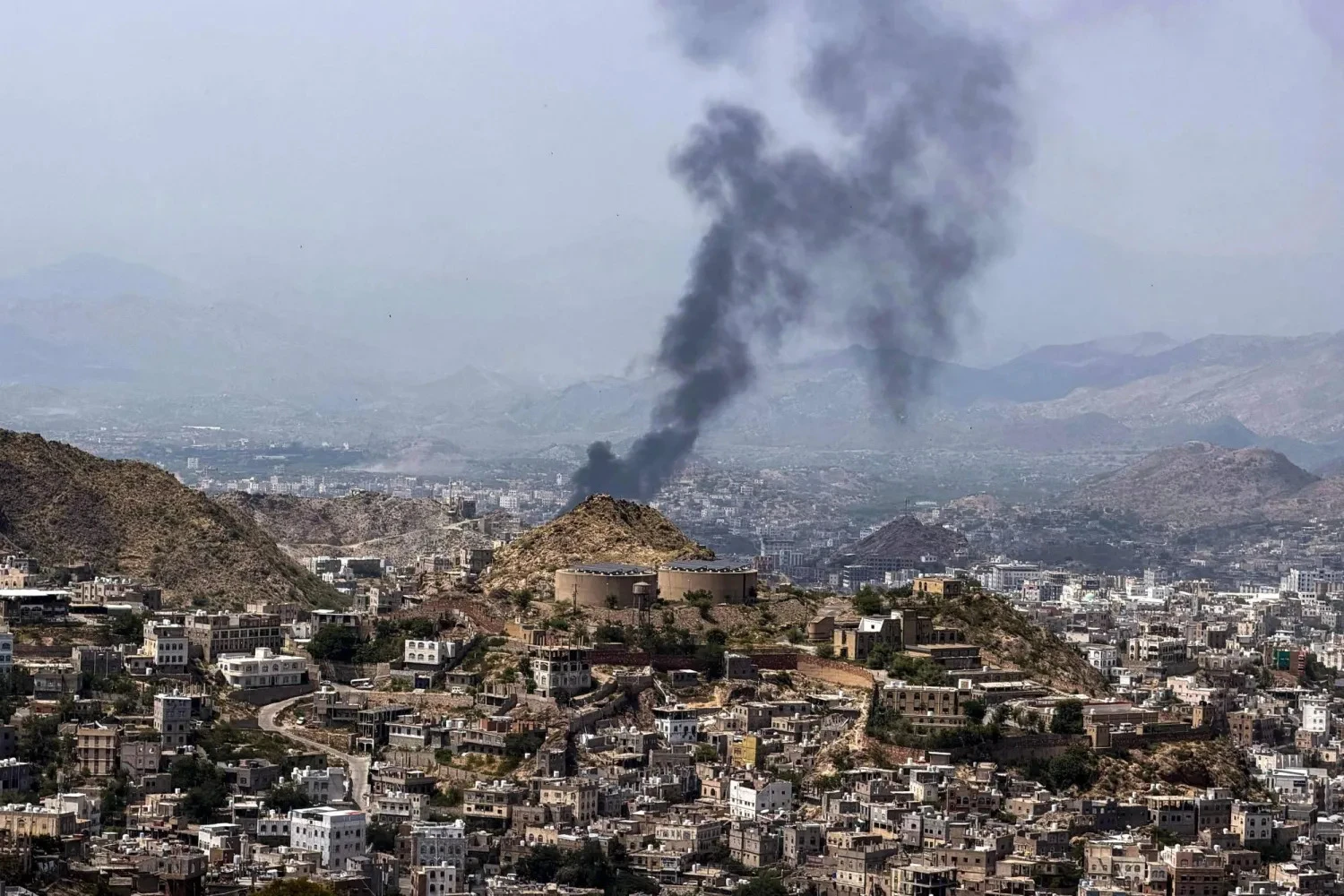

Houthi shells landing on Taiz stopped being news long ago. What has changed is what is inside them. On the Al-Aqroudh and Kahlan fronts, the militia has fired projectiles that leave victims choking, struggling to breathe and vomiting. The Ministry of Health office in Taiz says mustard gas was used.
This raises two pressing questions: Have the Houthis moved from conventional shelling to internationally banned weapons? And who made this possible?
Anyone who has followed Yemen closely should not be surprised. In September 2025, more than a year before the latest attacks, reports said that Iran was smuggling toxic gases and chemical weapons precursors into Houthi territory under the supervision of Revolutionary Guard experts. They also said work was underway on a production facility. Two years earlier, in 2023, Yemeni government forces had intercepted a shipment bound for the Houthis.
The warning signs were there long before Taiz, too. The Assad regime used toxic agents in Syria hundreds of times. Its best-known attacks hit Eastern Ghouta in 2013, Khan Sheikhoun in 2017 and Douma in 2018, alongside chlorine attacks on Al-Lataminah and Talmenes. These were not explanations dreamed up after the fact — they were early warnings and they went largely unheeded. Why? And why does chemical weapons use keep surfacing among Iran’s proxies in particular, first Assad and now the Houthis?
Tehran’s connection to chemical weapons is neither new nor a talking point invented by the Yemeni government
Noofal Gawad
Tehran’s connection to chemical weapons is neither new nor a talking point invented by the Yemeni government. International investigations documented Bashar Assad’s chemical attacks on his own people and Iran stood by his regime politically and militarily throughout.
According to some diplomatic documents, that support went beyond politics. They describe Iranian help in building facilities to produce chemical weapons precursors, including the ingredients for sarin and mustard gas.
The trail does not end in Syria. The UN Panel of Experts on Yemen has reported shipments of chemicals from Iran suspected of feeding Houthi weapons production. Among the seized materials was aluminum powder, which can be used to make explosives and rocket fuel.
Taken together, the record is clear: Iran developed chemical weapons capabilities, passed them to its proxies and those weapons have been used against civilians.
Can the international community really go on treating these as isolated incidents linked only by chance?
Iran built up the Houthis’ military capabilities and gave them money, training and expertise. It cannot disown the consequences, either politically or legally. Several Revolutionary Guard commanders have openly pledged continued support for the militia.
Accountability must reach those who supply banned materials and expertise, not just those who pull the trigger
Noofal Gawad
The world was never in the dark. In Syria, there were condemnations and investigations. There will be investigations in Yemen too. But none of this has deterred Tehran, which is the source of the problem. The same silence and inaction must not be allowed to repeat themselves in Yemen.
The legal framework already exists. The Chemical Weapons Convention bans using or transferring chemical weapons and helping anyone use them. It applies equally to international and internal conflicts.
The UN, the Organization for the Prohibition of Chemical Weapons and influential governments must treat Taiz as an alarm bell demanding urgent action, not as one more entry in Yemen’s war archive, as happened in Syria. Accountability must reach those who supply banned materials and expertise, not just those who pull the trigger.
The Houthis have already fired missiles and drones at Saudi cities and international shipping lanes. They have shown that Yemen’s borders do not contain their ambitions. If deadlier weapons from Iran reach their arsenal, the damage will not necessarily stay in Taiz or anywhere else in Yemen.
The world failed to stop repeated chemical attacks in Syria and failed to stop Iran from backing Assad despite them. Today, the same regime is arming a militia with a long record of abuses and a habit of threatening its neighbors.
How long will Tehran be allowed to arm its proxies while denying responsibility for what they do?
The real danger is not only the attacks in Taiz but what could come after them. This is a regime that readily backs armed groups that carry out its agenda, commit abuses and threaten regional security. Condemnation alone has not stopped it.
Ignoring past warnings did not prevent this disaster. If the world keeps ignoring them, what will prevent the next one? And who can guarantee it will stop at Yemen’s borders and that a Gulf city will not be next?
The question is no longer just what happened in Taiz. It is who will pay tomorrow for the world’s silence today.
Noofal Gawad is a Yemeni diplomat and director of the Office of the Undersecretary for Political Affairs at the Ministry of Foreign Affairs.


