
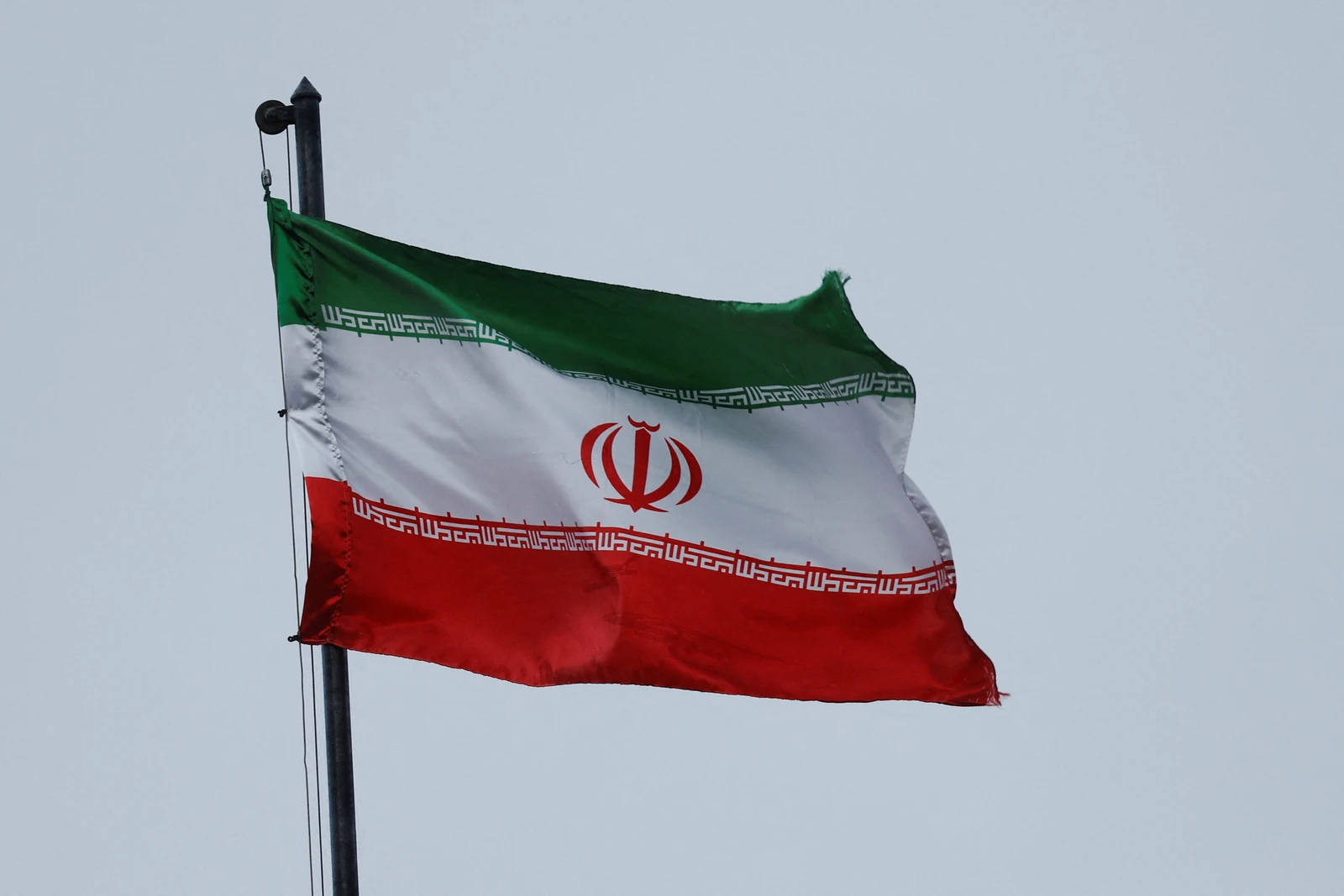

Iranian Supreme National Security Council Secretary Mohsen Rezaei last week issued a warning to countries enforcing US sanctions on Iranian airlines. He said that states preventing Iran from using their airspace and airports would face disruption. This was a blunt and direct threat to countries in the region. Iran should understand that it is now pushing the limits.
Rezaei also said that Tehran would neither reopen the Strait of Hormuz nor negotiate until Washington meets its conditions for ending the war. So far, Iran has managed to absorb the attacks. Despite the decapitation of its senior leadership, the country did not fall into chaos. Iran’s limited success was down to the fact it has institutions that can survive such a decapitation, partly due to their military power but to a large extent because the countries of the region resisted the war. In May, Saudi Arabia prevented the US from using its bases to attack Iran. Gulf countries, as well as Turkiye and Pakistan — basically the countries neighboring Iran — have maintained a policy of neutrality despite being US allies.
If they stood with the US as Donald Trump and Benjamin Netanyahu wanted, the situation could have been totally different. They definitely do not want to take part in the war as they understand very well the Israeli scheme. As much as this war is directed against Iran, it is also directed against the countries of the region. Israel wants to exhaust them through war so no one can contest its policies vis-a-vis the Palestinians. However, if those countries’ airports are being attacked by Iran, they will have no choice but to respond. In this sense, Tehran will be fulfilling Netanyahu’s wish.
Ahmet Uysal, a renowned Turkish academic, wrote on X: “Iran was breathing fire while Turkiye did nothing against it. Now that it faces a real move, may it come to its senses.” This should ring alarm bells in Tehran. Iran definitely does not want to face off with countries like Turkiye and Saudi Arabia. It has already pushed the limits with the Houthis and the Bab Al-Mandab Strait. The Houthis are nonstate actors, so Iran can always pretend they are acting on their own despite the fact that Tehran arms them.
Iran has come close to the threshold of provoking neighboring countries. It should be careful not to cross the line.
Dr. Dania Koleilat Khatib
We do not know for sure the drivers behind each country’s policies. However, one can see that Turkiye, for example, has taken strict measures against Iran following the Houthi attacks on Saudi Arabia. The operating license of Bank Mellat has been revoked by the Turkish authorities and flights by Mahan Air have been stopped. This is a clear message to Tehran from Ankara and probably on behalf of its allies: beware, you are pushing the limits.
Iran should understand that the region is opening its arms to Tehran to be part of a regional security architecture. However, if Iran wants to assert itself as a hegemon, then it is a totally different story. It will be inviting countries that have so far stayed on the sidelines and even indirectly helped Iran to unite against it — and that would be totally reckless behavior.
To understand the situation, one should examine the dynamic inside Iran. Iran is not a monolith. Not everyone in the Iranian leadership thinks the same. This was revealed following the signing of the Makkah mutual defense pact by Saudi Arabia, Turkiye and Pakistan. Foreign Minister Abbas Araghchi effectively welcomed the agreement. Though he did not mention the pact directly, he posted on social media: “When Muslims stand together, we can face every challenge by malicious outsiders head-on. Time to rely only on ourselves and embrace true brotherhood.” Others made aggressive comments. Lawmaker Ebrahim Rezaei criticized the pact, saying it would not provide Saudi Arabia with security. Mahmoud Nabavian, a member of Iran’s parliamentary National Security and Foreign Policy Commission, reiterated that criticism.
Again, neighboring countries do not want conflict with Iran. They will not attack Iran unless they have to. However, if their airports are targeted, they will not remain idle, not anymore. Iran has come close to the threshold of provoking neighboring countries. It should be careful not to cross the line. In fact, the restrictions on Iranian airlines imposed by Turkiye and Oman should push the Iranian leadership to rethink its policy. Countries in the region have so far not attacked Iran not because they cannot but because they do not want to.
Of course, Iran has a policy of “if we go down, everyone will go down with us.” However, this can backfire. Countries that obviously do not want to go down with Iran might think they have no other option but to help the US take Tehran down before the latter takes them with it. Also, they do not want Iran to emerge from this war as a hegemon. They do not want Iranian influence to replace the dwindling American influence. Countries in the region want a regional security architecture that provides security and stability for everyone, regardless of each country’s size or defense capabilities.
It is important for Iran not to turn potential allies into enemies. Instead of making useless and reckless threats, it would be better off deliberating with the countries of the region on the best way to end the war and for it to become part of the emerging regional security architecture.
Dr. Dania Koleilat Khatib is a specialist in US-Arab relations with a focus on lobbying. She is co-founder of the Research Center for Cooperation and Peace Building, a Lebanese nongovernmental organization focused on Track II.


