
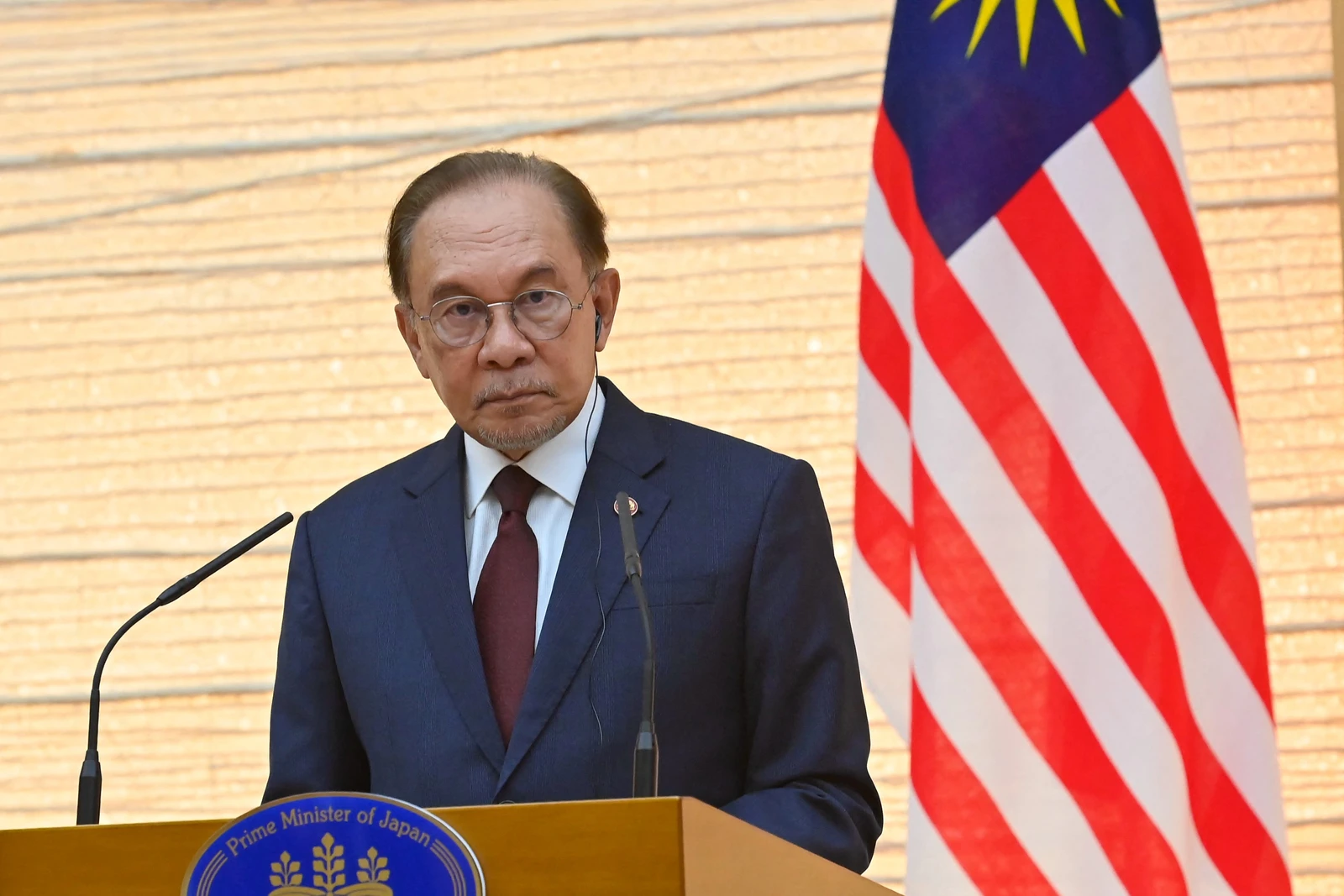

Malaysian Prime Minister Anwar Ibrahim has offered to host Myanmar President Min Aung Hlaing as part of an effort to accelerate the return of Myanmar nationals currently in Malaysia.
At first glance, the proposal appears contradictory. Malaysia has not formally recognized Myanmar’s current government and has been among the more outspoken Association of Southeast Asian Nations members in criticizing the country’s political crisis. Yet Anwar argues that Kuala Lumpur still needs someone with whom it can negotiate practical questions such as refugee return.
That tension points to an important change in regional diplomacy.
Since Myanmar’s 2021 military takeover, debate has often been framed as a choice between isolation and engagement. One side warns that restoring normal relations grants legitimacy without meaningful political change. The other argues that isolation reduces the access governments need if they hope to influence events inside Myanmar.
Malaysia’s approach suggests a third possibility: engagement that remains limited, conditional and tied to specific outcomes.
A promise to receive refugees is not the same as creating the conditions in which they can rebuild their lives.
Dr. Azeem Ibrahim
Anwar has said Myanmar has agreed to initially receive 5,000 people from Malaysia, with the first group of 1,476 scheduled to return next week. Malaysia hosts about 194,000 refugees from Myanmar registered with the UN Refugee Agency. Kuala Lumpur therefore faces a practical problem that diplomatic distance from Naypyitaw has not resolved.
The logic is straightforward. Myanmar wants greater regional acceptance. Since Min Aung Hlaing became president in April, he has visited several ASEAN states as part of a wider effort to restore diplomatic and economic ties. Malaysia, meanwhile, wants cooperation on a refugee population that it does not regard as permanently its responsibility.
This makes the Malaysian initiative more significant than another bilateral meeting. It illustrates how diplomatic access itself can become bargaining power.
Recognition is often treated as binary. In practice, international legitimacy is more divisible. A country can hold talks without granting formal recognition. It can host a leader without restoring full political relations. Economic contact, humanitarian negotiations and political recognition can move at different speeds.
That creates the possibility of conditional normalization. Instead of asking whether Myanmar should simply be welcomed back into normal regional diplomacy, governments can examine what concrete outcomes accompany each additional level of engagement.
Malaysia’s refugee negotiations provide an early example. Isolation preserves distance but often offers little practical leverage. Unconditional normalization provides access but can surrender leverage. Conditional engagement attempts to occupy the space between them.
Its limits are already visible.
The UN Refugee Agency has expressed concern about the upcoming repatriation and has emphasized that returns must be voluntary and take place in safety and dignity. Continuing conflict inside Myanmar makes such guarantees difficult.
There is also a structural problem. The government in Naypyitaw does not control much of Rakhine State, where many Rohingya originate. Large areas are controlled by the Arakan Army. Myanmar’s central authorities may therefore be able to agree diplomatically to receive people without possessing the territorial control needed to guarantee safe return.
This exposes both the potential and the weakness of transactional diplomacy. Diplomatic incentives can encourage concessions but those concessions have value only if they can be implemented. A promise to receive refugees is not the same as creating the conditions in which they can rebuild their lives.
There is a broader ASEAN dimension too. The bloc’s Five-Point Consensus was designed around a comprehensive approach to Myanmar’s crisis, including an end to violence, humanitarian assistance and inclusive dialogue. Implementation has repeatedly stalled. Meanwhile, neighboring governments continue to face immediate consequences from the conflict, including refugees, border insecurity and disrupted trade.
This creates pressure for smaller agreements even when a comprehensive settlement remains elusive.
Malaysia’s initiative may therefore signal a wider move from grand diplomatic frameworks toward issue-specific bargaining. Thailand has its own interests in border stability, energy and commerce. Bangladesh is pursuing talks over Rohingya repatriation. Myanmar, for its part, seeks investment and a return to normal regional participation.
The result is a diplomatic environment in which normalization is no longer a single event. It can occur incrementally through a series of transactions.
That carries risks. If concessions are symbolic while diplomatic benefits are substantial, Myanmar could gain acceptance without addressing the underlying causes of displacement and conflict. Yet if governments refuse all contact until a comprehensive settlement emerges, they may have little ability to negotiate practical improvements.
Anwar’s approach tries to manage this dilemma by separating practical cooperation from full political acceptance.
Diplomacy toward fragmented states is becoming more complicated. Governments can be internationally contested yet still control institutions that neighbors must deal with. Armed groups can control territory without international recognition. Refugees can depend on agreements involving authorities that diplomats remain reluctant to legitimize. Myanmar embodies all three problems.
The question for ASEAN is therefore becoming less about whether to engage Myanmar and more about what different forms of engagement actually produce.
Malaysia’s initiative offers one possible answer: diplomatic access can be granted gradually and linked to measurable cooperation.
Its success will depend not on the symbolism of a presidential visit but on what happens afterward. If engagement results in genuinely voluntary and safe returns, improved humanitarian access and practical cooperation, conditional diplomacy will have demonstrated value. If it produces only photographs and promises, the distinction between engagement and normalization will become much harder to defend.
Either way, Malaysia is testing a form of diplomacy that the rest of the region will be watching closely.
Dr. Azeem Ibrahim is the director of special initiatives at the New Lines Institute for Strategy and Policy in Washington.
X: @AzeemIbrahim


