

As I watched the various branches of our armed forces and security services on Sovereignty Day, I reflected on the immense responsibility entrusted to us to safeguard our people’s security and stability. It was a moment that reflected the progress of a nation working to strengthen its state institutions and restore its role. It also reminded me that sovereignty is not merely an occasion for celebration. It is a daily responsibility, reflected in how a state governs its affairs, protects its people’s interests and manages its relations with its neighbors, the wider region and the world.
In the modern understanding of the state, sovereignty entails more than possessing traditional instruments of power. It also requires the ability to build effective foreign relations. Iraq therefore needs an approach rooted in agile diplomacy and economic resilience.
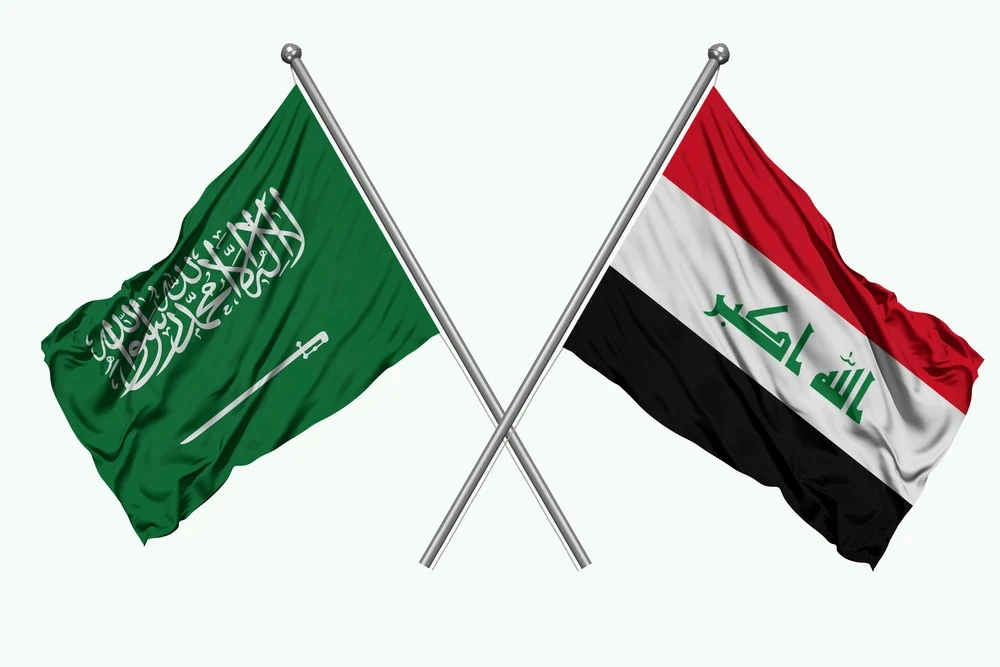
In this context, relations between Iraq and Saudi Arabia are of particular strategic importance, given the political and economic significance of both countries, their shared Arab ties and their common geographical, economic and security interests. The two countries have made tangible progress in rebuilding trust and opening channels of cooperation, laying the groundwork for taking bilateral relations to a new level.
Iraq’s security and Saudi Arabia’s stability cannot be viewed in isolation. Both are integral to the broader security of the Gulf and the stability of the region.
The two countries have made tangible progress in rebuilding trust and opening channels of cooperation
Ali Falih Al-Zaidi
Realizing this vision requires agile diplomacy founded on mutual respect for sovereignty and recognition of every state’s right to make decisions in accordance with its national interests. Iraq respects the sovereignty of other states and expects its own sovereignty to be respected in return. Its geographical position and diverse regional and international relationships also place it in a position to serve as a bridge for dialogue and a meeting point for regional powers, rather than an arena for rivalry and conflict or a base from which neighboring countries might be threatened.
Iraq can play a mediating role by bringing regional powers together through dialogue. This requires a balanced foreign policy that avoids alignment with competing regional blocs and seeks to keep Iraq out of regional conflicts.
Regional crises have demonstrated the vulnerability of our economies to severe disruptions in markets, trade flows and energy supplies. The closure of the Strait of Hormuz has underscored the need to diversify trade routes and reduce dependence on any single route or exposure to exceptional circumstances.
Iraq can play a mediating role by bringing regional powers together through dialogue. This requires a balanced foreign policy
Ali Falih Al-Zaidi
Iraq therefore needs a more resilient economy, built on diversifying sources of income, expanding trade routes and access to markets, developing transport networks and infrastructure, strengthening industry and agriculture, and creating greater opportunities for private enterprise and investment. The Development Road Project, alongside stronger trade and transport links with Gulf states, offers an important opportunity to expand Iraq’s economic role and connect it more closely to regional and international markets.
Iraq’s stability remains fundamental to the success of any partnership. Investment requires a stable state, clear laws and institutions capable of protecting rights and enforcing contracts. Combating corruption, simplifying procedures and strengthening the rule of law are therefore more than domestic reforms; they are essential prerequisites for attracting investment and strengthening economic independence.
Guided by this vision, Iraq and Saudi Arabia can usher in a new phase of closer relations built on partnership and joint planning. Stable relations between Baghdad and Riyadh can become a cornerstone of broader stability and deeper integration across the Gulf and the wider region.
Ali Falih Al-Zaidi is the Prime Minister of Iraq.
This article first appeared in Asharq Al-Awsat.


