
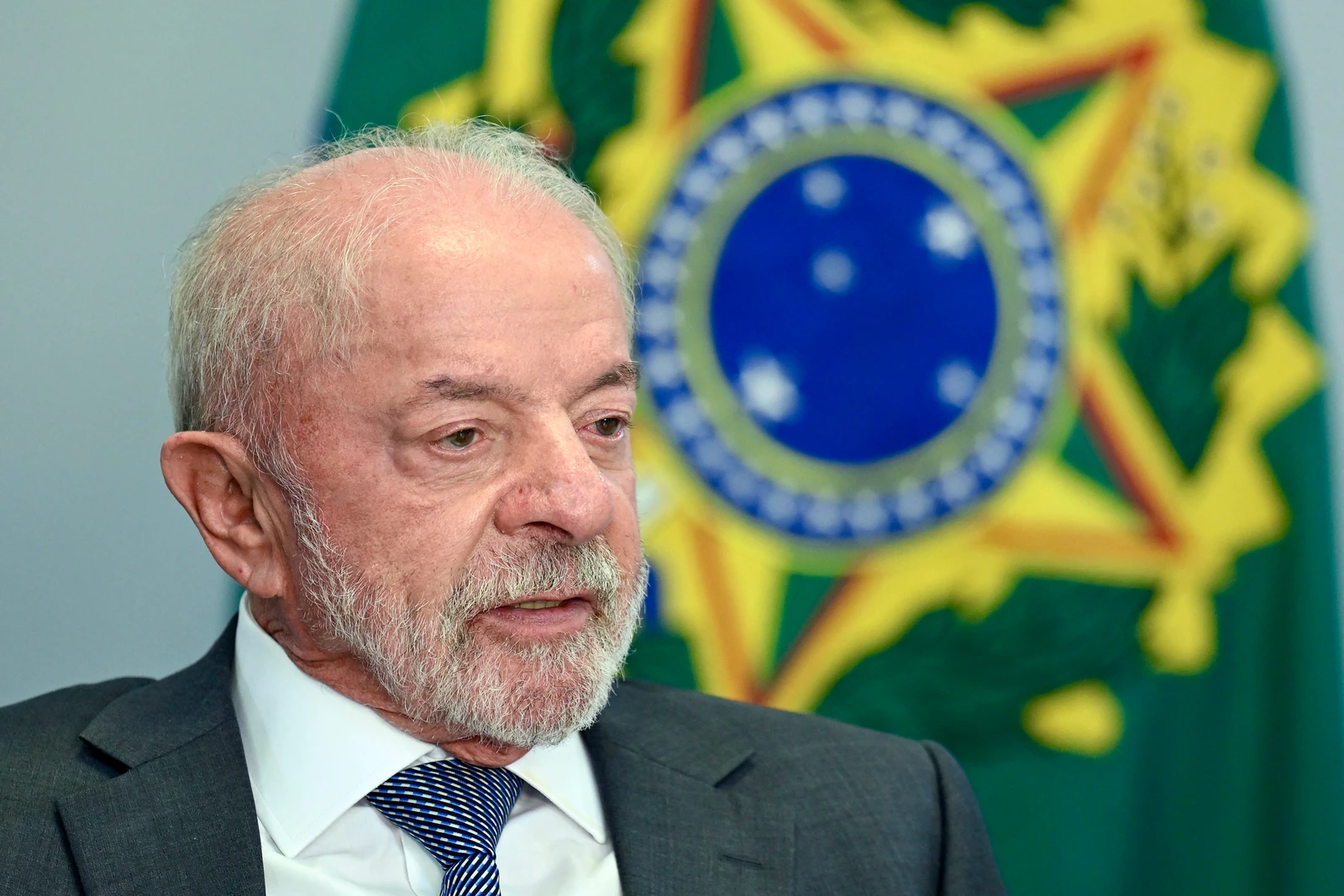

Much attention has focused on the domestic implications of Brazilian President Luiz Inacio Lula da Silva’s historic reelection last month. However, the foreign policy implications could also be significant.
A win for Sen. Flavio Bolsonaro would have seen a reassertion of the paramountcy of ties with the US under President Donald Trump, the country to which Bolsonaro has now exiled himself. One key goal would have been trying to reduce the range of US tariffs on Brazil.
Amid a political shift rightward in South America in recent years, Bolsonaro may well have sought to copy some of the playbook of Argentine President Javier Milei. Since assuming office in 2023, Milei has boosted ties with Trump and formally declined Argentina’s invitation to join the BRICS+ club.
To be sure, Lula’s ties with Trump have thawed since the hostility of some of 2025 and 2026. However, his global affairs focus will continue to be on attempted leadership of the Global South, via platforms such as BRICS+ and initiatives like the country’s previous chairing of the G20 in 2024 and COP30 in 2025.
It is no coincidence that the Brazilian president will make a visit to the Association of Southeast Asian Nations summit in the Philippines next week. He will also be at the COP31 climate change summit leadership meetings in Turkiye this week.
Since returning to office in January 2023, he has sought to project Brazil’s return to the global stage. This came after years of what some see as self-inflicted isolation from 2019 to 2023 under former president Jair Bolsonaro, Flavio’s father.
Lula has already made headway in his goal of restoring Brazil’s reputation as a vibrant democracy.
Andrew Hammond
Part of the reason that Brazil has the ability to project its power on the world stage is its huge natural resources. Brazil has large reserves of arable land and sees itself as an agriculture superpower. Since major investments in the 1970s, the nation has become the world’s second-largest exporter of agricultural products, with specialties including meat, animal food and protein such as soybeans, coffee, grains and corn, which help secure global food security.
Of course, there are also multiple other nations, including China and India, that are asserting their Global South leadership credentials.
So, while Lula is unlikely to achieve all of his global leadership goals, the turnaround in Brazil’s reputation has been significant since Jair Bolsonaro’s presidency. He has already made headway in his goal of restoring Brazil’s reputation as a vibrant democracy, a fact that last month’s surprise election result confirmed, after Flavio Bolsonaro led in the first round.
Following his second-round victory, Lula will continue to try to enhance Brazil’s relationship with China, which had been particularly poor during his predecessor’s tenure. However, he is looking for a wider pivot to the Asia-Pacific too, including ASEAN.
ASEAN is a disparate group of nations but it increasingly recognizes its influence on the global stage. There is growing international awareness of this strategically located region, which has a fast-rising purchasing power parity gross domestic product of more than $10 trillion, fueled by a population of more than 600 million in an area of about 4.5 million sq. km.
It was about a decade and a half ago, when Lula’s Workers’ Party was last in office, that then-President Dilma Rousseff oversaw Brazil become the first South American nation to accede to the Treaty of Amity and Cooperation in Southeast Asia. In his current term, Lula has taken this further — last year, he became the first Brazilian president to visit the ASEAN headquarters.
Over the quarter of a century up to 2024, ASEAN-Brazil bilateral trade increased more than sixteenfold, from $2.3 billion to $37.2 billion. This means that ASEAN is now Brazil’s fourth-largest destination for exports and fifth-largest trading partner behind China, the EU, the US and the Mercosur bloc (which, alongside Brazil, includes Argentina, Paraguay, Uruguay and Bolivia). Lula sees plenty of potential, not least given the significant trade surplus that Brazil runs with the ASEAN economy, driven in part by agricultural exports.
Taken together, this is why Lula’s victory has key foreign policy as well as domestic implications. His international vision is significantly different to Flavio Bolsonaro’s and he will now seek to action it further in a historic fourth term.
Andrew Hammond is an associate at LSE IDEAS at the London School of Economics.


