


After last week’s sweltering weather in Europe, when temperatures reached 45.9 degrees Celsius in France and the high 30s in Germany, Poland and the Czech Republic, it might now be an easier task to send the message that climate change is a reality, and our planet is warming dangerously.
It has become an imperative for leaders across the world, as much as for all of us, to understand and accept that climate change is affected by human behavior; that it is having an increasingly grave impact on our planet and the well-being of many millions of people around the world; and that if no urgent, globally coordinated action to contain and reverse this trend is taken, our generation is risking the future of planet Earth and of humanity itself.
Despite all the warnings that climate change is the No. 1 danger to humanity, the recent G20 summit in Osaka, Japan, barely discussed it, although it was on the agenda. As is customary on these occasions, only lip service was paid to environmental issues and climate change due to obvious disagreements between the participants, especially with the US, because some countries don’t seem to think it is worth opening rifts with Washington on this issue. The Paris climate agreement of 2016 is being very sporadically implemented by the more globally conscious countries, but other issues are perceived to be more urgent and of more concern to those countries’ populations.
However, this might not be the case for much longer, as evidence continues to mount that climate change, as we are increasingly experiencing it, is not just another instance of a climatic cycle, but the result of our short-term and irresponsible ways of life, which are detrimental to the long-term sustainability of the environment. For many years now, the Intergovernmental Panel on Climate Change, which provides policymakers with regular scientific assessments on climate change, its implications and its risks, has been warning that “human influence on the climate system is clear, and recent anthropogenic emissions of greenhouse gases are the highest in history. Recent climate changes have had widespread impacts on human and natural systems.” Such impacts include the warming of the atmosphere and the oceans, diminishing levels of snow and ice, notably at the poles, and rising sea levels.
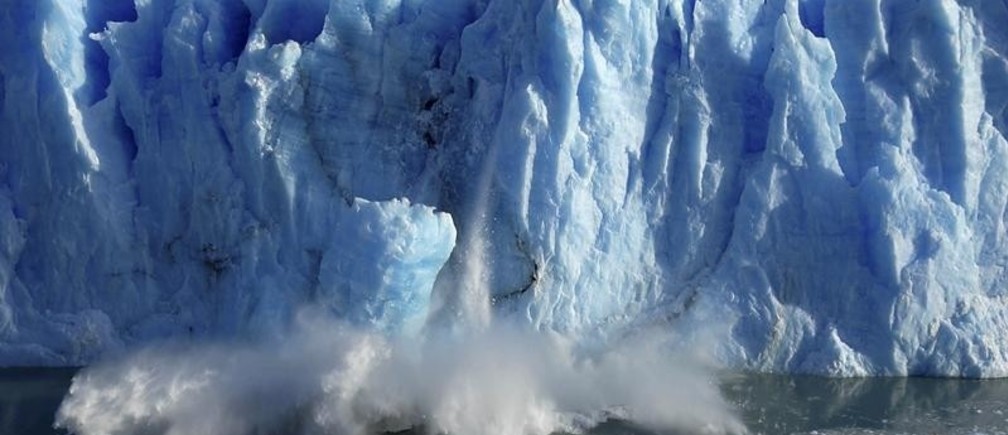
Away from the sweltering cities and centers of population, the evidence, including from satellite imagery, has exposed the scale of the rapid disappearance of glaciers across the Himalayas over the past 40 years. The average rate of ice loss since the beginning of the 21st century has doubled compared to the last quarter of the 20th century. If individual countries and the international community as a whole don’t take urgent steps to control greenhouse gas emissions, up to two-thirds of the ice in these mountains could melt away.
Experts expect that, even in the best-case scenario — in which the international community does get its act together and cut carbon dioxide emissions to meet the current target of limiting global warming to 1.5 C above pre-industrial temperatures — more than a third of the glaciers along the Hindu Kush and Himalaya range will still have disappeared by 2100. The homes of the highest peaks, among them Mount Everest and K2, might be reduced to bare rock by the time we reach the end of the century.
Scientists are agreed beyond reasonable doubt that human activity is behind these rising temperatures and melting ice.
Yossi Mekelberg
These melting glaciers have serious consequences for almost 2 billion people in China, India, Pakistan, Afghanistan, Bangladesh and smaller countries in the region, such as Bhutan and Nepal. Between those who live in the mountains and those who live in the river valleys below, this phenomenon is already beginning to disrupt the water flows of major rivers such as the Yangtze, Mekong and Ganges, which provide water for millions of farmers to irrigate the fields that they depend on for their livelihood. Drastic changes to these rivers’ flow patterns could also negatively affect hydropower production, as well as lead to natural disasters, mainly landslides and floods.
But this situation is not limited to the Hindu Kush and the Himalayas. According to NASA, the Greenland and Antarctic ice sheets lost an average of 286 billion tons of ice per year between 1993 and 2016, while Antarctica lost about 127 billion tons of ice per year during the same period.
Scientists are agreed beyond reasonable doubt that human activity through the burning of fossil fuels is behind these rising temperatures and melting ice. Human-induced warming has heated up the planet by an extra 1 C, though many regions have experienced more than 1.5 C of warming over pre-industrial temperatures in at least one season; resulting in rising sea levels, increasing droughts and floods, and biodiversity loss. Research points out that those most affected by these extremely worrying consequences of global warming are people in low and middle-income countries, which has dire implications for their food security and is bound to lead to rising poverty and the search for salvation abroad. Whether those particularly vulnerable territories are small islands, megacities or coastal regions, as much as high mountains, the consequences of global warming are already beginning to negatively impact their inhabitants, who may well see their ecosystems damaged irreparably.
Climate change and global warming together represent the biggest challenge confronting the world today. Facing up to such an existential threat requires global leadership and a change of discourse, especially in the affluent parts of the world, to one that rejects the profligacy of excessive use of fossil fuels to feed an unabated consumerist addiction, replacing it with a responsible attitude toward the climate and sustainability. That is not an easy message to deliver to spoilt societies that thrive on consumerism to generate wealth and enable a very particular way of life, but it is the most necessary one at this point in history. So look around — can anyone spot such leadership and such messengers emerging before it is too late?
- Yossi Mekelberg is professor of international relations at Regent’s University London, where he is head of the International Relations and Social Sciences Program. He is also an associate fellow of the MENA Program at Chatham House. Twitter: @YMekelberg


