
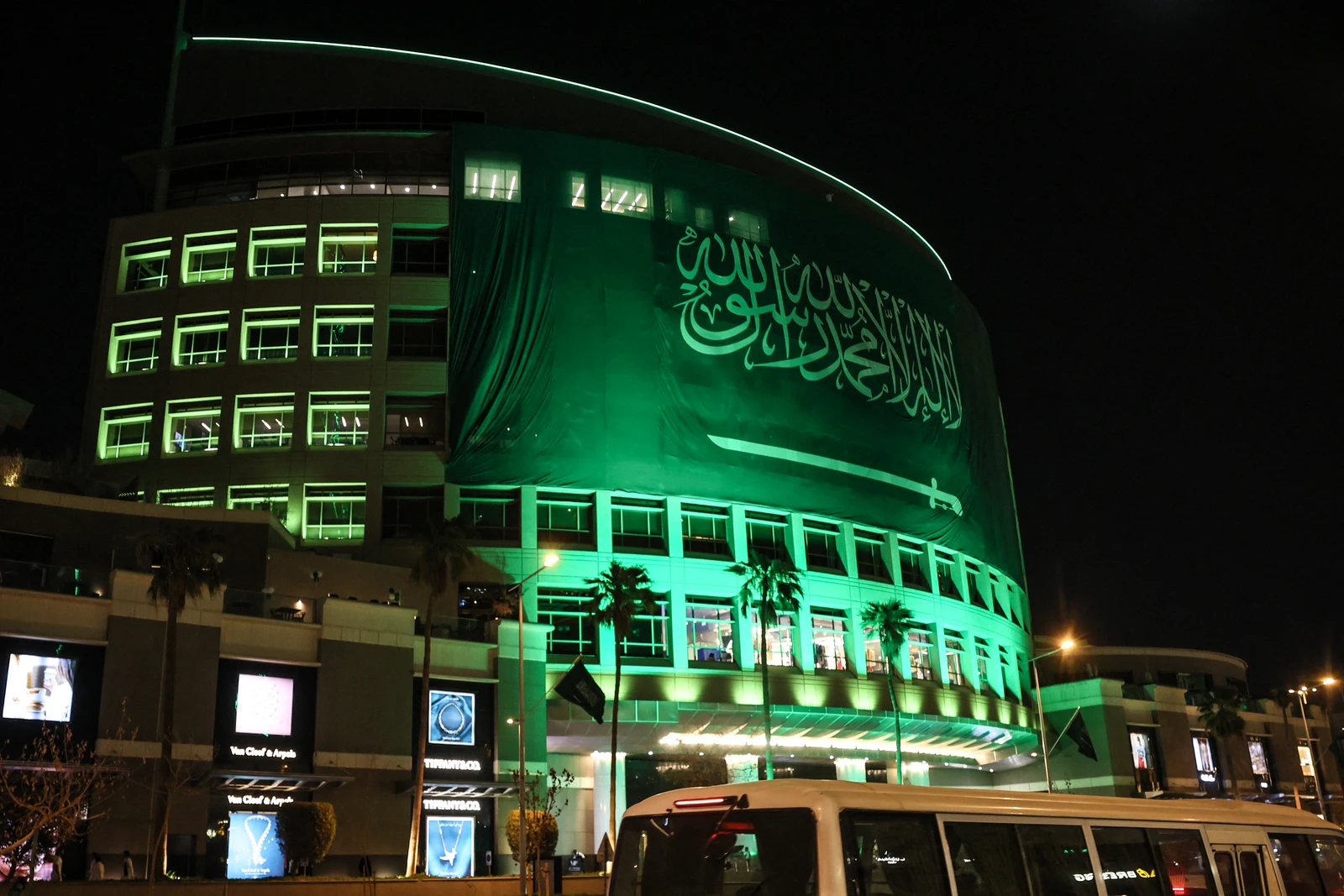

On National Day, we celebrate not only what Saudi Arabia has become but the journey that made it so.
And therein lies the story.
A nation like no other.
Its story did not begin with abundance, nor was its state built amid ease and plenty. It arose in a peninsula where water was scarce, settlements lay far apart and distances were hard to cross, in a world shaped by competing powers and conflict.
Yet our forefathers understood a truth that would come to define this nation: scarcity of resources need never mean scarcity of resolve. What people lack in means, they can overcome through clarity of purpose and strength of will.
When Imam Mohammed bin Saud founded the First Saudi State in Diriyah in 1727, the undertaking was greater than the boundaries of a city. It was the project of building a state that would bring together what had been divided and establish a society capable of living and prospering.
The purpose was not so much to expand the land as to unite it; nor was it merely to establish rule but to build a state in which people could find security, have their rights protected and know their duties.
The state expanded and grew stronger, until the campaigns against it culminated in the fall of Diriyah in 1818.
But a state that lives in the hearts of its people does not cease to exist when one chapter ends.
A state that lives in the hearts of its people does not cease to exist when one chapter ends
Prince Turki bin Talal bin Abdulaziz
For the Saudi state was never merely a structure upon the land; it was an idea rooted in its people. And so, when the structure fell, the meaning endured. When the First Saudi State came to an end, its purpose remained alive.
Only a few years later, Imam Turki bin Abdullah rose to reestablish the Saudi state in 1824.
And so, the Saudi experience proved, early on, that adversity may bring down what has been built but it cannot defeat the purpose that built it. The state returned because the forces that sustained it were stronger than those that had brought about its fall.
Then came the moment that encapsulates the meaning of Saudi determination.
In 1902, King Abdulaziz set out to recapture Riyadh. He was not merely reclaiming a city, he was reclaiming the project of a state.
From Riyadh, and through a unity of resolve, the journey to reunify the country began anew, until what had been divided was brought together, security was established and, on Sept. 23, 1932, the Kingdom of Saudi Arabia was proclaimed.
He began with only a small band of men around him and ended with an entire nation standing behind him because, from the very beginning, the purpose was as great as the nation itself.
He did not have at his disposal the capabilities we see today: not our modern cities, our roads and airports, our universities and hospitals, or an economy of the scale we have today.
The means were few but the will was great.
And from the little they had in their hands, they created much of what we hold in ours today.
The founder set his sights on building a strong and firmly established state whose purpose was the peace and well-being of its people, resolve its shield, decisiveness its sword.
This allows us to understand the history of the Kingdom differently: Not as a succession of years but as a succession of trials.
The world around the Kingdom changed time and again but the Kingdom never changed its compass
Prince Turki bin Talal bin Abdulaziz
The journey of unification spanned the First World War. The formative years that followed were marked by scarce resources, disease and epidemics; then came the Second World War and the profound transformations it brought.
Yet the state continued to build, strengthening its institutions, preserving its unity and expanding its presence until, in 1945, the Kingdom became one of the original signatories of the UN Charter and contributed to the founding of the Arab League.
Thereafter, the region witnessed successive crises, wars and upheavals, from regional conflicts and waves of terrorism to the turmoil of recent decades.
The world around the Kingdom changed time and again but the Kingdom never changed its compass.
And here lies the most important question: Why?
For nations endure not by what they possess alone but by what they stand for.
Resources may diminish, balances of power may shift and the world may change. But when a purpose is grounded in what is right and is rooted in the hearts of the people, it becomes a resource that never runs dry.
Herein lies the secret of Saudi resolve: When the book of God, with all it embodies of justice, mercy, faithfulness and trust, is held with sincere intent as the guiding reference of a nation’s leadership, circumstances may tighten and the balance of power around it may shift. Yet, by the will of God, such a nation will not be forsaken so long as it remains true to its foundations and steadfast in its purpose.
And when purpose is founded upon justice and the intention to serve people is sincere, steadfastness in adversity becomes the consequence of that foundation, not an accident of history.
Today, in the reign of King Salman and under the leadership of Crown Prince Mohammed bin Salman, we are living a new chapter of the same story.
Our capabilities have changed, our horizons have widened and our ambitions have grown. But the foundation remains unchanged.
What our forefathers built is not ours merely to celebrate; it is a trust placed in our hands. What we inherited from them was not the end of their journey but the beginning of our responsibility.
They left us a nation greater than the one they found. Our responsibility is to leave those who come after us a nation greater than the one entrusted to us.
And here the equation is reversed: They had little in their hands, yet their purpose was greater than what they possessed. Today, much lies in our hands; our purpose must never become smaller than what we possess.
This is the course our leadership has set and behind it we stand as one.
National Day, then, is more than an anniversary of unification. It is a day to remember where we began, what we overcame, why we endured and where we are going.
And to ask ourselves the very question our forefathers answered through their deeds: What will we make of what is now in our hands?
From little, our forefathers built a state.
Those who followed built that state into strength.
Our responsibility today is to turn that strength into a future of which we can be proud among the nations of the world.
This is our homeland … A nation like no other.
Prince Turki bin Talal bin Abdulaziz is the governor of Asir Province.


