
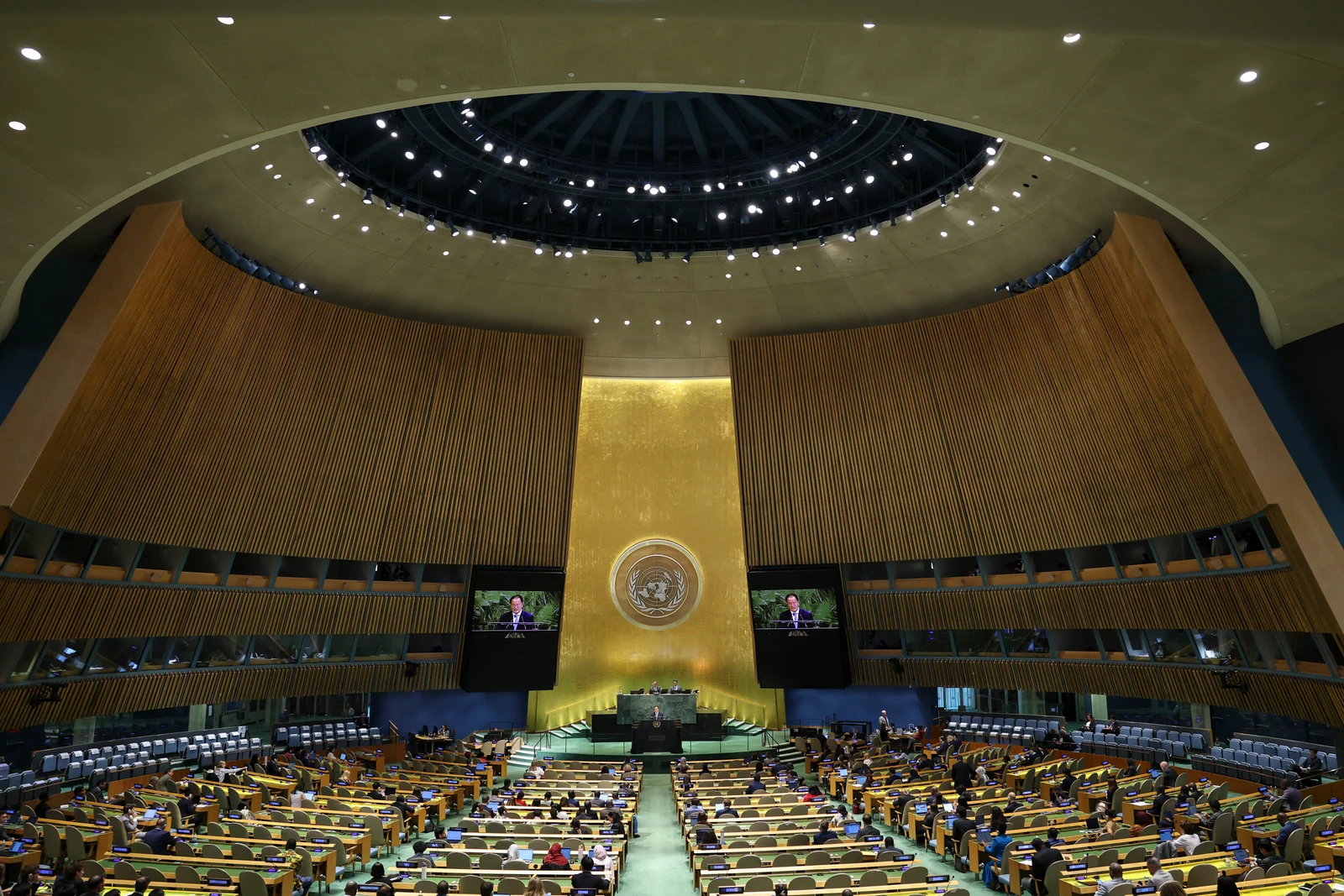

Amid unprecedented global challenges, from wars, epidemics, climate change and artificial intelligence’s existential threats to humanity to superpower discord splintering the world order, many ask whether the UN is still a necessary space for global deal-making. The short answer is: not really.
But the reality raises another question: If not the UN, then what else could solve the problems of increasingly intransigent super- and medium-sized powers amid a rise in ethnonationalism and so-called patriotism, including calls for the erosion of multilateralism, the rule of law and the rules-based international order?
The world is in an era in which political leaders believe less and less in the ethos of the UN, which was founded to help protect the planet and its people from the scourge of war. If those leaders have pivoted away from the founding ideals and virtues of the UN, then the international organization’s moral authority ceases to be a tool.
The relevance of the UN is increasingly being brought into question because the current global moment is one of international competition and discord. This is a moment in which deal-making and forceful unilateral power supplant cooperation. It is feared that the UN and its many institutions, which have long needed to reform and adapt to match the realities of our world, are now becoming nothing more than a talking shop.
The organization’s only chance of getting a new lease of life rests in the hands of global powers, whether or not they realize that the world needs the UN as a midway point to link between states and prevent total disconnection, leading to a descent into the law of the jungle and chaos.
Apologists believe that the UN’s failures reflect the realities of states and societies that are in permanent discord
Mohamed Chebaro
Since 1945, the UN’s record has been mixed. Its detractors, mainly from the Global South, believe it to be a tool that dispenses medicine to the various maladies of the world according to Western priorities. Apologists believe that the UN’s failures reflect the realities of states and societies that are in permanent discord. Its standing has been constantly tested by challenges to peace and order and its funding limits.
Inside the UN’s most powerful tool, the Security Council, the five veto-wielding permanent members managed to prevent all-out war during the Cold War era. But in recent years, the council has repeatedly blocked interventions in crises from the Palestine-Israel conflict and Russia’s invasion of Ukraine to Syria, Myanmar and Sudan. The repeated failure of the UNSC to broker a ceasefire in Gaza stirred deep resentment both inside the organization and outside it.
Over the years, the UN Charter’s prohibitions against aggression have frequently been directly or indirectly flouted by the superpowers’ geopolitical calculations. Russia’s invasion of Ukraine and the US’ decision to attack Iran in February suggest that the UNSC’s biggest members no longer feel bound by its guiding principles.
With peace-making proving elusive, the current funding crisis also highlights a permanent handicap of the organization. Since its inception, US funding has been a cornerstone of the UN’s operations. The Trump administration’s decision to cut the bulk of America’s funding has dealt an unprecedented blow to the UN, with its officials left wondering how to pay their various bills. A new set of financial arrangements is needed if the organization is to function, however minimally, in these turbulent times.
A new set of financial arrangements is needed if the organization is to function, however minimally, in these turbulent times
Mohamed Chebaro
Traditionally, the US covered approximately a fifth of the organization’s core costs and a quarter of the budget for its blue helmet peace-keeping operations. It also often covered a third of the budgets dedicated to relief agencies such as the World Food Programme. The US is not alone in scaling back. European governments have also been reducing their spending on international development and humanitarian aid, while emerging nations have not stepped up to close the financial gap.
Despite the pressing need for aid and the release of some funds for the UN’s lifesaving efforts this year, big relief agencies have been forced to cut back assistance to civilians in places like South Sudan and Afghanistan.
Looking ahead, the UN’s tiptoeing around sensitivities looks set to stay, while the world teeters on the brink.
It is hoped that the new secretary-general, who will be elected soon, can harness the virtues of the UN and its moral authority to guide the world’s search for peace. But it is feared that the rising tensions among major powers, perennial disputes over how to come to an agreement and who should shoulder the financial weight of development projects and support for poorer states, as well as climate change adaptation and mitigation, are likely to remain as a thorn in the UN’s side.
The prospect of AI regulation, which will cause disagreements between corporations and governments, is another testing topic for the UN and the world. The colossal job of rebuilding trust between governments is nothing next to the adversities of rebuilding faith in the UN’s complex negotiations-based approach, which balances nations’ interests.
In such a climate, rather than turning to the UN, many governments are vying for cooperation through smaller clubs, both old and new, such as the G7 for Western nations and BRICS, the bloc for the so-called emerging market nations.
If this trend persists, and in the absence of a new covenant between the superpowers, the standing of the UN will remain dented, its future uncertain. Terminating the 81-year-old organization is no longer an odd thought, as many nations look determined to put their own interests first. As a result, the mantras of human rights, the rules-based international order and multilateralism continue to fade with every speech, tweet or toxic-fueled narrative that poisons all attempts at prioritizing compromise and cooperation.
Mohamed Chebaro is a British-Lebanese journalist with more than 25 years of experience covering war, terrorism, defense, current affairs, and diplomacy.


