

The Iranian regime last week doubled down on its intolerance of demonstrations on the streets; but nevertheless Tehran and other Iranian cities were the scenes of protests and anti-regime activities. In the capital, many workers had planned to hold a rally in front of the Majlis (parliament), but they were denied permission. However, a large number of the workers still made it to the Majlis and others came out to support them.
This highlights the fact that many Iranians have become so disaffected and frustrated with the authorities that they are willing to risk their lives by taking to the streets and protesting. People of all ages and social classes appear to have overcome their fears
In these situations, the regime has demonstrated repeatedly that it responds through a technique that it has been utilizing since its establishment in 1979. Deploying brute force against protesters has become the clerical rule’s modus operandi. The security and suppressive forces dispersed the demonstrators and a number of them were arrested. In addition, the regime unleashed its paramilitary and Basij forces and many protesters clashed with plain clothes Basij agents.
Protests were not limited to Iran’s capital, as there were also gatherings and clashes in several other cities, including Isfahan and Saqqez in Iranian Kurdistan. In the latter’s Chami Vali Khan Square, one protester was injured after being attacked by the regime’s forces.
One of the major grievances of the protesters is associated with economic difficulties. Neither the moderates nor the hard-liners appear to be willing to address their citizens’ underlying problems and satisfy their demands. Since January’s widespread and nationwide demonstrations, when tens of thousands of people took to the streets across Iran’s cities, the Iranian leaders have not taken any concrete steps to tackle the issue.
Instead, the leadership has been playing the blame game or resorting to empty rhetoric. Iran’s President Hassan Rouhani continues to boast that his government has reduced inflation and is helping the economy, but the reality — such as the recent currency crisis and people’s living standards — tells a different story. Some Iranians even believe that Rouhani has been more detrimental to their economic situation than his predecessor, Mahmoud Ahmadinejad, who offered social subsidies.
Iran's rulers must satisfy citizens' economic needs or risk an uprising and the possible fall of their regime.
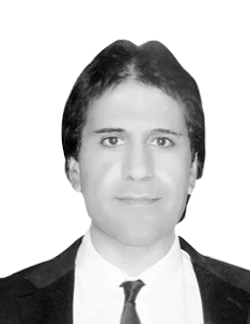
Dr. Majid Rafizadeh
Arezoo, an Iranian mother of two, told me during a phone interview: “My husband is a full-time teacher. At night he also works as a taxi driver. I have a master’s degree and cannot find a job. I have been sewing clothes all day and sell them. We work seven days a week and our incomes put together ($390) are not enough to pay the rent for a one bedroom apartment in a lower class neighborhood of Isfahan ($550). My children have been sick for a long time, I have dental pain, but we cannot afford to go to a doctor. On TV, we hear Rouhani keep saying the economy is improving. But he is completely disingenuous.”
Many skilled and educated Iranians cannot find a job, and the unemployment rate and inflation remain high. Food, housing and healthcare have become extremely expensive for ordinary Iranians. This was reflected in chants such as “astronomical wages (for senior officials), public misery” at the latest protests. Placards carried by the workers read: “Our dinner table is still empty.” One of the workers carried a large placard that read: “Hey, you, billionaire minister, I haven’t been able to buy meat for the past 40 months.”
In spite of his promises to promote economic equality and improve people’s living standards, Rouhani’s moderate establishment has mostly acquiesced to the hard-liners’ power, particularly Supreme Leader Ali Khamenei and the senior generals of the Islamic Revolutionary Guard Corps. According to official figures, Tehran’s military budget saw an unprecedented increase of 145 percent during the first four years of Rouhani being in office.
It is worth noting that the protesters also had political demands, particularly after the arrest of several of demonstrators. Many Iranians were chanting: “Arrested workers should be freed,” “Bread, housing, freedom, are our inalienable rights,” and “Worker, teacher, student, solidarity, solidarity.”
The National Council of Resistance of Iran and the People’s Mojahedin Organization of Iran, which boast a large network inside the country, were active through their networks in the run-up to the protests.
The Iranian regime should comprehend the hard truth that cracking down on the protesters will not eliminate the underlying causes of its citizens’ grievances. The Islamic Republic needs to take tangible steps in order to adequately satisfy the economic needs and address the political grievances of its people.
Otherwise, the frustrations and disaffectedness of the population could significantly endanger the hold on power of the ruling clerics. After all, Iran’s history in the last century reveals that its society is not unfamiliar or fearful of an uprising and changing a political establishment when the leadership ignores people’s socio-political and economic needs.
• Dr. Majid Rafizadeh is a Harvard-educated Iranian-American political scientist. He is a leading expert on Iran and US foreign policy, a businessman and president of the International American Council. Twitter: @Dr_Rafizadeh


