

As NATO celebrates its 70th anniversary, we are watching in real time as Western states withdraw from historic international commitments — and Russia, Iran and other opportunists rush in to occupy these vacated arenas. NATO represents one of the West’s greatest successes in guaranteeing 70 years of peace across a continent previously plagued by incessant wars, but the prospects of maintaining the European strategic balance have never looked more precarious than they do today.
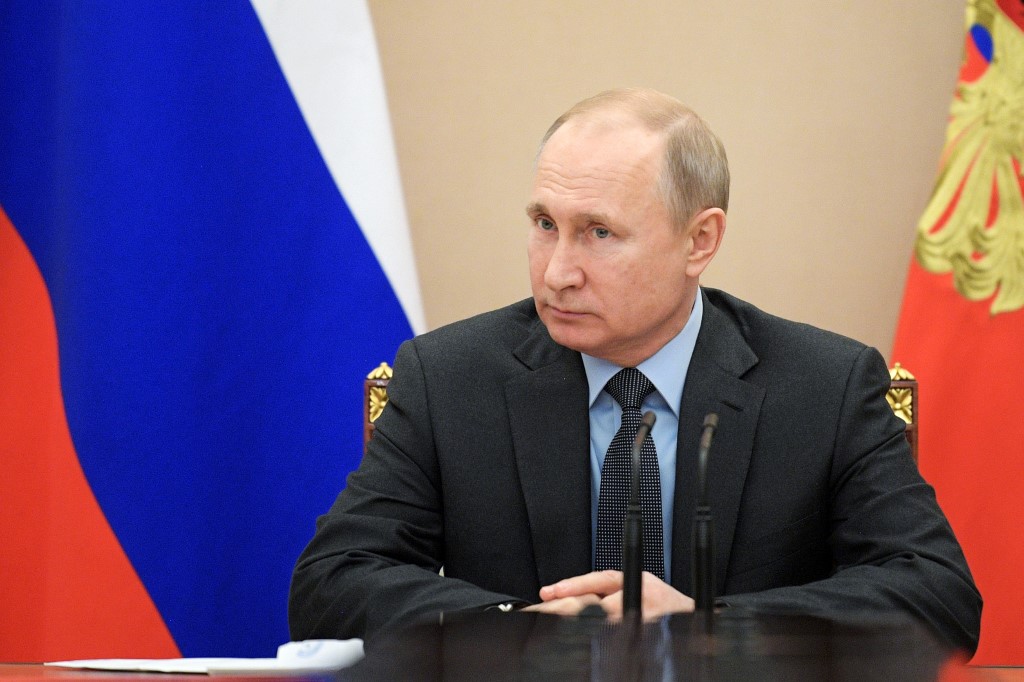
Russian expansionism has been most pernicious along Europe’s eastern frontiers: Annexing parts of Ukraine and Georgia; Arctic encroachment near Norway’s borders; saber-rattling against Baltic republics; and speculation that President Vladimir Putin could impose a union with Belarus as a ploy to retain power. Moscow has waged campaigns to undermine democratic election processes, promote European far-right populists, and assassinate enemies seeking refuge abroad. NATO has consistently failed to produce any form of credible deterrent to these bellicose Russian actions.
As liberal Europe is progressively eclipsed — demographically and economically — by emerging powers, Western nations are colluding in their own downfall: Withdrawing from regions of influence and allowing the ascendancy of isolationist and xenophobic trends, while international peacekeeping and legal institutions slide into decrepitude. Although US President Donald Trump demands that European states contribute more to NATO’s upkeep, he has arguably done as much to undermine NATO as Putin himself, with his anti-multilateralism rhetoric and inexplicable fascination with authoritarian dictators hostile to Western values.
For two decades after the USSR’s demise, Moscow was largely absent from the Middle East and Africa. Nevertheless, Putin exploited the failure of Arab states and the West to impose a solution in Syria to wade in himself and become the de facto dominant power in Damascus. Russia colluded with Tehran and Ankara to secure Bashar Assad’s future role, rendering UN-sponsored talks irrelevant. Amidst Western strategic confusion in the region, Gulf states and other Arab nations like Lebanon and Iraq are increasingly looking to Moscow as the de facto superpower.
Egypt’s recent $2 billion deal to purchase Russian SU-35 fighter jets is one of many indicators of growing North African military reliance on Moscow. Nearly 80 percent of Russia’s African military sales are to Algeria, while Tunisia enjoys close intelligence and energy ties. Moscow is reported to be decisively backing Khalifa Haftar’s headlong western advance across Libya, while Russian mercenaries were invited into Sudan by a regime struggling to contain popular protests. In many cases, Moscow has exploited commercial inroads to reinforce its military posture, securing a presence in Libyan, Syrian, Sudanese and Eritrean ports. “Moscow and its private military contractors are arming some of the region’s weakest governments and backing the continent’s autocratic rulers,” commented the Africa director of one Washington think-tank: “This engagement threatens to exacerbate current conflict zones.”
When a bully gets away with his transgressions, he inevitably pushes the boundaries of what he can get away with ever further
Baria Alamuddin
On the US’s own doorstep, Trump’s approach toward Venezuela has been noisy. However, prospects are dwindling for the immediate removal of President Nicolas Maduro, who exploits anger about the accumulated impact of US sanctions. Meanwhile, Russia is opportunistically deepening its influence, including with a new military helicopter pilot training facility and by sending dozens of “military advisers” to Caracas. Trump’s halting of funding to certain Latin American states will, meanwhile, counterproductively hamstring efforts to address the chronic instability driving mass migration. And, whenever US funding is cut, Russia is unceasingly ready to step in.
Although we can’t exclusively blame Moscow for Brexit, the rise of Trump, or the emergence of far-right forces across Europe, Putin must be gloating that, each time, he has been meddling on behalf of the winning parties. Few observers expect Putin to meekly step down from power at the end of his current (and supposedly final) presidential term in 2024, although it remains an open question precisely how he intends to undermine Russia’s political system in order to stay in the driving seat.
The world nervously views Putin’s Russia as an all-powerful behemoth, yet Russia’s gross domestic product is less than a 10th of that of the EU or US. Its non-oil economy has stagnated under Putin and the warning signs are there that the president’s megalomaniacal delusions of grandeur could give rise to the same imperial overstretch that caused the USSR to implode. Advancing hegemonic ambitions in fragile nations without promoting good governance and stability will only leave Moscow bearing the onerous burden for a succession of Syria-style failed states.
NATO’s value was always in its deterrent capacity, making new European wars unthinkable. However, in failing to prevent Russian aggression in Eastern Europe’s farthermost regions, while lacking any kind of decisive response to Putin’s meddling in the exercise of Western democracy, a fragmented and rudderless Europe has left itself exposed to future malevolent Russian actions. When a bully gets away with his transgressions, he inevitably pushes the boundaries of what he can get away with ever further.
An increasingly introverted West is psychologically unprepared for the implications of an ever more bellicose Russia, which is hell-bent on sabotaging the values and institutions that underpin European democracy. It is difficult to see routes for avoiding the coming East-West confrontation. Yet, while one side clearly relishes the prospect of such a test of strength, the other is too occupied with its internal squabbles and bickering to even acknowledge the threat.
• Baria Alamuddin is an award-winning journalist and broadcaster in the Middle East and the UK. She is editor of the Media Services Syndicate and has interviewed numerous heads of state.


