


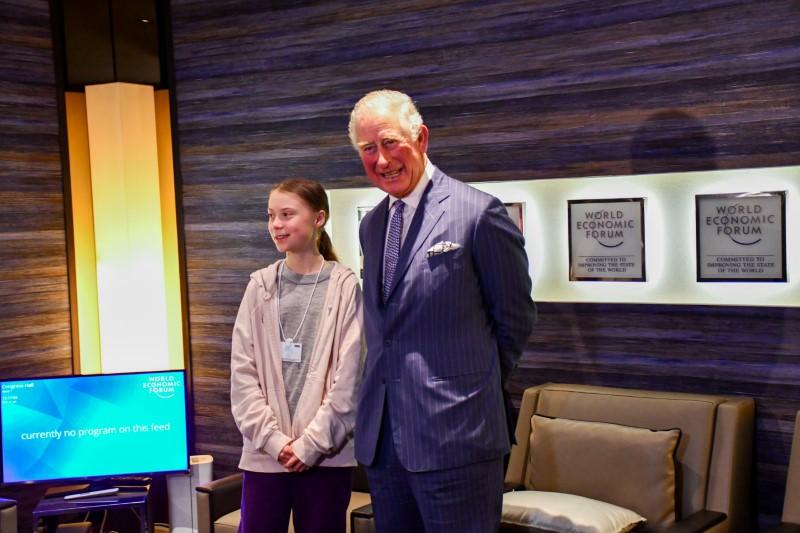
Greta Thunberg, the teenage climate activist, warned that “our house is on fire” at last year’s World Economic Forum meeting in Davos. Her pointed words — accusing adults of sitting idly by as the planet burns — quieted a roomful of global leaders, inspired young activists worldwide, and underscored the critical importance of putting children at the center of global action to build a better future.
Climate change is happening now. That was apparent in Australia’s recent unprecedented bushfires, in which 18 million hectares burned and an estimated 1 billion animals died. It was also reflected in India’s 2019 heatwave, which was among its longest and most intense in decades. And a warming planet is contributing to the global spread of dengue, a mosquito-borne viral infection.
Yet, even as the clock runs out on our ability to avert a catastrophe, global climate action is not gaining the needed momentum. As Thunberg and other youth activists have underscored, it is our children who will bear the brunt of this failure, as they will inherit an increasingly inhospitable planet.
Climate change is not the only area where we are failing our children. Predatory commercial marketing that targets children and their caretakers is contributing to the widespread consumption of unhealthy products, such as alcohol, tobacco, e-cigarettes, and sugar-sweetened beverages. The global economic losses associated with the inappropriate use of breast milk substitutes — which are associated with lowered intelligence, obesity and increased risk of diabetes and other non-communicable diseases — amount to an estimated $302 billion.
Children are our most precious resource and they deserve to live long, healthy and productive lives. To determine how to enable them to do just that, the World Health Organization (WHO), UNICEF and The Lancet recently convened a landmark commission — which I co-chaired, along with Awa Marie Coll-Seck, Minister of State in Senegal — that brought together 40 experts on child health and well-being.
As the commission’s report “A Future for the World’s Children?” notes, the key is to invest in people while they are young. Evidence shows that hungry children have poorer health, worse educational outcomes, and earn less as adults. Children who are exposed to violence are more likely to commit violence. Conversely, children who receive proper nutrition, appropriate care and quality education grow up to be healthy, productive citizens, who are presumably better equipped to raise healthy, productive children of their own.
In short, investing in children today brings lifelong and even inter-generational benefits. This brings value to all of society. For example, a school-building program undertaken in Indonesia in the 1970s has helped to boost today’s living standards and tax revenues.
The return on investment in children is remarkably high. In the US, every dollar invested in a preschool program was found to bring $7 to $12 in societal benefits per person, via reductions in aggressive behavior and improved educational attainment. In lower-middle-income countries, every $1 invested in maternal and child health can bring more than $11 in benefits.
But we should not pursue such investments only because of the numbers. If we can’t protect our children’s futures, what is the measure of our humanity?
The WHO-UNICEF-Lancet commission calls on leaders at every level, from heads of state and government to civil society and community leaders, to place children at the center of strategies to achieve sustainable development. This will require long-term vision, with presidents and prime ministers ensuring that sufficient funds are directed toward the needed programs and there is effective collaboration between ministries and departments.
Every sector has a role to play in building a world fit for children. For example, traffic accidents are the No. 1 killer of children and young people, implying an urgent need for interventions to improve road safety. Likewise, with 40 percent of the world’s children living in informal settlements — characterized by overcrowding, poor access to services and exposure to hazards like fires and flooding — housing reform is essential.
Some countries recognize the importance of boosting public investment in children. In New Zealand, my home country, Prime Minister Jacinda Ardern’s government has introduced a “world-first” well-being budget, which puts people — especially society’s most vulnerable, including children — first. The budget allocates billions of dollars for mental health services, child poverty, and measures to tackle family violence.
In short, investing in children today brings lifelong and even inter-generational benefits.
Helen Clark
But New Zealand continues to emit far too much carbon dioxide — 183 percent of the level needed to meet its 2030 target and adhere to the Paris climate agreement, according to our report. Other rich countries, such as Norway and South Korea, are doing similarly well in helping children flourish today, while continuing to emit far too much carbon dioxide to ensure that the children of tomorrow can do the same. Meanwhile, some less wealthy countries, including Armenia, Costa Rica and Sri Lanka, are on track to reach emissions targets by 2030 and are doing a fair job of ensuring that their children are healthy, educated and safe.
“I don’t want your hope,” Thunberg told world leaders in Davos. “I want you to panic… and act.” She is right. If we are to bequeath a sustainable future to Thunberg’s generation, and those that follow, our leaders must act courageously — and immediately. This is the stuff legacies are made of.
- Helen Clark, Board Chair of the Partnership for Maternal, Newborn, and Child Health (PMNCH), served as Prime Minister of New Zealand from 1999 to 2008 and was Administrator of the United Nations Development Programme from 2009 to 2017. Copyright: Project Syndicate


